
If you love cooking and saving time, do I have a suggestion for you! Consider making the switch to an induction cooktop. We did, and it’s changed our lives.
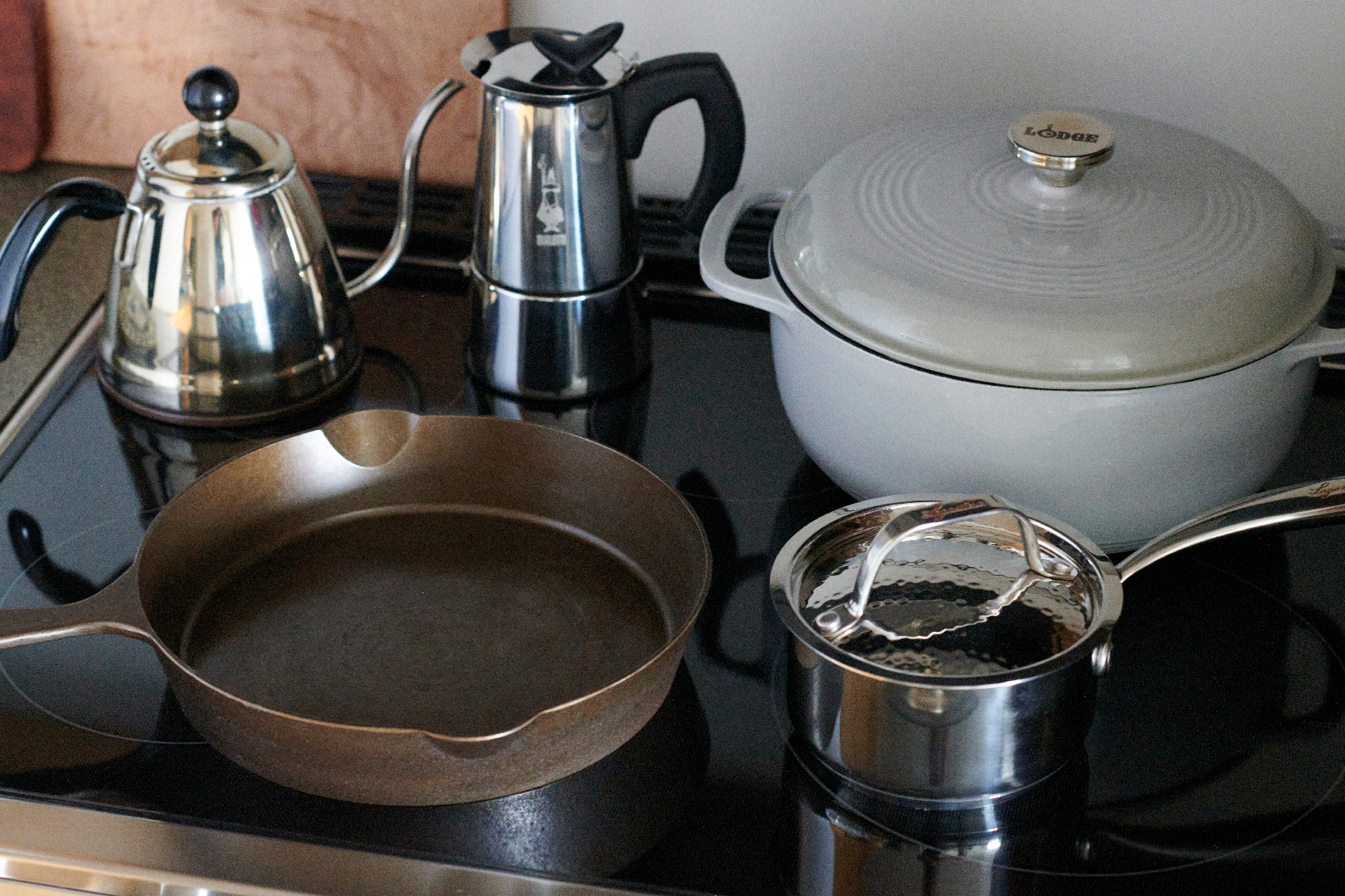
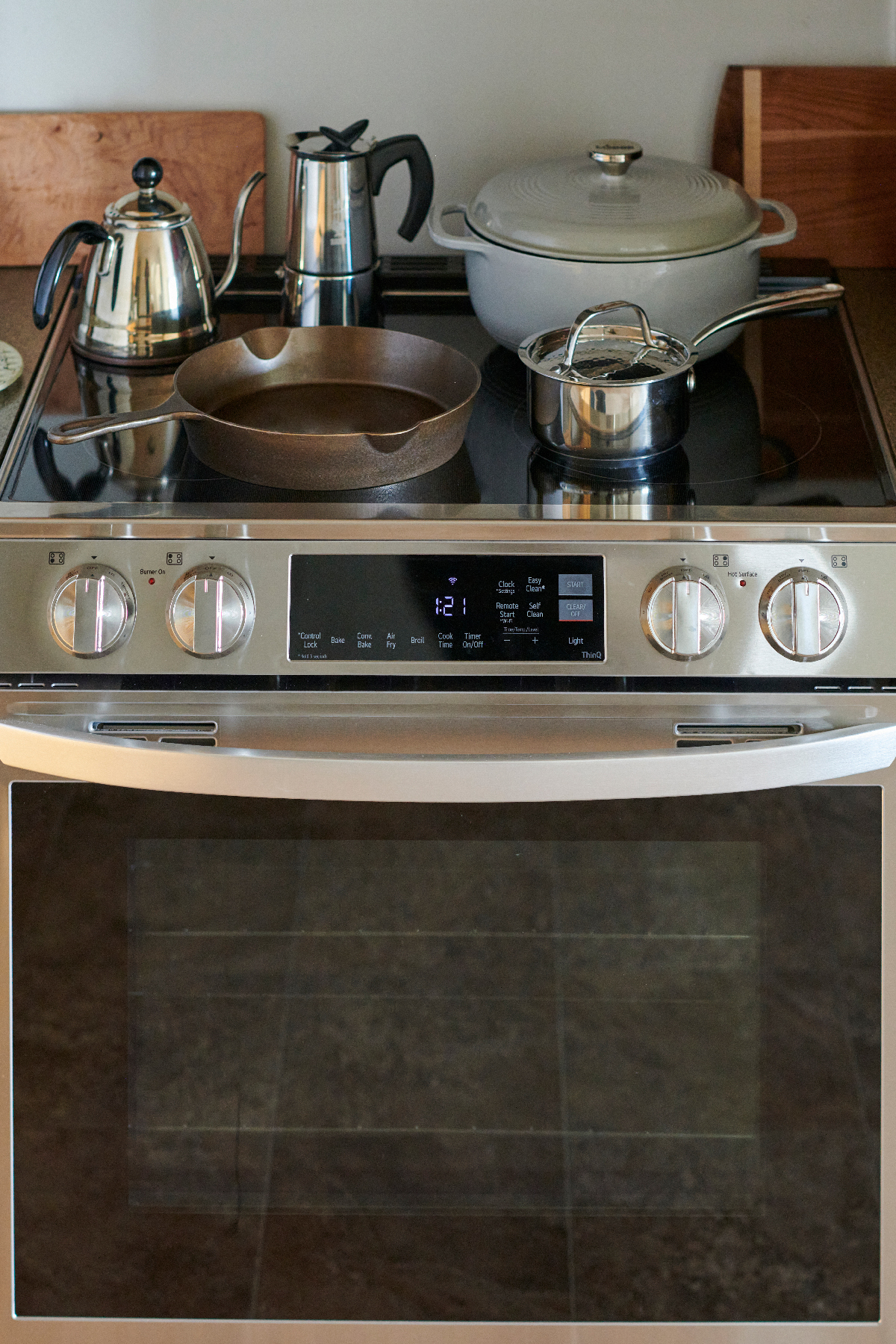
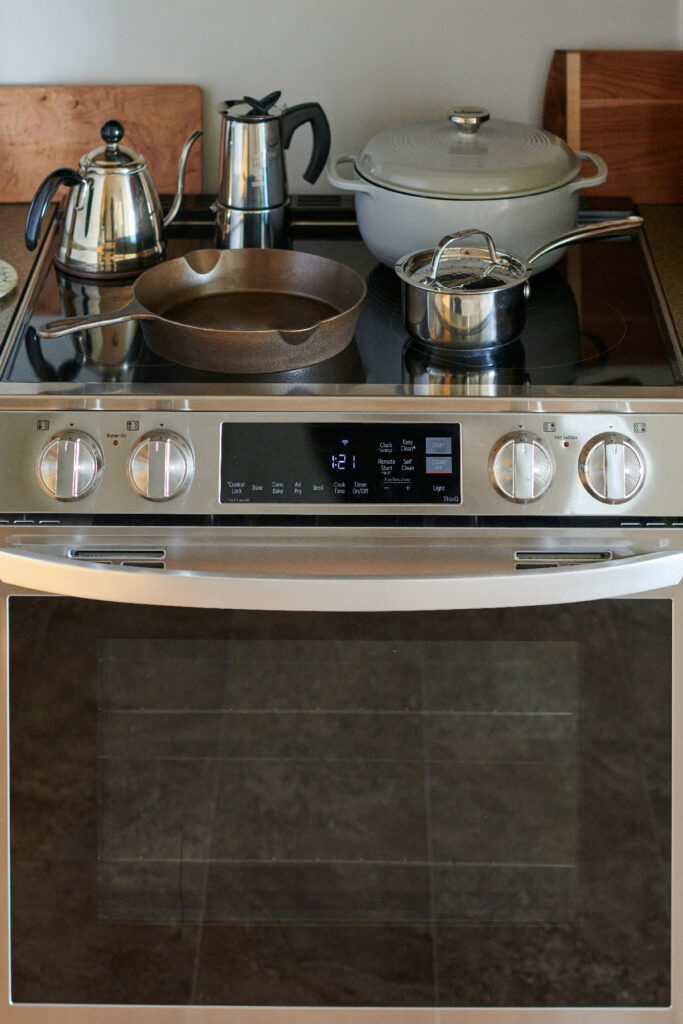
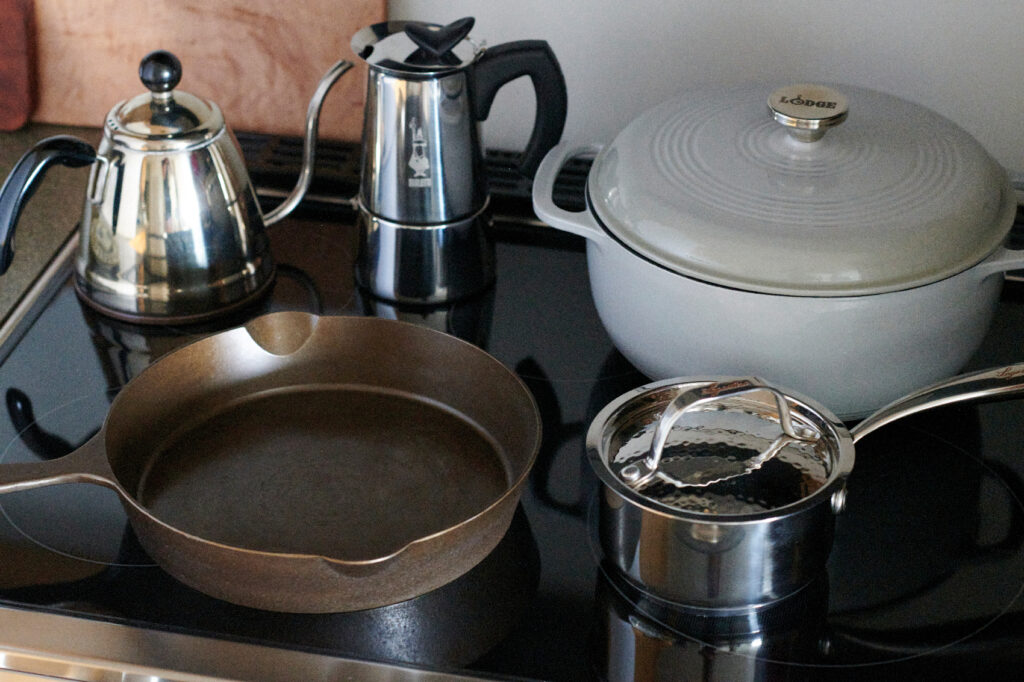
A selection of induction-compatible cookware shown on our induction range includes, clockwise from left: a stainless-steel gooseneck kettle; a Bailetti Musa 6-cup stainless-steel moka pot; a 6-quart Lodge enameled cast-iron Dutch oven; Lagostina Luminosa stainless tri-poly induction bonded 1.1-quart saucepan; and Lancaster Cast Iron’s No. 8 cast-iron skillet.
Induction technology made its debut at the 1933 Chicago World’s Fair, which was otherwise billed as “A Century of Progress International Exposition.” In 1971, a modern home cooking iteration was displayed at the National Association of Home Builders convention in Houston. Fifty-plus years later, its affordability has made induction cooking more accessible, but its acceptance has failed to keep pace with its availability.
Digging In!
From a technological perspective, induction cooking utilizes a magnetic field to “excite” the molecules found in cookware, putting them on the move to generate heat. Essentially, the cookware becomes the heat source. The cooktop is only hot from the pan transferring heat in reverse and cools rapidly.
Switching to induction cooking requires a degree of adaptation. Stepping beyond the familiarity of old recipes can immediately become a barrier, but it’s one worth setting aside. Induction only works with ferrous cookware, which is magnetic. While foodies often cook with aluminum and copper cookware, they are typically not induction-ready pans unless otherwise stated. A simple compatibility test can be conducted: if a magnet sticks to the bottom of a pan, you’re good to go (aluminum-clad pans with steel bottoms or plates might pass the test).
An Unexpected Test Kitchen
Over the past six months, our 19-year-old kitchen appliances have been voicing their fatigue. Replacing an oven coil was a straightforward repair. Other minor issues grew into substantial problems (the word “nightmare” comes to mind). As is often the case, the appliances began to “nickel and dime” us to the point that it was time to bite the bullet and invest in new ones.
In updating our kitchen, the limiting factor was a space restriction for a refrigerator in the 21-square-foot realm. I stand at 6’2” tall and have long dreamed of a world where I can graze in the refrigerator without having to double over. Looking for a bottom-freezer model, measuring and remeasuring, we found an accommodating brand and proceeded to compile a short list of picks for a range and dishwasher. We decided to put the project on the “back burner” and make our final decisions when we returned home from a family vacation. That was the idea, anyway.
I refused to spend our vacation in Bar Harbor, Maine, without having access to respectably made coffee. Along came our (pour-over) coffee-making apparatuses: whole beans, a flat burr grinder, a Chemex coffee maker and, fortuitously, a Japanese-made stainless-steel gooseneck kettle. We remembered coffee filters, but not a thermometer.
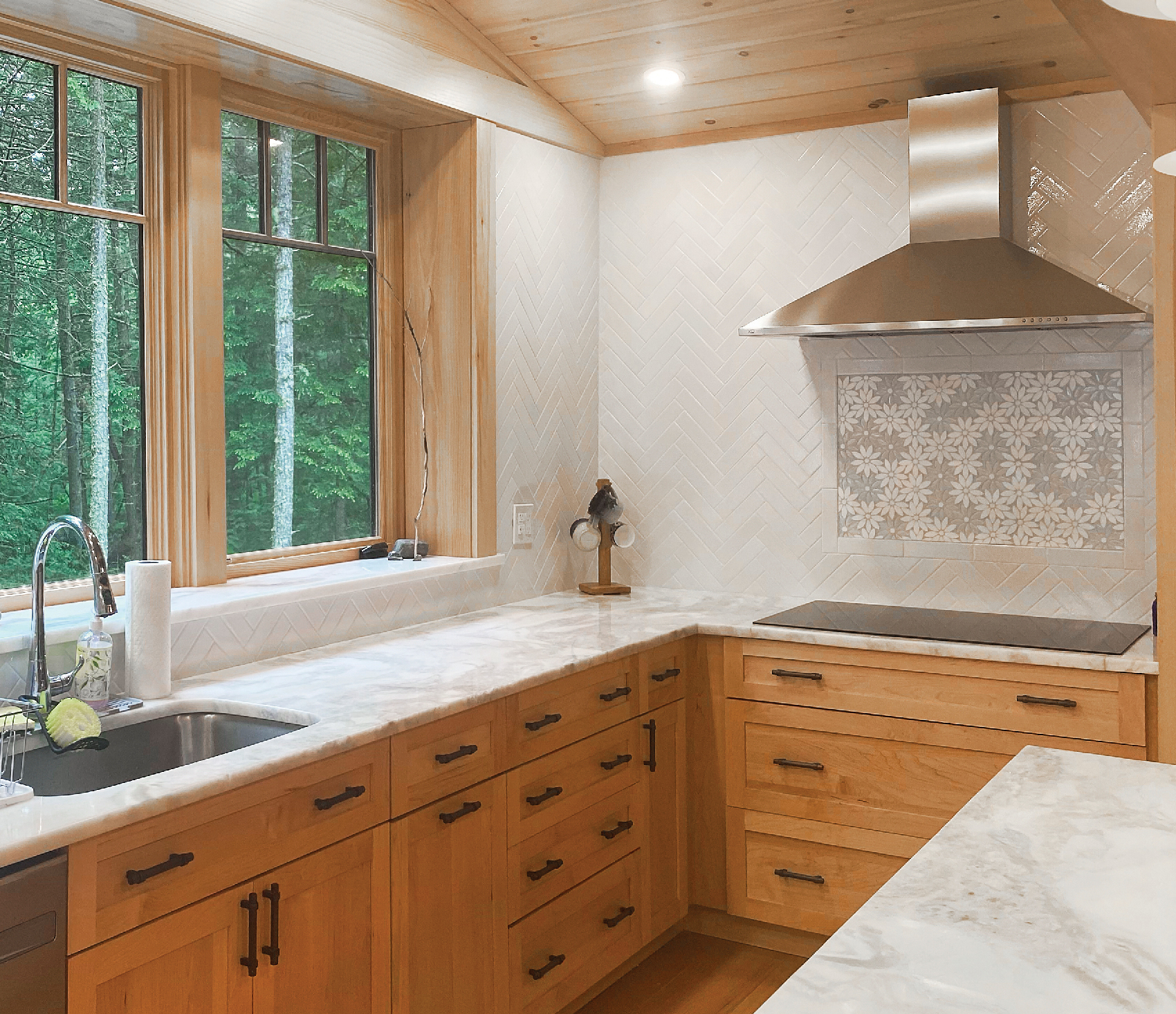
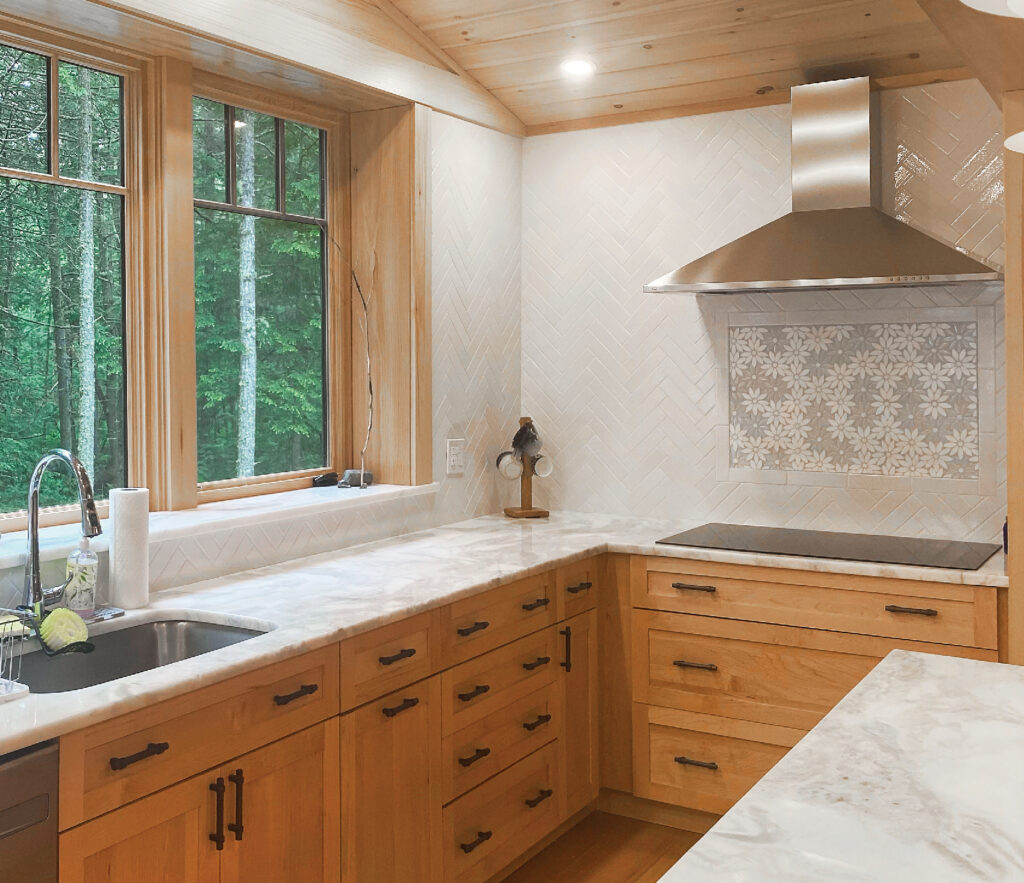
Our lakeside cabin outside of Ellsworth, Maine, provided an appreciated surprise: an induction cooktop that convinced us to purchase one for our kitchen at home. Photograph by Lindsey Kauffman.
To our delight, the house we rented had an updated and unexpectedly enlightening kitchen. Equipped with an induction range, we had a week to experiment with the cooktop. Our remote lakeside cabin became even more idyllic, thanks to being able to enjoy a proper cup of coffee, courtesy of the stainless-steel kettle that’s induction compatible. This would be our longest vacation in seven years, but without coffee, I might as well stay at home.
Preparing coffee each morning on the cooktop, water came to a boil in what seemed like seconds. Incredibly, in the literal sense of the word, we couldn’t believe how fast induction heated everything. It substantially cut down on cooking times and our morning routine. Less waiting, more doing. Sequential pots of hot water, achieved with ease, were ideal for sharing and entertaining. On the flip side, preparing meals commanded attention and adjustments with the rapid temperature increase. Yes, with a nominal degree of collateral damage involved.
Cleanup with induction is brilliant. Because the cooktop itself isn’t a heat source, it is only hot or warm from the pan. Spilled food and liquid do not adhere to the cooktop and can be wiped up post-haste with a damp cloth. (No residue is left behind, and damp kitchen towels won’t become charred.)
We also discovered that since the cookware functions as the heat source, the contents of a pan or pot cook evenly and precisely. The stove doesn’t warm the room, making cooking more pleasurable. Realizing these early benefits, I was sold, even though I had more to learn. Upon arriving home, we placed our order for appliances that included an induction cooktop.
Compatible Cookware
After installation, the learning process added deeper insights. First, I took an inventory of our cookware, testing the pieces against a magnet. Stainless steel was the primary unknown, as it can be ferrous, or not, depending on how it’s made. The biggest sticking point in switching to induction was our Lagostina Martellata hammered-copper-clad pans. I already knew the answer, having previously checked them with a magnet.
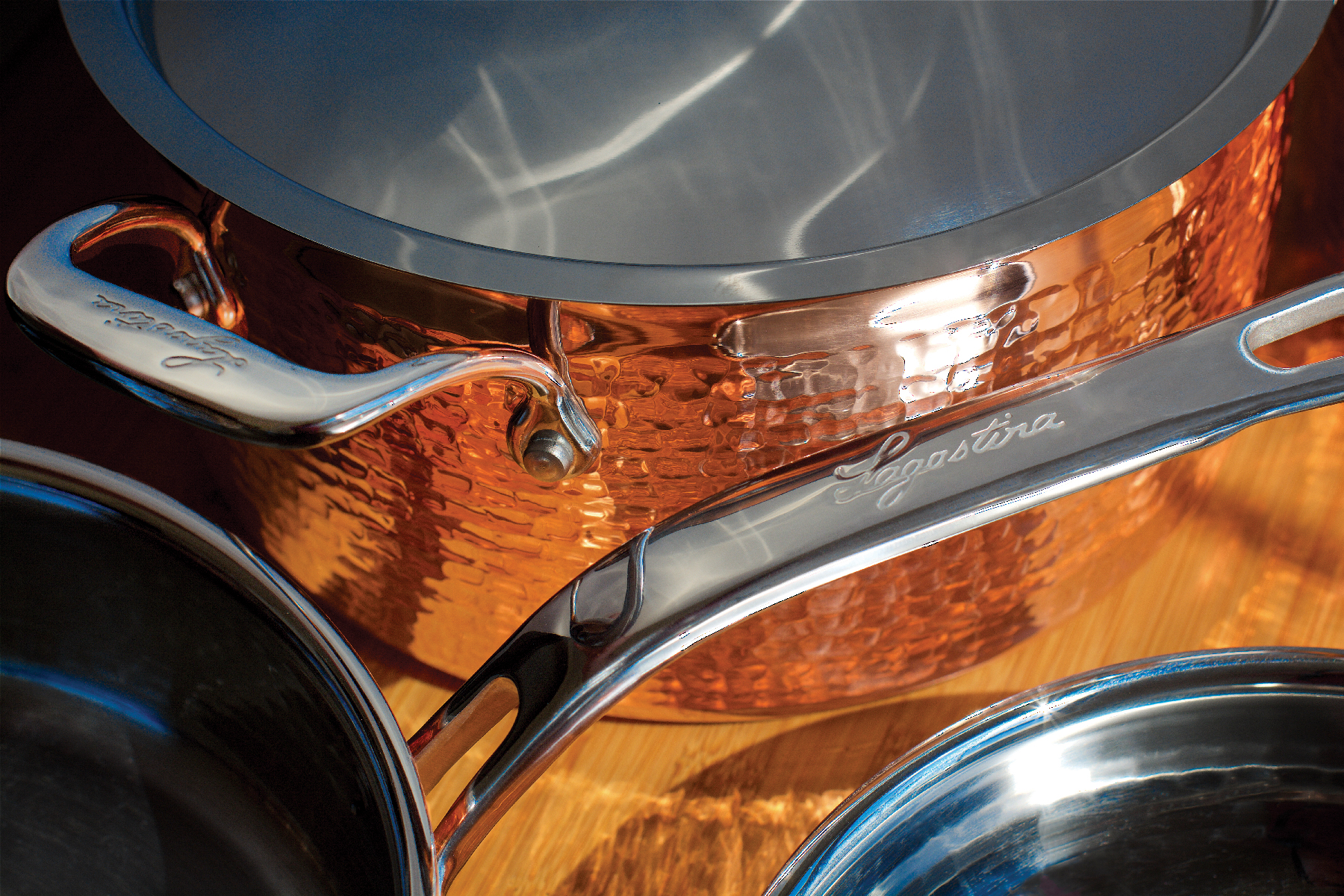
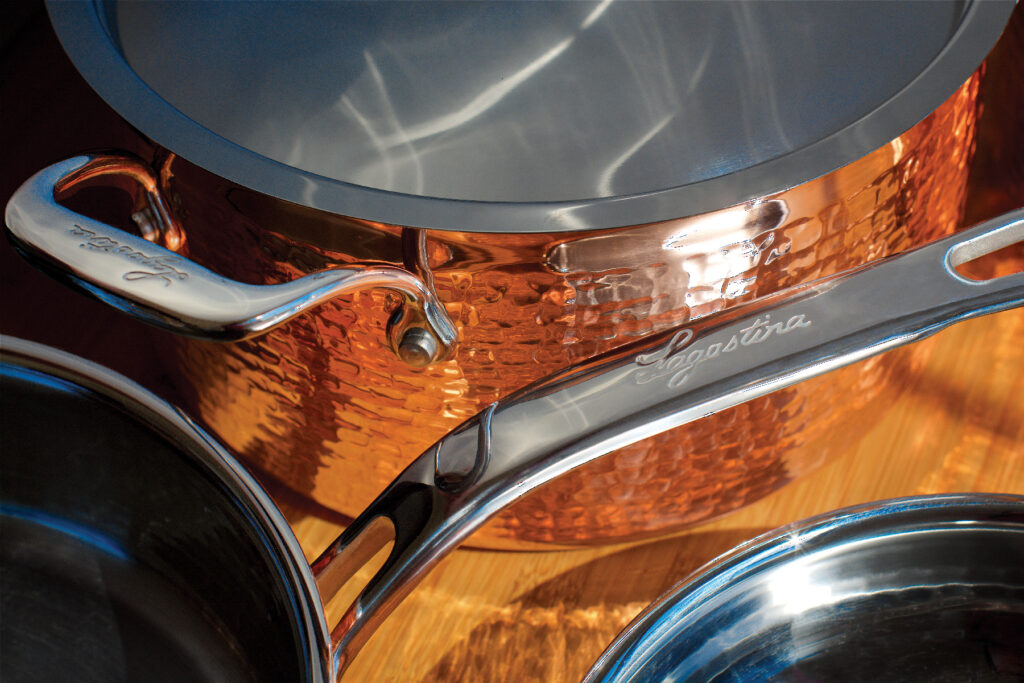
Sadly, our Lagostina Martellata copper 3-ply stainless-steel pans are the only induction-incompatible cookware in our kitchen. (Aluminum and copper-clad pans can contain enough ferrous steel to be compatible, so it’s always worth checking with a magnet.) Lagostina is no longer distributed in the United States, and it is difficult to import. Saucepans were our only need, so we settled on an older set we found through Facebook.
Comprised of an aluminum plate, copper exterior and stainless interior to prevent acid etching, our copper-clad pans are not magnetic and cannot generate heat through induction. The verdict was surprisingly gutting. We’ve grown attached to that cookware, as it’s been with us since we wholeheartedly embraced cooking as a passion. That journey continues, with redemption to follow. Fortunately, the cookware still works in the oven up to the manufacturer’s recommended temperature (450º F).
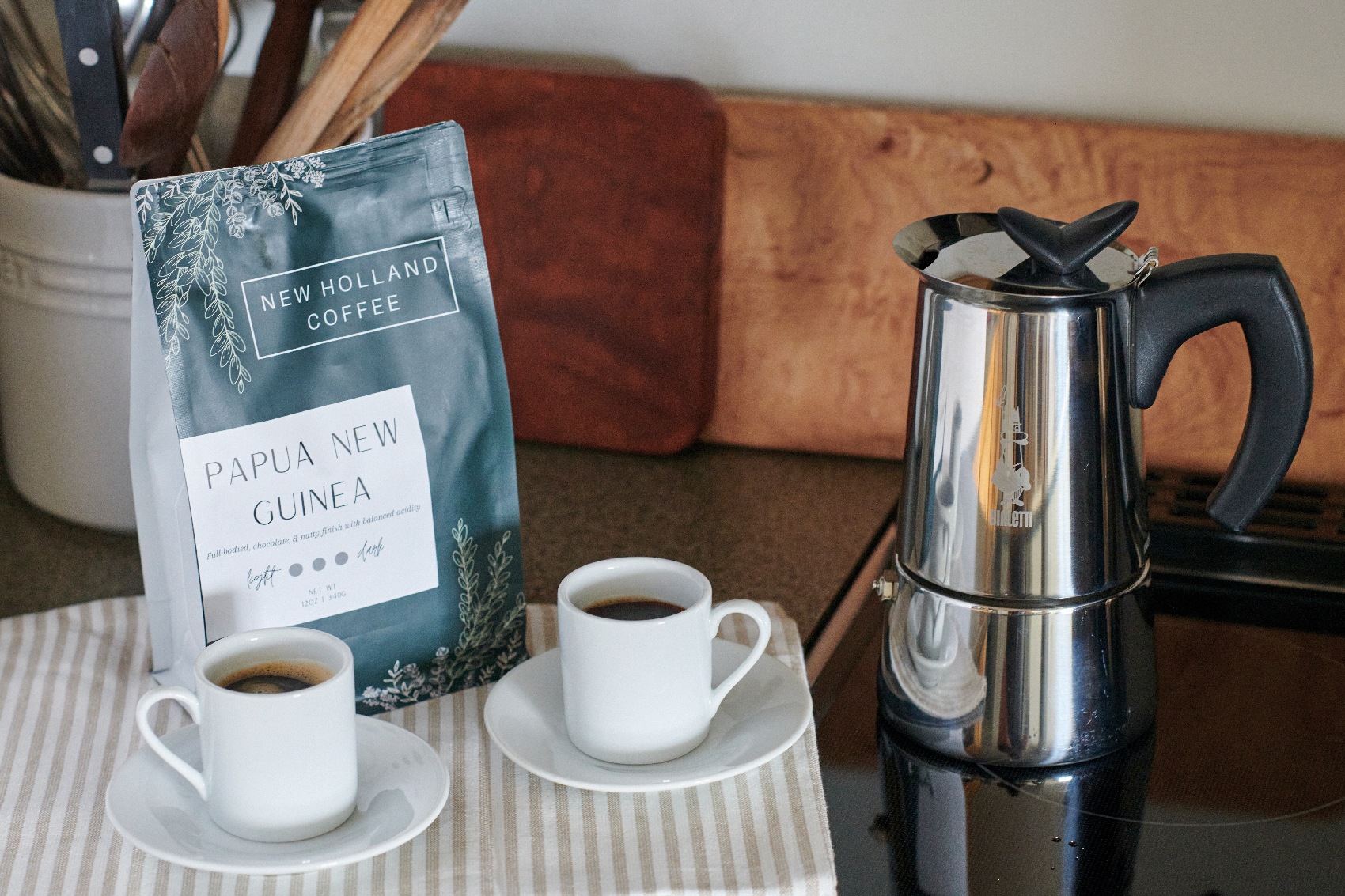
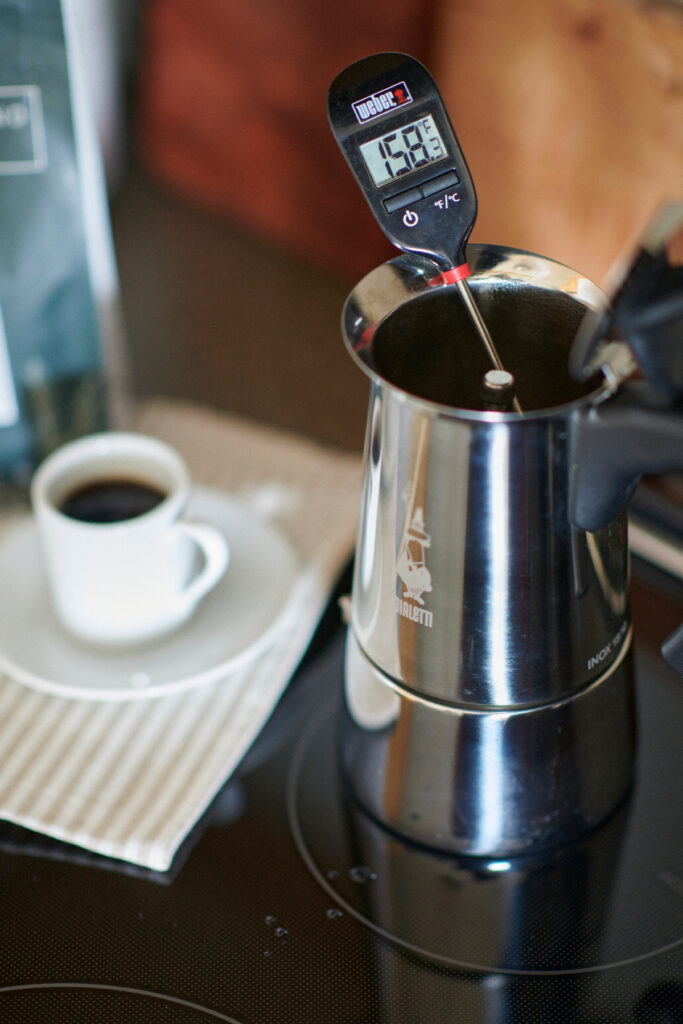
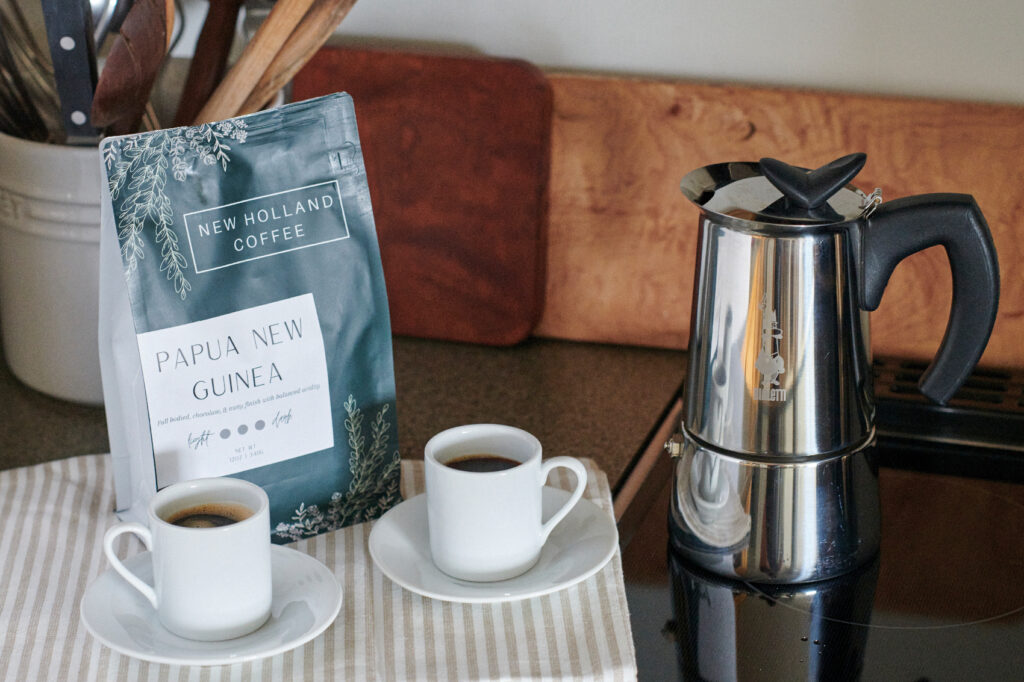
Brewing moka-pot coffee takes two minutes from chilled water to a smooth brew. Starting on the highest heat setting for 60 seconds, then dialing it back to medium with an instant temperature response, there is no sputtering. Every brew now yields the sweetest and fastest moka pot coffee I’ve ever made.
We did discover that adapter plates are available, adding a conduction element to transfer heat on induction cooktops. The plates negate some of the benefits of induction cooking while retaining others.
While we established that our stainless gooseneck kettle is induction-ready, I wasn’t sure about our Bialetti moka pot. Traditionally, moka pots are made of cast aluminum, but I sought out a stainless-steel variant years ago. It passed the magnet test. A heavy-bottom 16-quart stockpot also checked out. Even our digital thermometer worked without interference, which could have gone either way. Now we’re getting somewhere!
Striking Iron
Here’s the best part: cast-iron cookware is compatible. I squarely blame Foodographer for the two (maybe three) dozen cast-iron pans I’ve amassed. Lodge cast-iron skillets were an early favorite for ease of buying, especially smaller pans in multiples. Then I discovered and moved on to the wonderful pans from Butter Pat Skillet, which were cast in nearby Cornwall, Lebanon County (the company is now owned by Yeti).
Lancaster Cast Iron from Conestoga is another well-made favorite. The latest editions feature a helper-handle, and they now offer a gorgeous No. 8 branded lid (and Dutch oven).
Then came vintage Wagner, Favorite Piqua Ware and Lodge pans purchased at thrift shops. As a result of stripping the bare iron with lye (cans of yellow oven cleaner) then “re-seasoning” them, we’ve collected quite a few vintage pans on the cheap. Several immaculate Griswold pans of sizes 3, 4, 5 and 8 were gifted by dear friends and thus have sentimental value. Finally, there are two enameled Lodge Dutch ovens, the kitchen workhorses for making soups, stews, roasts and baked items.
Cast-iron cookware shines brighter on induction than any other cooktop. Induction’s precision and evenness largely overcome cast iron’s key weakness: uneven heating. Its dense nature is ideal for retaining temperature and is slow to change temperatures evenly. The magnetic field of induction heats cast-iron skillets evenly on the bottom and sides, without hot spots from gas flames or electric coils. True for any cookware on induction, once an element is turned off, there’s nominal temperature drift, making iron’s dense nature ideal for the task. In transitioning from a glass-top electric range to induction, habits such as lifting, not dragging, cast iron across the surface are easily learned.
I’ll not condone this (it’s also unnecessary), but it illustrates a point: I’ve read that some folks use a silicone mat under the cookware on induction to keep it from scratching the glass – while heating! The surface gets hot from the cookware, but the takeaway is that cookware is the hottest element, not the cooktop.
Keen Observations
We’ve found that it’s essential to relearn sounds associated with cooking. Induction ranges have a low hum and can sometimes cause our stainless-steel kettle to chatter when set to “High/Boost.” On one occasion, the half-full kettle started to walk off the element; induction is powerful due to its efficiency in transferring energy. As a result, I’ve learned there isn’t time to walk away from the stove if using a higher setting. Avocado oil will sizzle and pop in moments. Listen and learn to trust your ears with new timeframes and cooking sounds.
Safety is also addressed. Once I accidentally turned on an element with nothing atop it, so the surface didn’t get hot. The only clue you’ll hear is a chime to let you know the range doesn’t detect anything magnetic on the element, and that specific element is disabled until reset.
There’s also a diminished risk of burning yourself or starting a fire, although on one occasion my ears told me the quiet element wasn’t operating. Surely, it was too soon to be hot. I checked the kettle with the back of my hand and for several days thereafter, I wore a red badge of folly, reminding me that the thin-walled kettle was indeed hot.
When preheating thinner pans, you’ll need to increase the heat gradually so as not to risk warping the metal. Because It’s a smart stove, we can always check if the stovetop was left on by accident with a mobile device, but that seems less necessary with induction.
Unexpectedly, induction has leveled up our home cooking and reinvigorated my desire to cook. I’m digging deeper into my Junior League cookbook collection, brushing up on technique through watching Julia Child’s TV shows, and reading James Beard’s works. Often the old ways are best, but the new ways sometimes make the old even better.
Overall, induction is remarkably efficient, and takes less time and energy to use. Best of all, it has helped to keep our open-concept kitchen and living areas cooler in the heat of summer.
Tip: Portable induction cooktops are low-investment options to evaluate the technology or add it to your kitchen without changing appliances.
Leave a Reply