
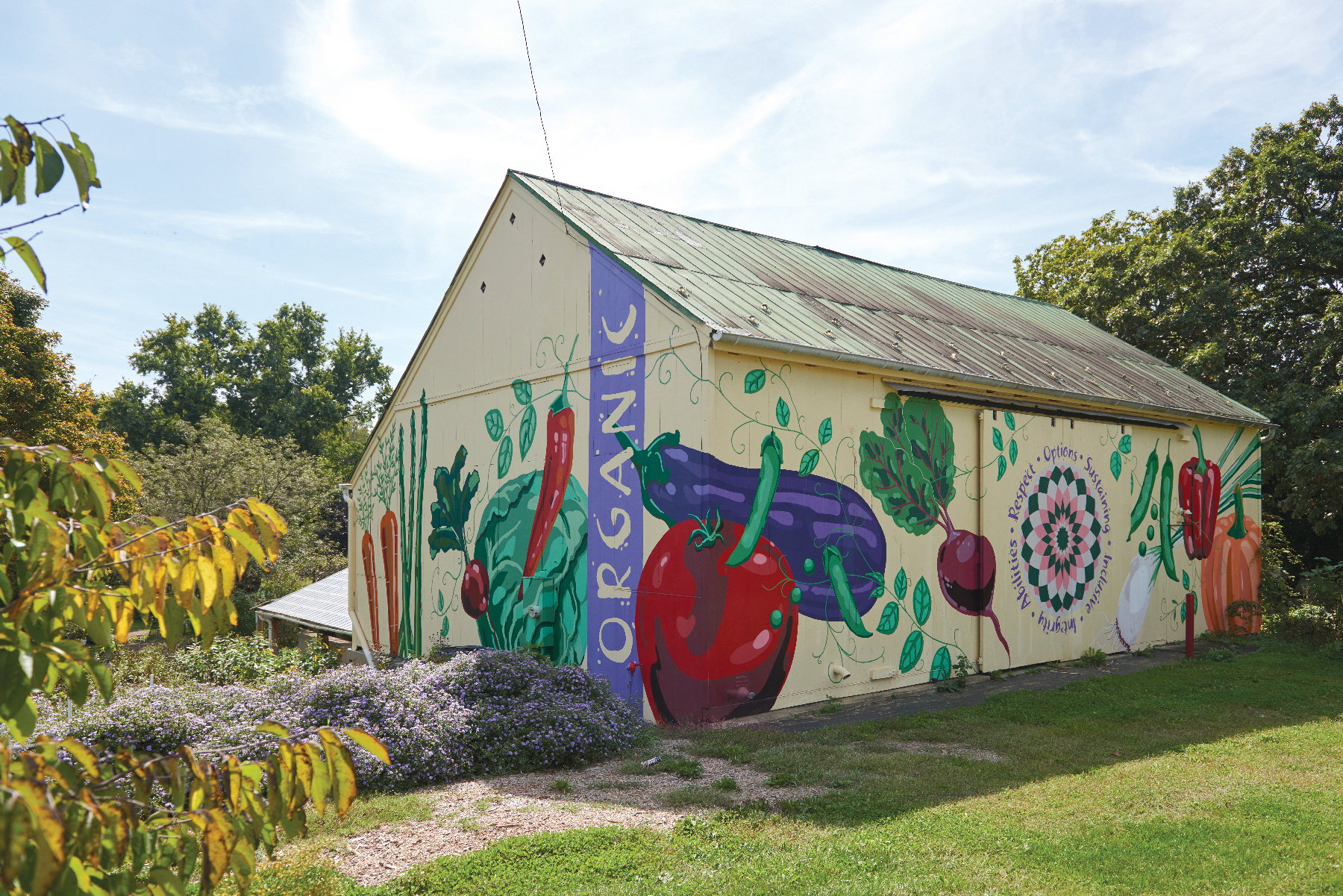
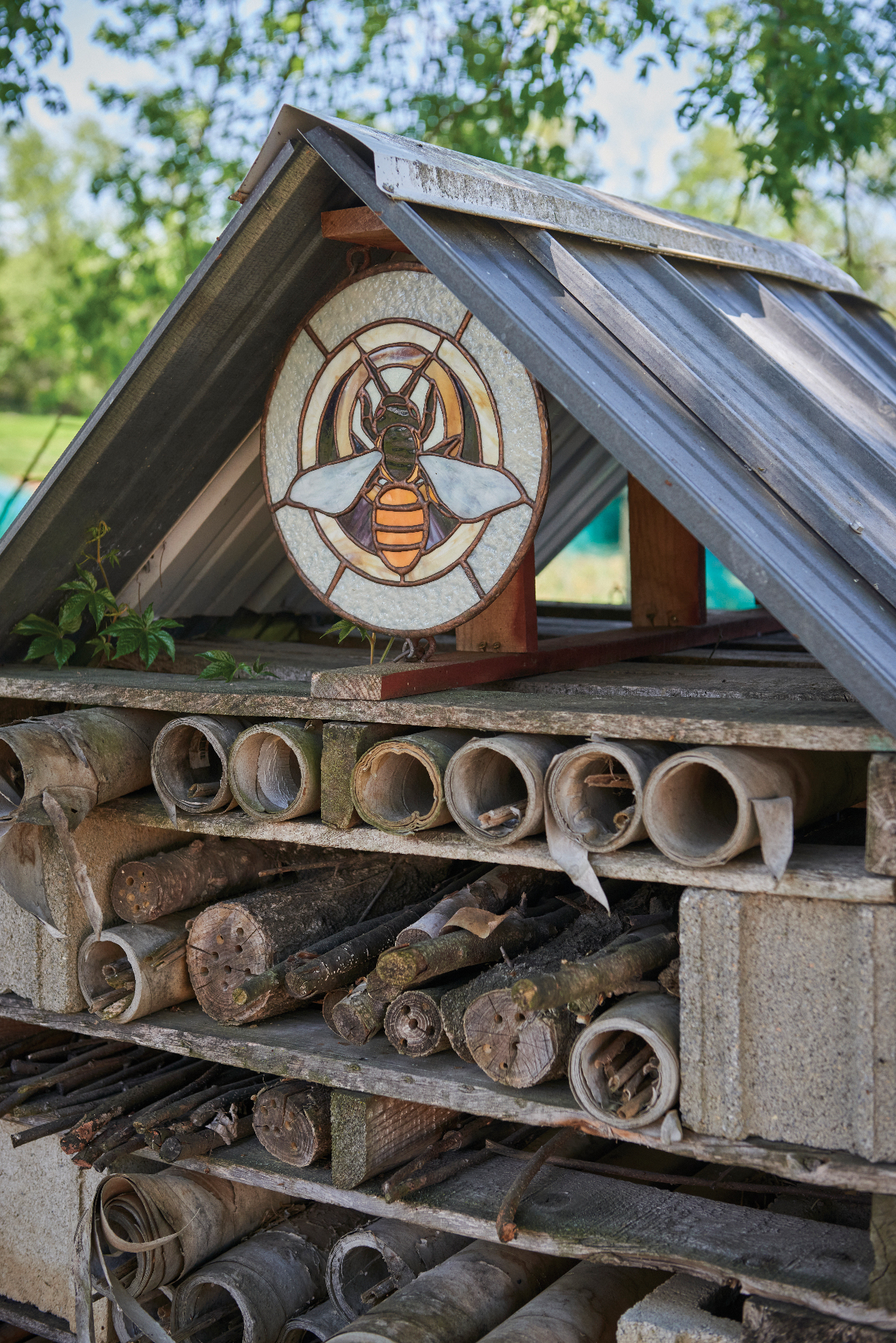
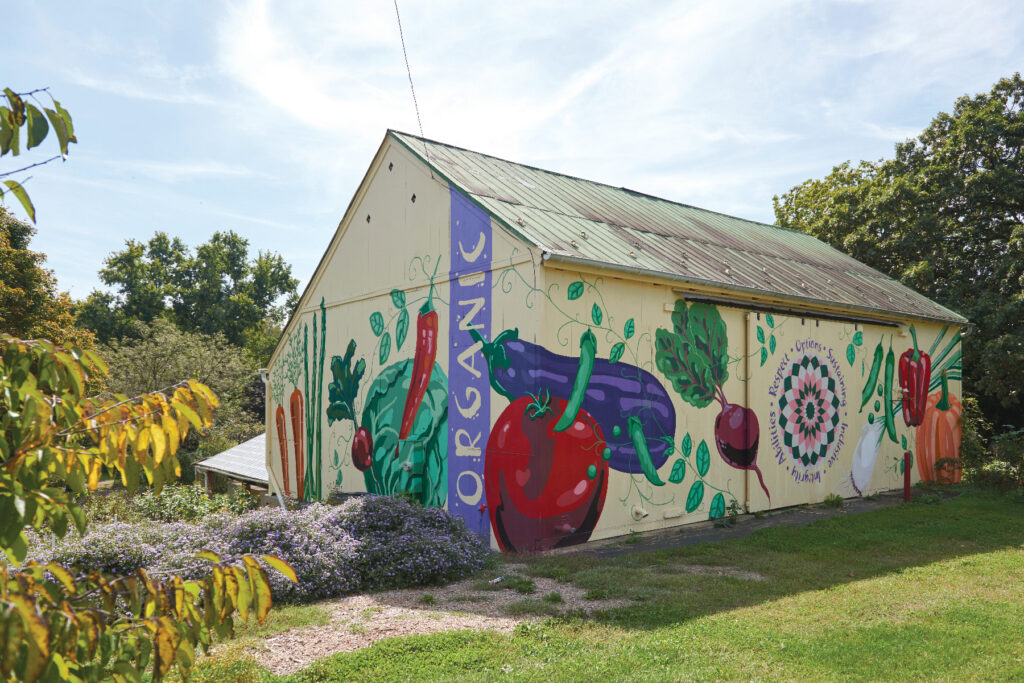
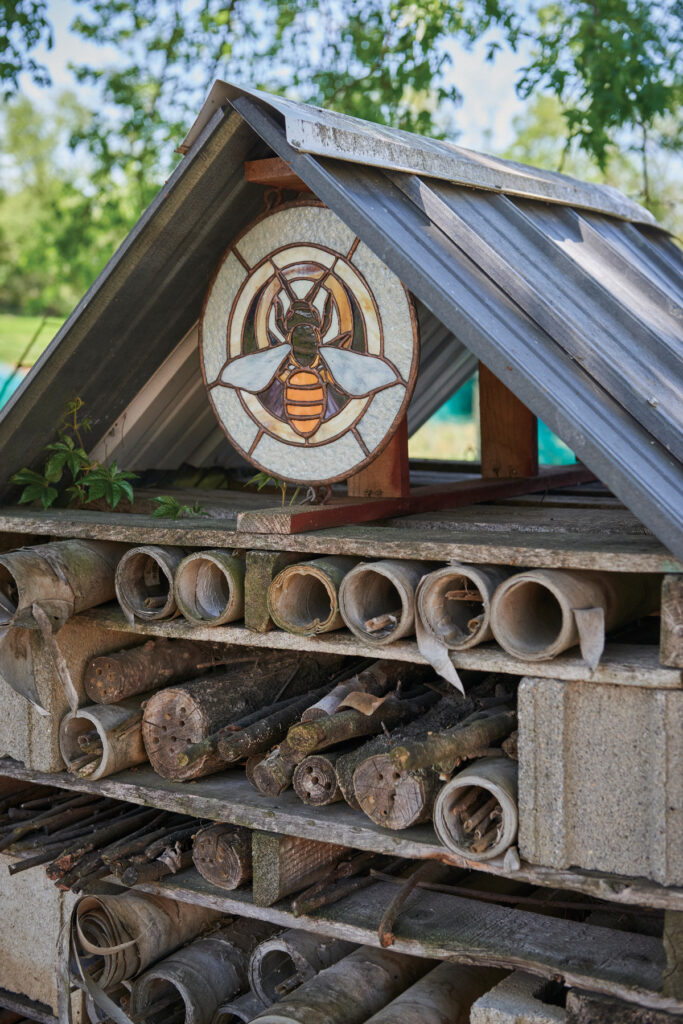
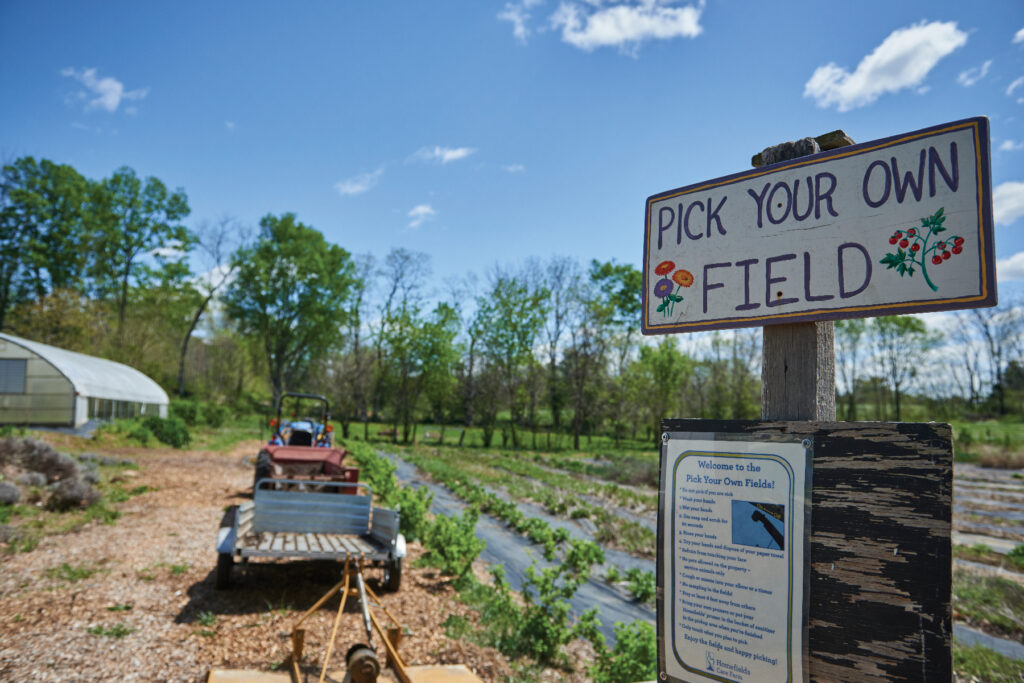
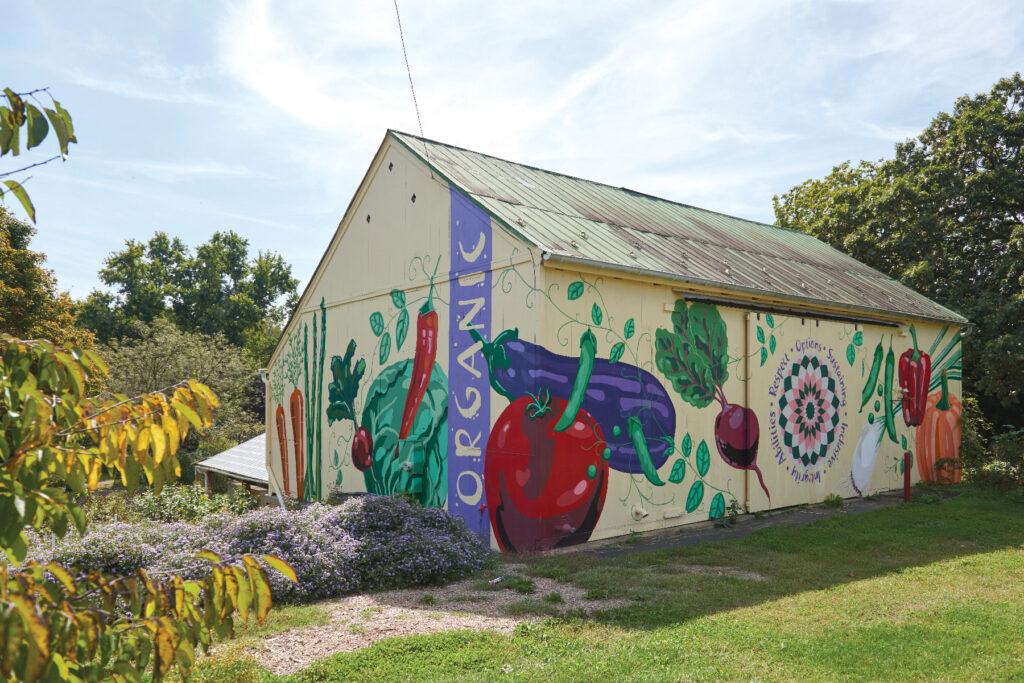
Greeted by a spectacular mural painted on the barn, visitors to Homefields Care Farm in Millersville are soon enveloped by the idyllic spirit of the landscape. Patches of vibrant wildflowers and native plants thrive in every available space among the organic fields, greenhouses and orchards, creating an abundant habitat for bees and other beneficial insects. All creatures great and small are welcome; however, the real beauty is in Homefields’ mission.
Finding A Place to Belong
Homefields offers several layers of programs, with people being at the core of its mission. Founded in 1993, Homefields added residences in 1994 and 1995, and launched the “care farm” concept in 1999 (officially rebranded to Care Farm in 2018).
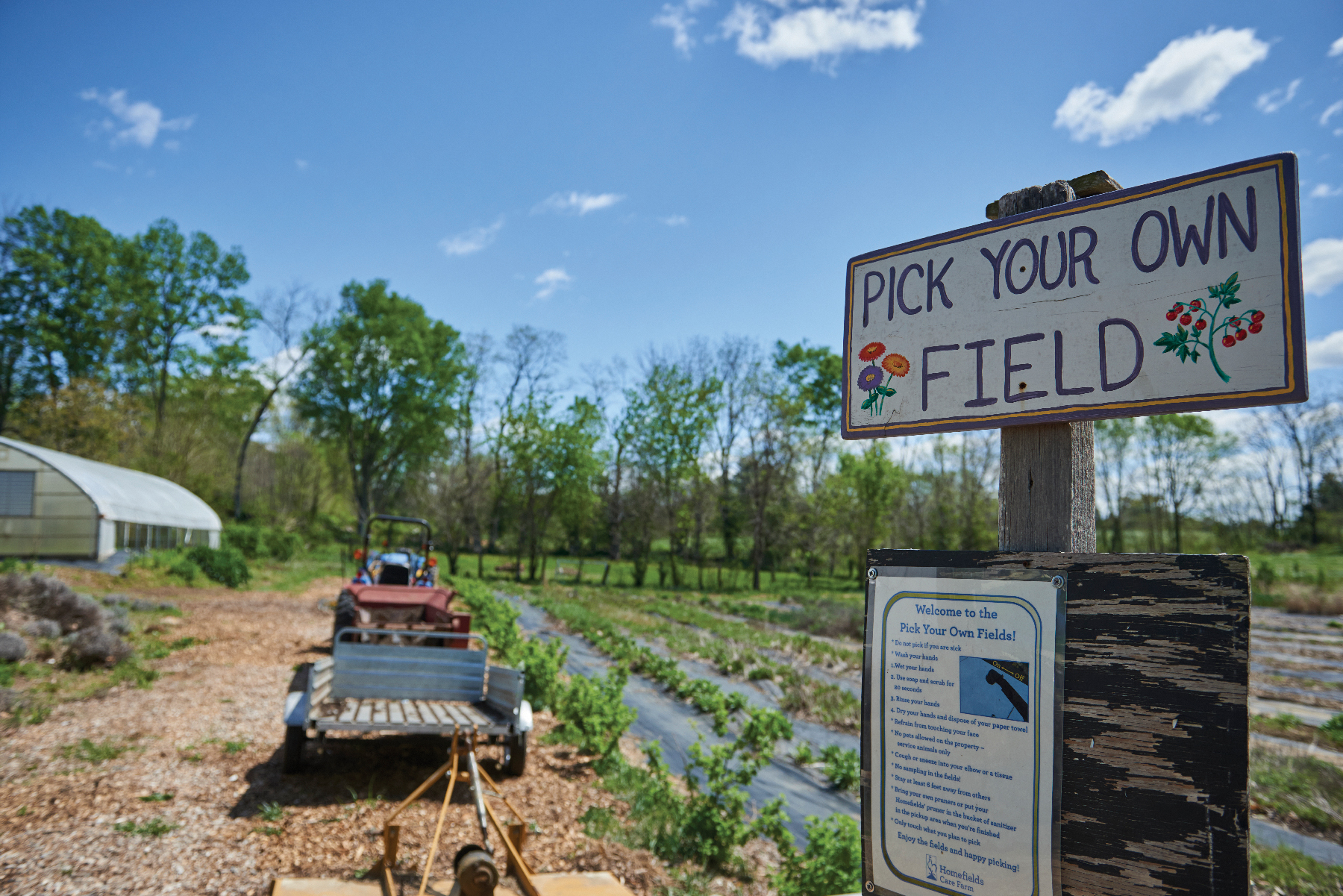
The mission was bolstered when a small group of parents set out to “build a step where none existed.” Together, they understood the harsh reality that support programs end for children with special needs when they reach 21 years of age. At that point, a chasm opens for housing and work opportunities, with few support programs available and no clear path forward.
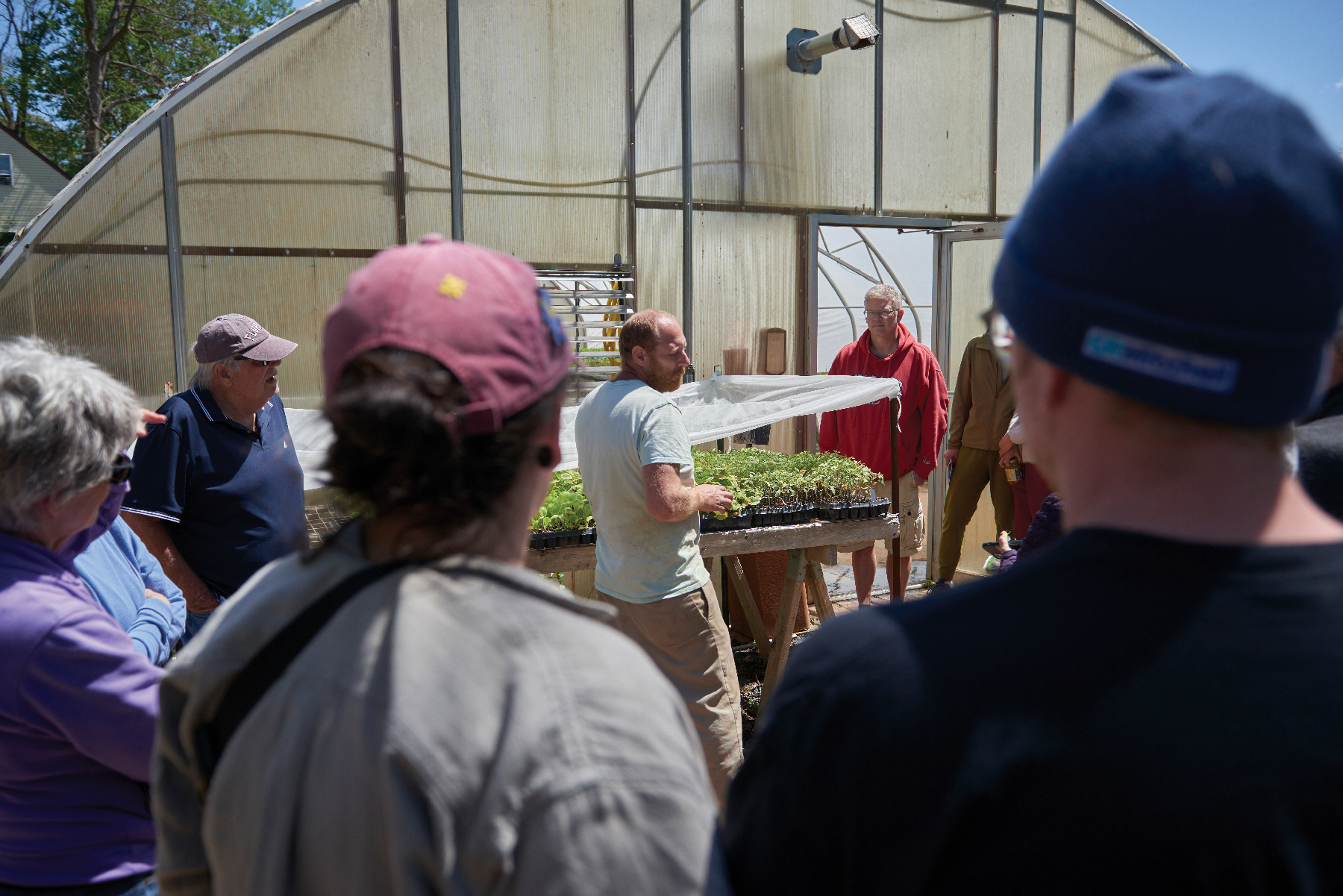
According to Allison Hawthorne, a founding member who is now the executive director, Homefields was the second care farm in Pennsylvania and 35th in the nation at the time it was founded. Along with other founding members, including Jim Determan, Dorothy Lyet, and Tom and Linda Strauss, Allison explains the plan “envisioned homes situated on land that supported a small farming operation with year-round projects. This environment, with many ongoing activities, would stimulate residents and offer them new options.” Five families pulled their resources to purchase eight acres in Millersville in an effort to meet these objectives.
Supporting People Through CSA
Thirty-five years later, Homefields Care Farm offers a Community Supported Agriculture (CSA) that aids in providing workplace and skills-training opportunities for adults and students with special needs. The CSA is at the core of Homefields’ mission: “To nurture meaningful experiences that connect people of all abilities to each other and to the land.” Homefields seeks to meet everyone of any ability, wherever they are.
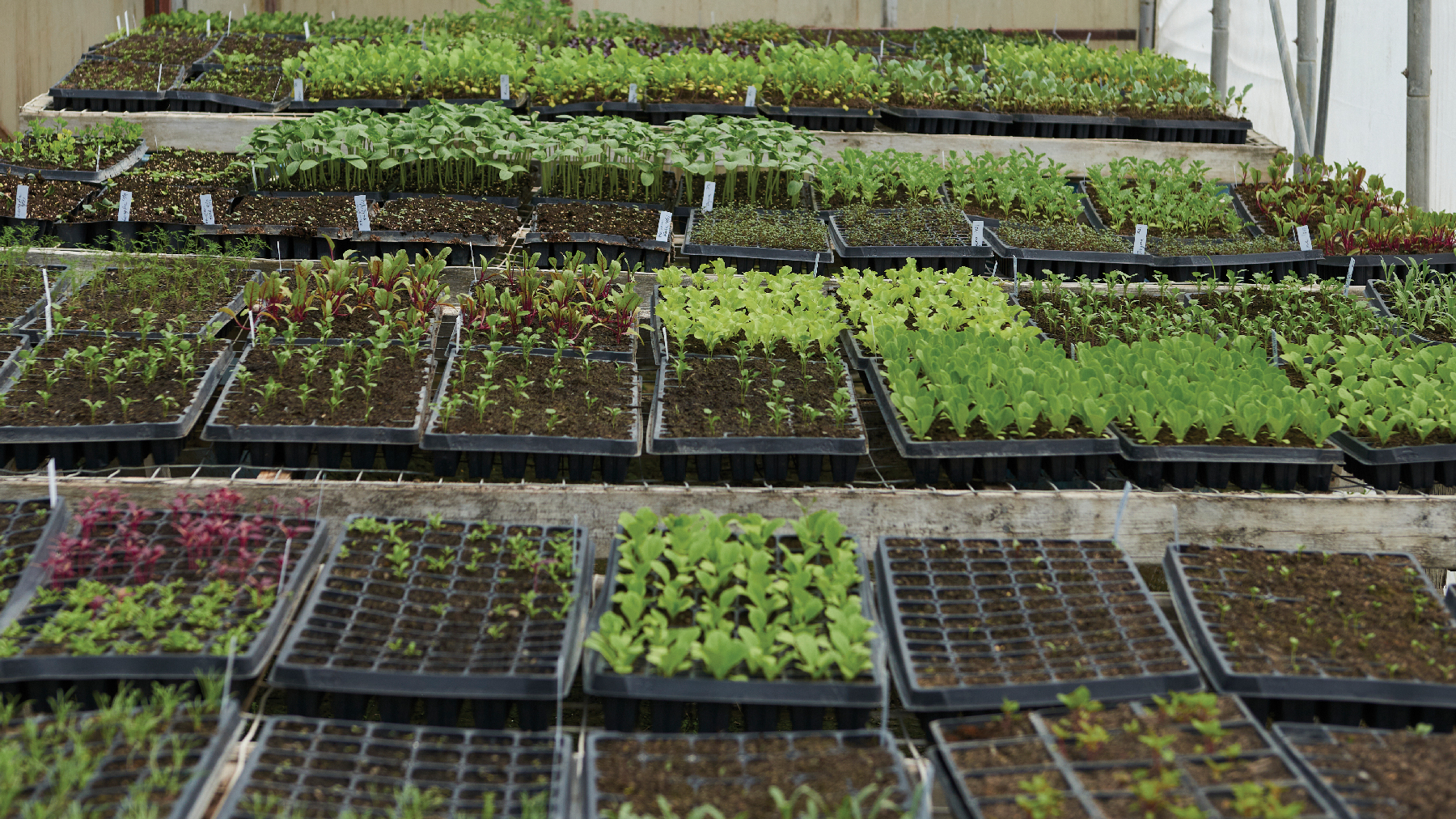
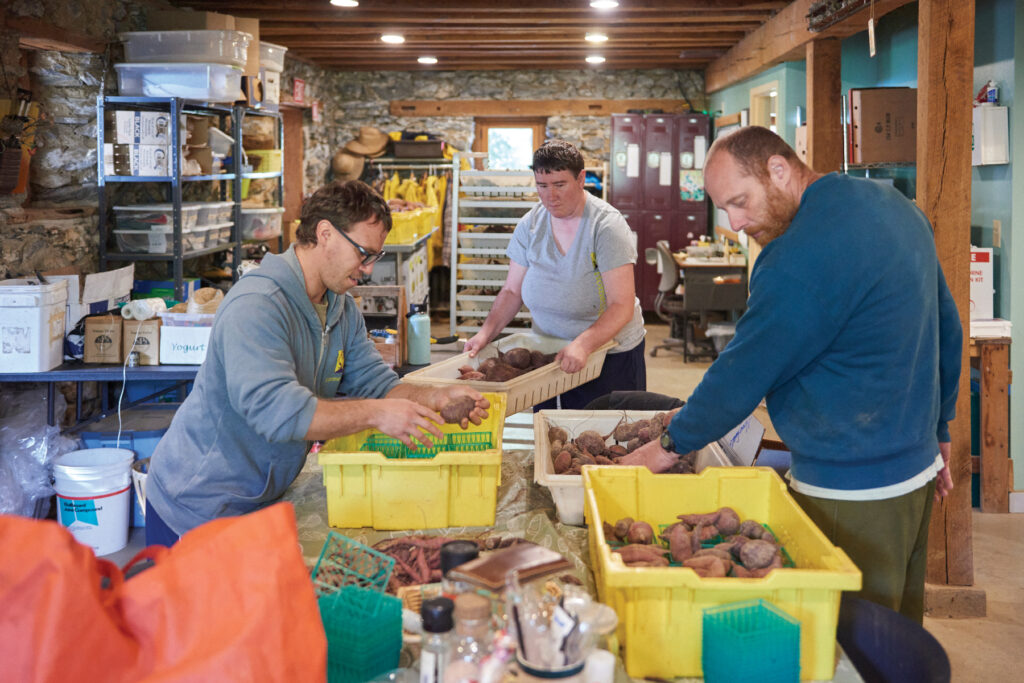
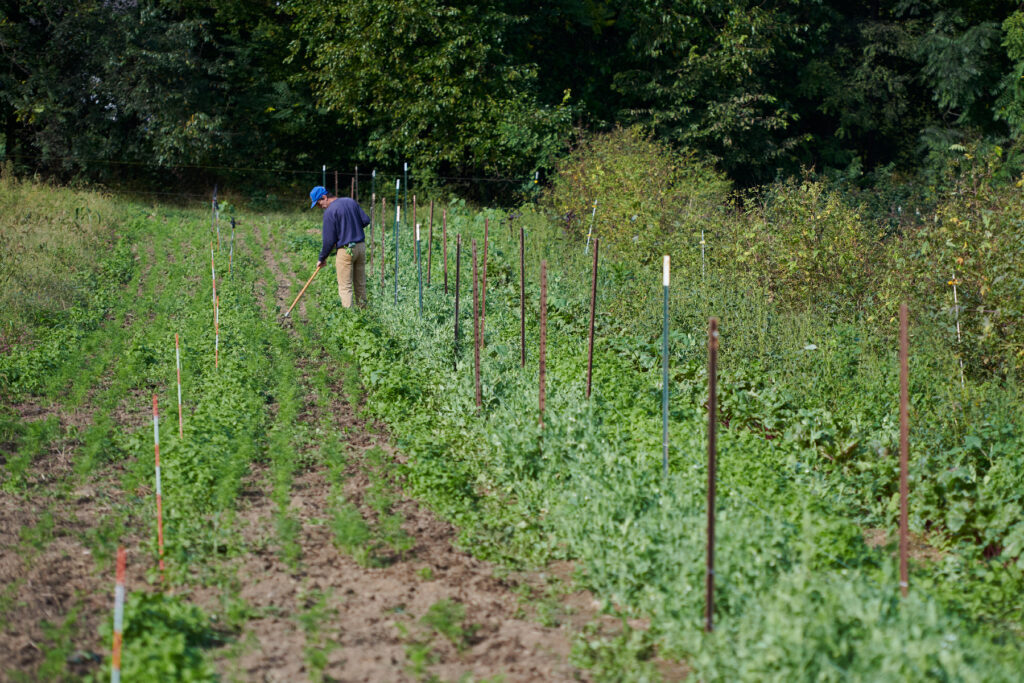
Homefields’ work philosophy is atypical of most job programs for workers with physical or mental disabilities, in that tasks are often menial, repetitive, and one part of a larger process without the gratification of a conclusion. Little to no consideration is given to the interests or unique capabilities of workers. “They’ve been told, ‘Sort this hardware, tear down this box, but they don’t know where they are in that process,” says Allison. “They’ve never seen the whole process. They don’t know the importance of their role.” Homefields creates opportunities for supported farm workers to try out various roles and offers them choices. Because the needs of the farm change on a daily basis, so too do the choices a worker can make. One day, they might opt to weed, another to wash or pack vegetables.
Students and workers experience the immense gratification of planting seeds, cultivating them and watching them grow into food provided to CSA members. “We take it from seed to shareholder,” says Allison. “This is the piece that has kept me going for over 30 years.”
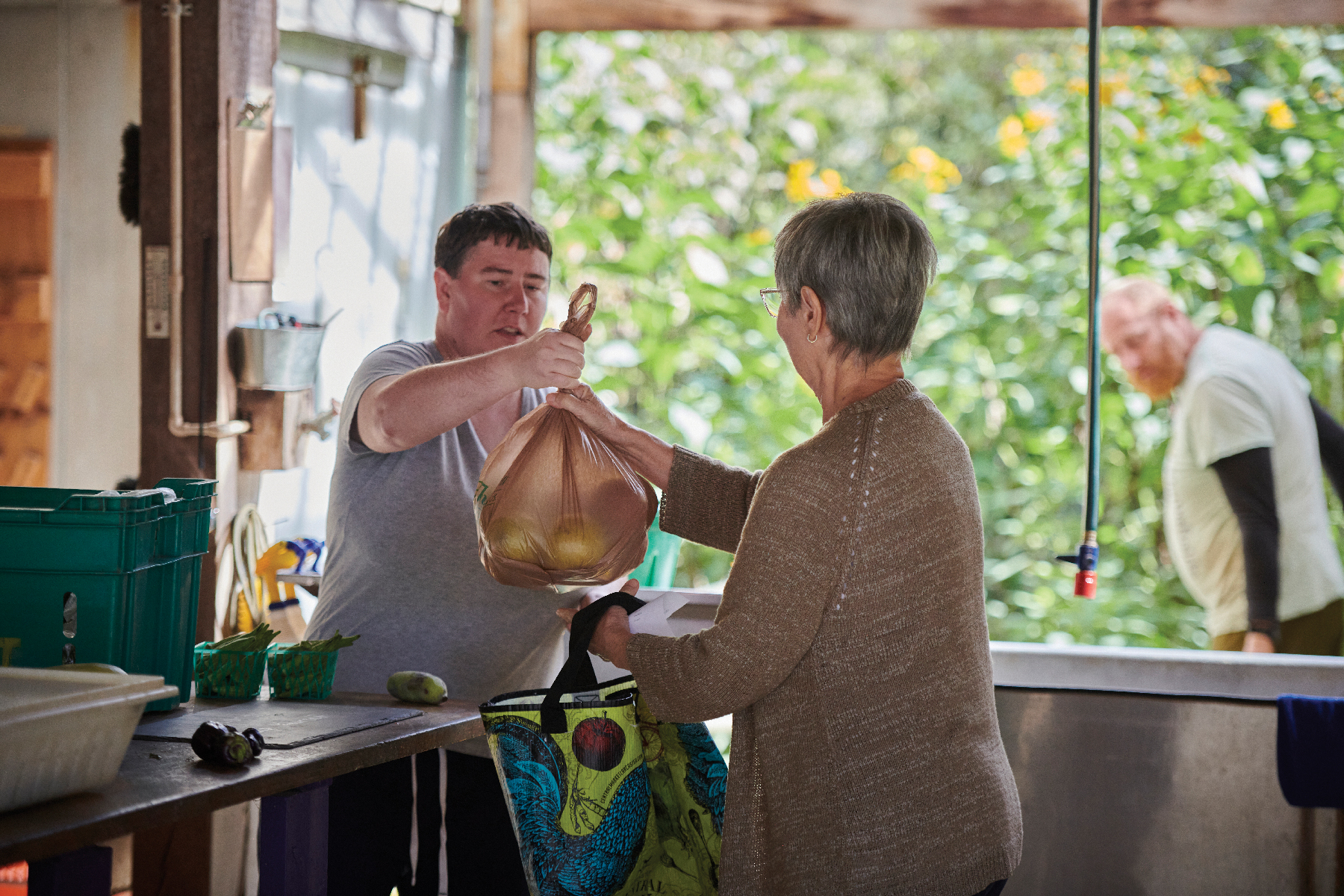
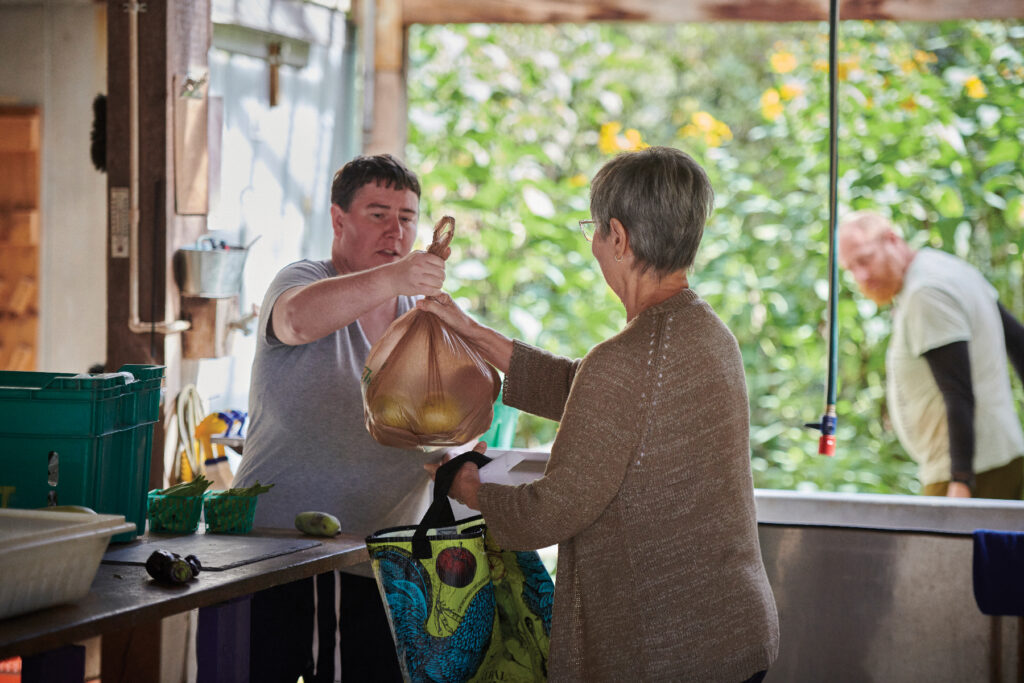
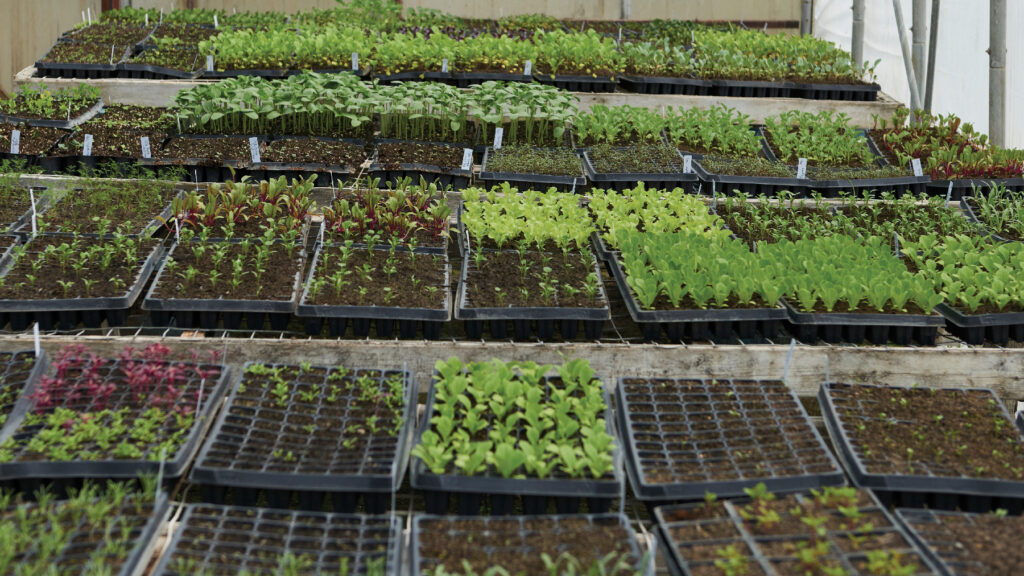
From May through November, Homefields offers a CSA to the public, which provides the majority of the farm’s financial support to its workers, who are given the opportunity to work indoors and out, interact with the community, and be seen and valued. Both agricultural and personal growth begins in early spring, as the team of supported farm workers plants seeds in starter trays. Tending to the crops all summer, they foster and experience growth firsthand. At harvest, workers experience the satisfaction of directly handing the fruits of their labor to CSA members.
These tasks help develop hard and soft skills, building confidence while serving as opportunities for social interactions, continued connection, and enriching their lives holistically in a safe, welcoming environment. “We wouldn’t be here if we were just picking potatoes, we also pick each other up,” says Allison.

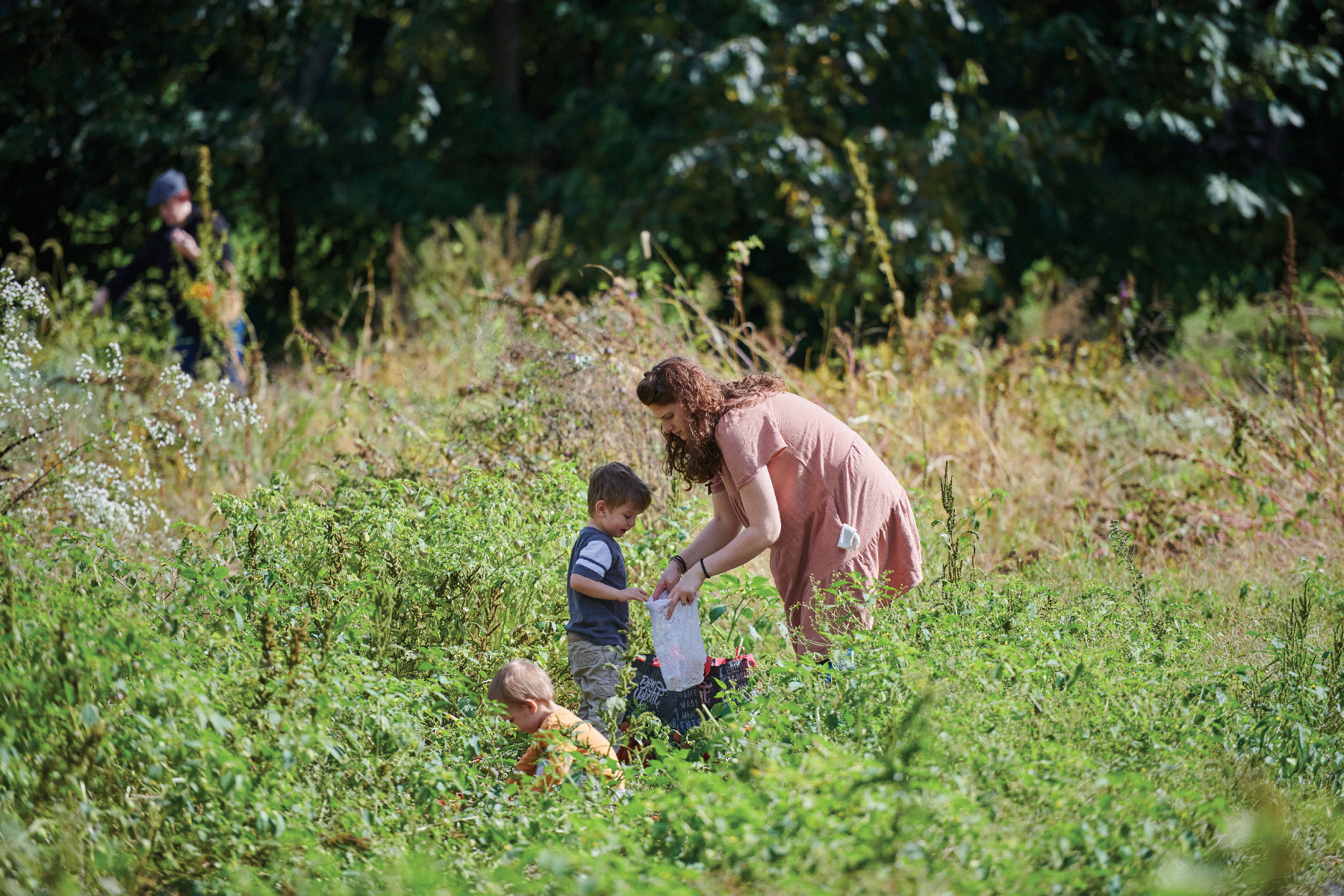
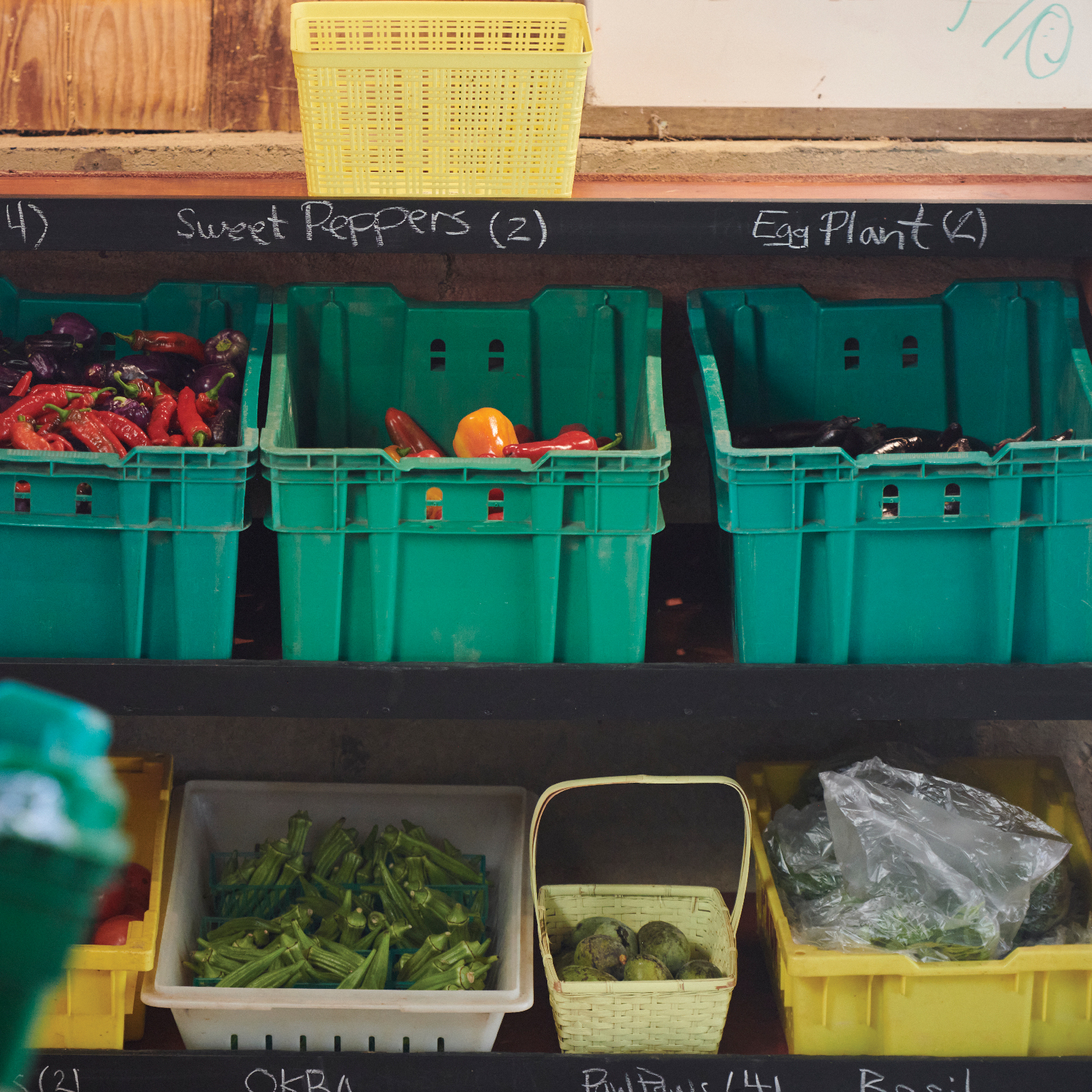
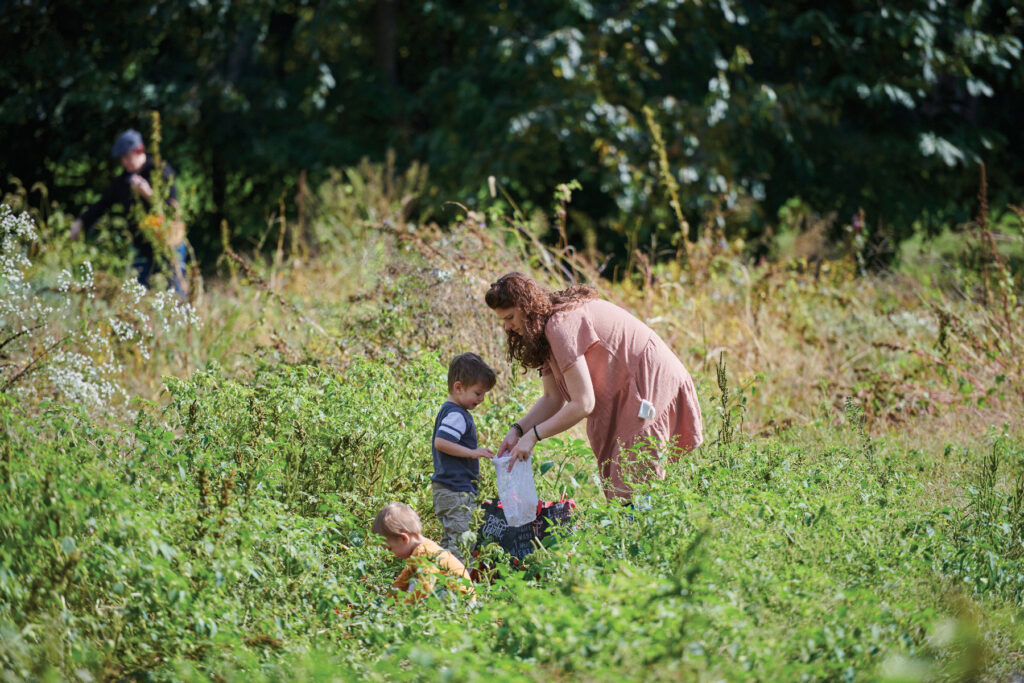
CSA members also experience several levels of benefits, starting with the option to pick up produce weekly or biweekly on Fridays and Saturdays. By bringing reusable bags, members can help reduce the need for single-use plastic. Some members also opt to pick herbs, berries and flowers in the fields directly, creating a dynamic, hands-on activity for children. Visits to the farm are a serene part of the experience, but the opportunity to interact with the supported workers and ask questions is another mutual benefit.
One CSA member visits Homefields biweekly with her young son, traveling all the way from Bucks County. Tony Beers, Homefields farm manager during the 2025 season, was curious as to her reasoning. According to Tony, “She said, ‘I like the way you treat my son.’” The visits allow her son, who has autism, to explore the fields, ask questions, and just be a kid, free of stigma.
Education and volunteer programs also take place at Homefields Care Farm. As part of their learning curriculum, students regularly visit from nearby Millersville University, as well as local high schools, including Penn Manor, Manheim Township and Conestoga Valley. Many of the visiting students, volunteers and workers have never visited a farm. “The setting of agriculture and nature itself is therapeutic,” says Allison.
Programs and workshops are also offered that focus on topics such as garden design, beekeeping and foraging for wild edibles. Yoga and Tai Chi classes are also held.
Rolling Roots Mobile Market
While essential to financing their mission, Homefields CSA makes every effort to resist price increases to ensure access to quality, low-cost produce. In support of that priority, and of their people-focused mission, Homefields has partnered with Community Action Partnership (CAP) of Lancaster to create a mobile market. Dubbed “Rolling Roots,” the program aims to bring fresh and affordable produce to areas in the county that are not easily walkable or lack access to farm-fresh food. On alternating Thursdays, the mobile market brings produce to either the Welsh Mountain area of eastern Lancaster County or to Lancaster City (behind Rachel’s on West Walnut Street) in an effort to curb food insecurity and inequality. Everyone is welcome to buy fresh produce at the Rolling Roots markets.
Additionally, any unsold produce is donated to local food banks after CSA pickups are fulfilled. In 2025, Homefields donated 5,000 pounds of fresh, organic produce to the Lancaster County food bank system, partnering with CAP, Union Community Care and The Loft Community Partnership.
Working Despite the System
As children age out of traditional programs, how well they are served depends heavily on their unique needs and the amount of existing family support available. Existing programs offer home care support from 2:30 p.m. until the next morning, meaning young adults need a place to belong during the day, such as a part-time job. Individuals with special needs might lack the means needed to get to a job or program, depending on the transportation support available.
Oftentimes someone (generally a parent) must remain at home. Typically, the higher income earner maintains their job, while the other parent forfeits their career to provide full-time, supervised care, a well-meaning act that can stress or even impoverish an otherwise capable household.
Not every household can afford the loss of income, and parents of children with special needs are several times more likely to divorce due to the additional financial, care and scheduling pressures. Some families are led by a single parent. As parents age and face personal healthcare challenges, support requirements often shift to adult siblings, transferring the pressures and perpetuating the cycle. Homefields provides two group homes onsite for adults with disabilities, with Community Services Group providing 24 hour staffing.
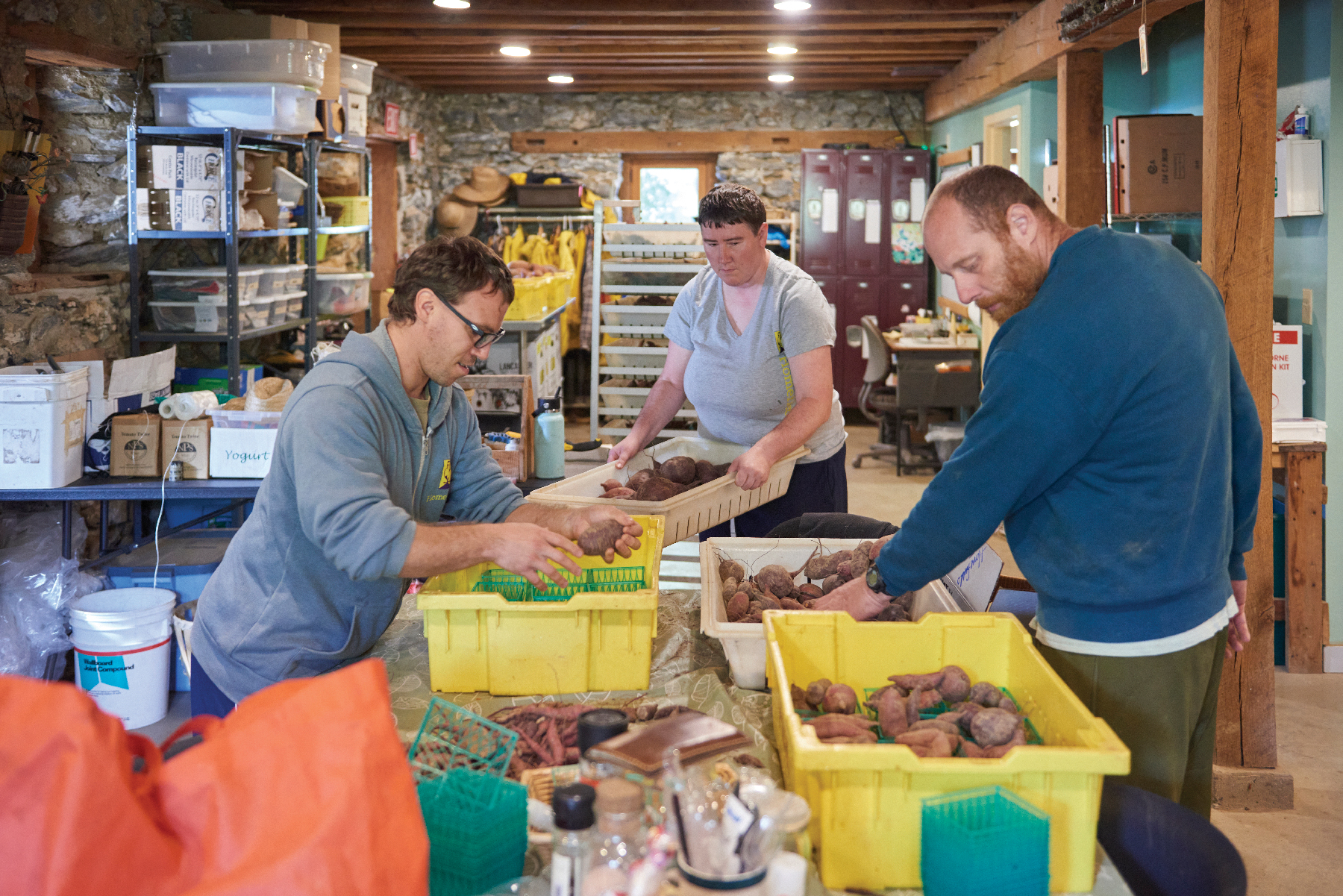
At Homefields, supported farmhands receive a minimum hourly wage of $7.25, regardless of ability. The realities are immensely complicated. Crossing specific income thresholds can trigger a total loss of essential support. Consequently, hours must be restricted for workers with disabilities in order to maintain essential, supervised care support. At the state level, that funding is lacking.
According to the Congressional Budget Office, recent federal cuts to Medicaid in HR1 will likely total $1 trillion over the next decade, claiming to “reduce” state Medicaid costs while effectively eroding access to essential care. Ultimately, in times of crises, support is then found through emergency services such as police and EMTs, resources wholly unsuited to provide care to adults with physical or mental considerations, and potentially with dire costs.
Local Support
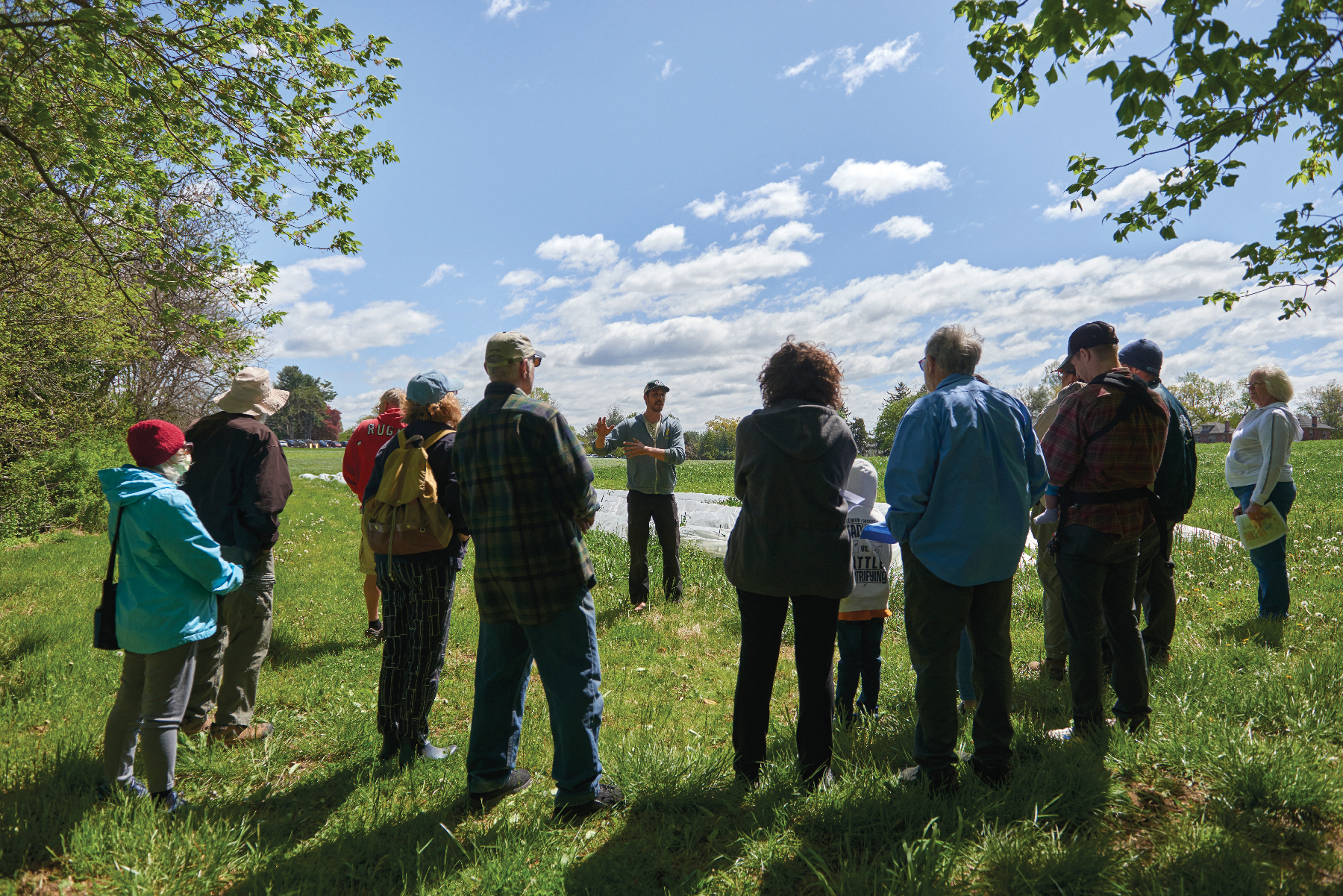
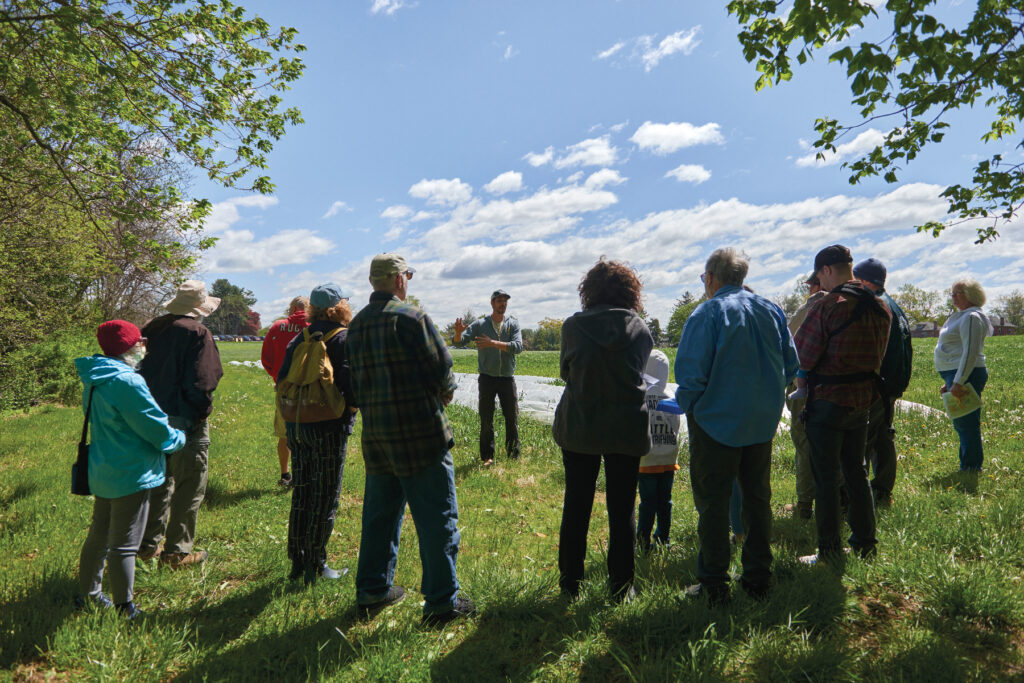
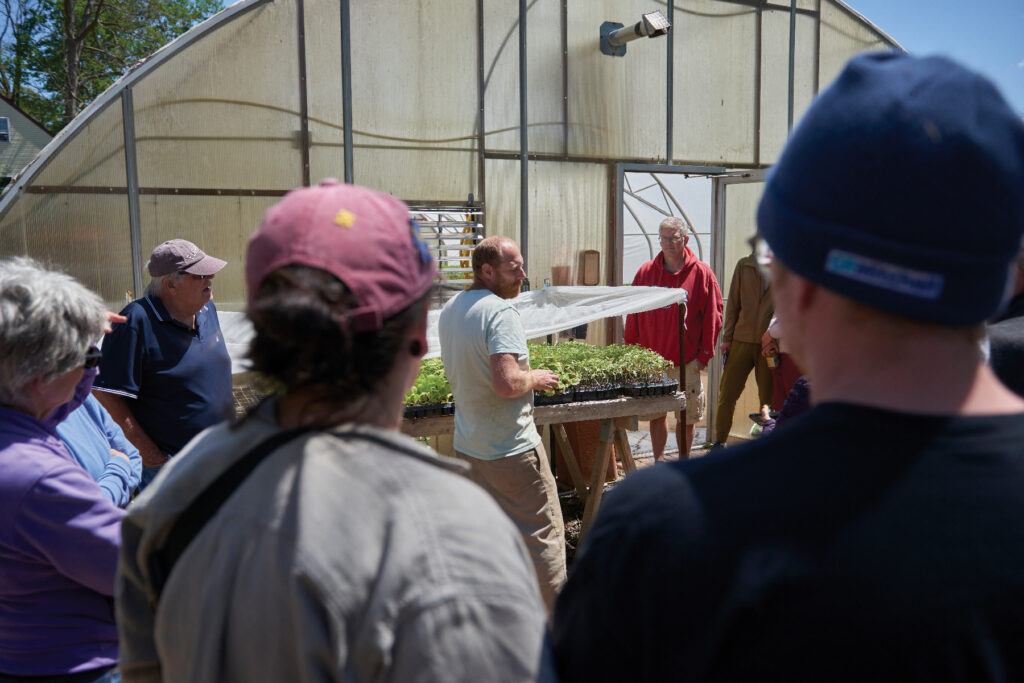
Looking ahead, the possibilities at Homefields are as exciting as they are challenging. Every April, Homefields hosts an Open Farm event (Sunday, April 19, 11 a.m.-3 p.m), welcoming members of the community to visit and experience the farm through guided tours and activities for children. CSA memberships are available for the 2026 season, and volunteers are welcome. A major fundraising event entails a golf tournament that is held in September.
Support is always needed to hire workers and to provide enough tools to host larger volunteer groups. Homefields also hopes to tackle clear, attainable goals by partnering with B-corporations, businesses driven by a mission of sustainability and ethics, often to provide a social benefit beyond a simple motivation for profit. One aspirational goal is to purchase a motorized wheelchair or vehicle capable of transporting a worker over bumpy paths around the farm, with considerations for future maintenance. There are often grant-matching opportunities to multiply donation impact.
There are always ongoing maintenance needs on a farm. Last year, one greenhouse required a replacement electrical panel and wiring, and a tree branch fell on another, where an arborist could have helped avoid the damage.
In 2015, an unexpected cost arose when a neighboring property was listed for sale. The risk of development became a real threat since the tract had a 5% slope towards the organic certified farmland, meaning lawn fertilizers and pest control treatments could potentially impact Homefields’ land. Protecting the organic certification of their crops, Homefields took out a loan to purchase the neighboring land.
The move wasn’t about expansion or even formally preserving farmland, but protecting the harvest that helps fund their mission. The purchase also meant redirecting key resources away from other opportunities. As housing development around Millersville expands, the significance of Homefields’ fresh food access and land resources increases. Developed land will also likely never revert to agricultural use.
Farm After Dark
After several visits to Homefields, I was invited to attend their annual Farm After Dark event. Supported farmhands, their families, friends, farm managers and staff encircled the campfire on lawn chairs and logs, with hot dogs and s’mores available to roast over the coals. Set beneath an atmospheric October sky, glowing luminaries invited visitors to where the warmth and light chased away the crisp nip in autumn air, filled with smoke, chatter and laughter. Topics of conversation ranged from lighthearted to deep and philosophical, geological to technological, touching on travel, wildlife, the formation of mountains and topsoil over millennia, and the latest Apple computers.
It wasn’t a repetitive day of work devoid of reward and opportunity. Neither was it a rigid or awkward nonprofit event. It was a sincere moment of community, a place of inclusion and belonging for everyone coming together. That’s what Homefields aims to create.
Homefields Care Farm CSA is located at 150 Letort Road in Millersville. For more information, visit homefields.org.

Leave a Reply