
Forget pink and green, blue, as in water, is being touted as the way to achieve optimal health and wellness.
Why We Swim, a book written by Bonnie Tsui, refuses to go away. Released in 2020, it continues to attract readers. In it, Tsui explores the reasons why we swim: for pleasure, for exercise, for healing. The book’s pages delve into topics such as what makes Olympic-level swimmers tick, profiles the Baghdad Swim Club (its members swim in the pool at one of Saddam Hussein’s former palaces) and how a fisherman survived for six hours in the frigid water off Iceland.
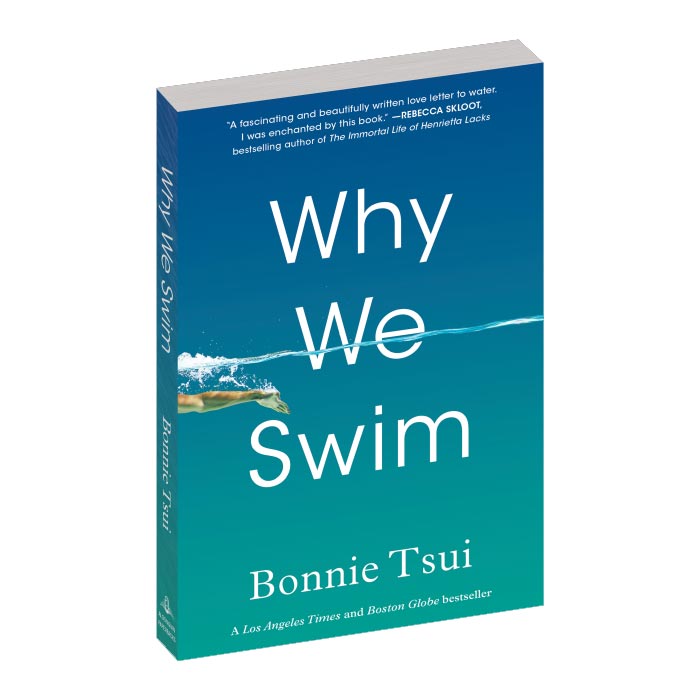
The book’s release coincided with the beginning of the pandemic and the urgency of humankind to find a way to cope. Interestingly, they ultimately found release in anything having to do with nature, specifically water. The phenomenon reached a peak in the summers of 2021 and 2022, with Americans craving anything to do with water. They wanted to swim in in, relax by it, walk along it, add it to their gardens and float atop it via canoes, kayaks, tubes and paddleboards. It was impossible to find swimming lessons for children, as classes filled as soon as they were announced. The demand for rental houses near bodies of water was unprecedented (working from home meant you could do so from anywhere, so why not the beach?).

Coastal-inspired bathroom by Cecilia Interior Design.
We even tried to capture the feeling of being by the water through decorating our homes in a Coastal style that has seemed to grow even more popular with each passing year, as it’s evolved to embrace traditional and modern elements. In the West, for example, Coastal Cowgirl is a thing. As for 2026, trend watchers are touting yet another direction: Sunseeker, which utilizes bold retro colors and furniture designs a la the 1970s. The Coastal craze even influenced how we dressed, with Coastal Grandma becoming the look.
More Than a Trend
Everyone from trend watchers to psychologists explained the phenomenon as being our way of coping, as water possesses the innate ability to keep humans cool, calm and collected. Tsui finds it kind of ironic that humans are so drawn to water. After all, swimming does not come natural to us; we need to be taught. But, then again, it’s an entirely natural environment, as we spent nine months suspended in fluidity. As President Kennedy told the crews of the America’s Cup in 1962, “I really don’t know why it is that all of us are so committed to the sea, except I think it’s because in addition to the fact that the sea changes, and the light changes, and ships change, it’s because we all came from the sea. And it is an interesting biological fact that all of us have in our veins the exact same percentage of salt in our blood that exists in the ocean, and, therefore, we have salt in our blood, in our sweat, in our tears. We are tied to the ocean. And when we go back to the sea, whether it is to sail or to watch it, we are going back from whence we came.”
A Cause for Study
The power of water is now being studied by researchers around the world. It’s even been given a name … Blue Health. Water is being touted for the physical, psychological and even social attributes it provides. Just the other day, I heard on a podcast that people who live by the water live an average of seven years longer than do other people who don’t. A study by Harvard University revealed that those who swam in their youth are much healthier in old age than are their non-swimming peers.
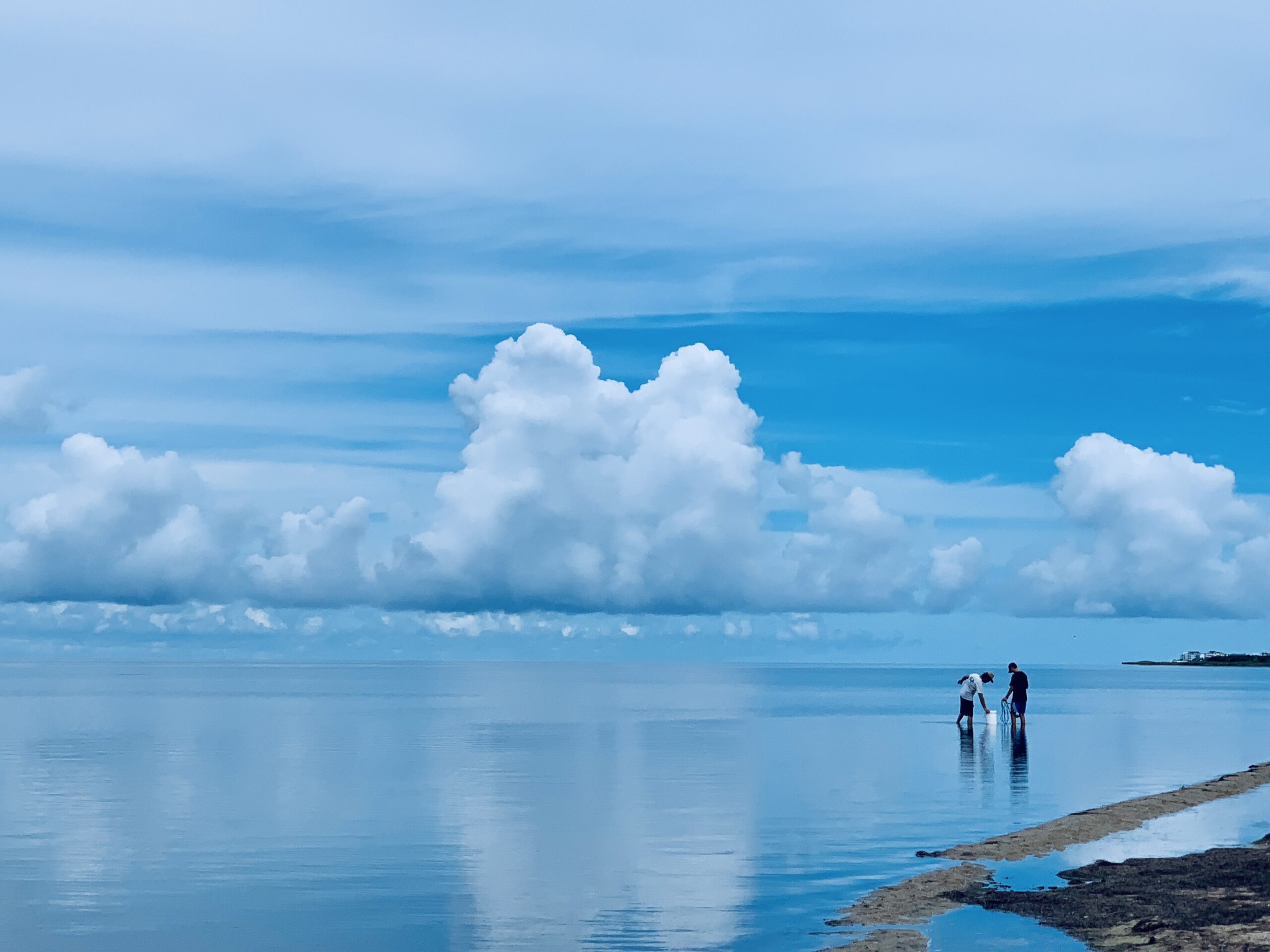
Blue skies over the Pamlico Sound (OBX).
From a physical perspective, water allows you to exercise every major muscle group. It’s good for your cardiovascular system. It helps with flexibility. And, you don’t have to be an Olympic-level swimmer to take advantage of the benefits of water. Water aerobics have evolved to include classes such as water walking/running, cycling, H2O yoga and Pilates, balance and agility (using paddleboards), Zumba, kick boxing and the list keeps growing. Masters swimming teams are plentiful. A study published by the International Journal of Environmental Research and Public Health (2015) found that people tend to exercise longer whether they are in the water or near it.
Cold plunges have also become popular. These quick “dips” in icy water garnered attention when videos of NFL and NBA players utilizing them began popping up on social media. Cold plunges are said to help muscles recover faster, reduce inflammation, improve circulation and sleep, increase metabolism, support the immune system and enhance one’s mood.
Water is also good for our mental health. Its very existence is comforting, as you can feel it and be supported by it, hence the popularity of float therapy. Water possesses the ability to lift our spirits, boost happiness, calm us down and relax us. Better sleep is another benefit. You can even take your frustrations out on water.
As for social positives, classes provide camaraderie while vacations to favorite beach destinations bring family and friends together. Swimming lessons for very young children involve parents, hence they also serve as an exercise in bonding.
Water’s positive effect on the environment has been given the name “therapeutic landscaping.” Water gardening is relaxing. The sound of water transforms a patio or deck into a getaway. In urban areas, water is being utilized to soften sounds associated with traffic, etc. Its ability to improve air quality is also being explored. Blue Spaces (i.e. Coastal styling) have even moved into corporate and commercial buildings, where shades of blue have been found to not only relieve stress but improve productivity.
Yet another book explored the power water possesses during the pandemic. Blue Spaces: How and Why Water Can Make You Feel Better (2021), was written by Dr. Catherine Kelly, who lived along the coast in Mayo, Ireland for seven years, and swam in the ocean almost daily. “I got in the sea, and it got in me,” she told a reporter for The Washington Post.
Swimming Lessons with Michael Phelps
In August, the Today show’s Craig Melvin visited the Baltimore Ravens’ new training facility (Under Armor Performance Center) at Loyola University to cover a story about the importance of being able to swim. The center is home to a swimming pool the team uses for rehab and recovery purposes. The team’s Marlon Humphrey noticed some of his teammates were shying away from using the pool. As it turned out, one in three Ravens players did not know how to swim.
https://youtube.com/shorts/CAKPQ9m-xn8?si=6MuTSUb1TK-D7_9k
Michael Phelps took on the challenge of providing members of the Baltimore Ravens with swimming lessons.
The cornerback was determined to remedy the situation. He knew exactly who to contact: the Ravens’ ultimate fan, Olympic swimmer, Michael Phelps. Humphrey and a few teammates filmed a video inviting Phelps to visit his hometown of Baltimore and conduct swimming lessons for the team. Figuring it would attract the attention of everyone except Phelps, Humphrey was happy that he and his teammates could at least encourage their fans to get swimming lessons for their children. To Humphrey’s surprise, the Olympian had indeed seen the video and was excited to participate.
Turns out, Phelps had an ulterior motive. He figured working with the Ravens would generate attention for his Michael Phelps Foundation, which promotes the need for children (and adults) to learn to swim.
Two weeks later, in mid-August, Phelps was in Baltimore, putting the Ravens through their paces in the pool and delivering a pre-season motivational speech, as well. He admitted to Melvin that when he was a child learning to swim, he feared putting his face in the water, so he is familiar with being uncomfortable in the water. While in Baltimore, he also worked with children from the Boys and Girls Club who were invited to attend a special session at the facility. The Ravens thanked Phelps for his appearance by making a sizeable donation to his foundation.
The Sky and Ocean are Carolina Blue
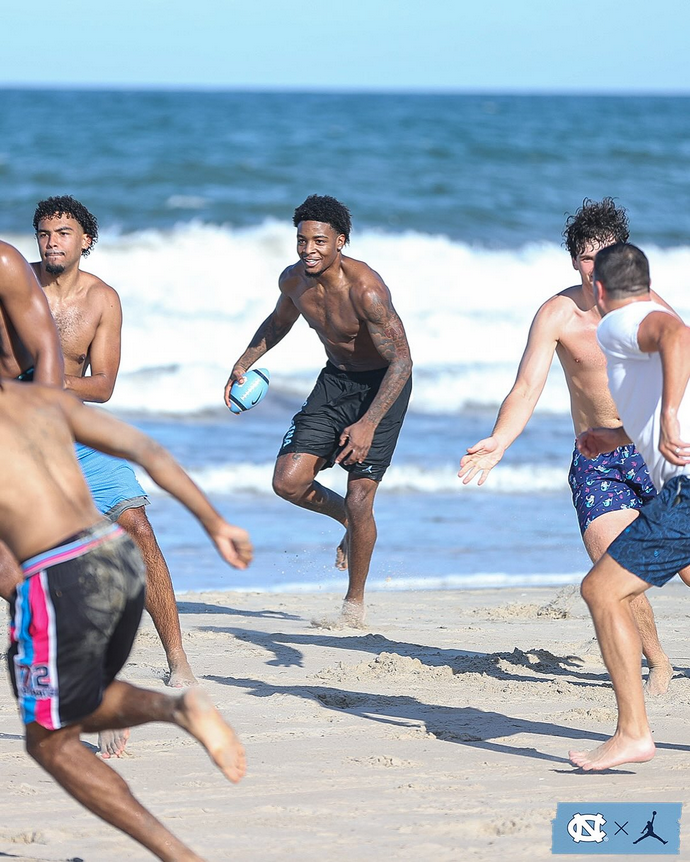
The University of North Carolina’s men’s basketball team kicked off the season with a bonding session on the Outer Banks. UNC Facebook photo
How do you get a basketball team to ease into pre-season conditioning but make it look like fun and games? If you’re the University of North Carolina Tar Heels, you leave the basketballs behind at the Dean Dome and head for the Outer Banks and an oceanfront house. While the annual getaway is regarded as a bonding session that welcomes new players into the fold ahead of the upcoming season, players are kept busy splashing in the pool and bobbing in the ocean. They also take advantage of the beach to play football, run and do yoga. The team also took part in an annual meet-and-greet, autograph-signing event at a youth center in Kill Devil Hills.
Diving In
While Labor Day signals the end of the outdoor pool season, there’s no reason to despair! There are still plenty of ways to get your water fix in. As for the ocean, fall is a beautiful time to schedule a getaway. The crowds are gone, rental and hotel rates are lower and there are no wait times at the restaurants. Best of all, you’ll have the beach to yourself. Water temps from Virginia south stay warm through October.
Fall is also a great time to hike or bike our rail trails and other natural areas. The river views along the Enola Low Grade Rail Trail and Northwest Lancaster County River Trail are spectacular. Other destinations that feature water include Muddy Run Recreation Area, Susquehannock State Park and Speedwell Forge. Kayaking is another way to explore the waterways.
As for water-based classes, you’re in luck there, too. Lancaster County’s recreation and fitness centers offer a slate of classes (sometimes seven days a week). Designated lanes for lap swimming are also available around the clock.

Get outdoors this fall and explore the trails along the Susquehanna River.
As you might guess, I’m a water rat. When I think of my childhood, my mind always travels to being a member of swim teams. Of all the trophies, ribbons and medals I won, I only kept one, that being the gold medal for the Girls 12 and Under relay that my Brookside Swim Club teammates and I won in 1964 at the first City-County Championships. We went undefeated all summer. It was our first lesson in dealing with stress, as everyone wanted to beat us. As an adult, swimming laps and taking aerobics classes helped me to recover from a bad bout with Covid. I’ve always considered being in the water to be the ultimate stress reliever.
Earlier this summer, my son and I went to Folly Beach in Charleston, South Carolina. While the water was rough, the waves were setting up a ways off the beach, so getting in was not a problem. We bobbed around for two hours or so. The next day, we were on Topsail Island in North Carolina. The water was really rough, with the waves breaking close in. Charlie and his wife, Jen, got in but I stood for like an hour waiting for a break. It was the first time in my life that I feared the water. “I guess I’m officially an old lady,” I thought to myself.
A few days later, I read online that more than 200 people had to be fished out of the ocean from New Jersey to Georgia over that weekend because of rough surf and rip currents. “Yeah! I’m not an old lady after all,” I said, telling myself that common sense had prevailed.


Leave a Reply