

Lancaster has built a testament to two of its greatest citizens, a space to explore the ideals of freedom, and a fortress for the history of human responsibility.
At long last, the Thaddeus Stevens & Lydia Hamilton Smith Center for History and Democracy will celebrate its grand opening on May 1.
In May 2024, Robin Sarratt stood before community leaders and philanthropists, scholars of history and the curious, educators and politicians. The now-president and CEO of LancasterHistory pulled inspiration from Martin Luther King Jr. for the groundbreaking ceremony of the Thaddeus Stevens & Lydia Hamilton Smith Center for History and Democracy. “It’s always the right time to do the right thing,” she said.


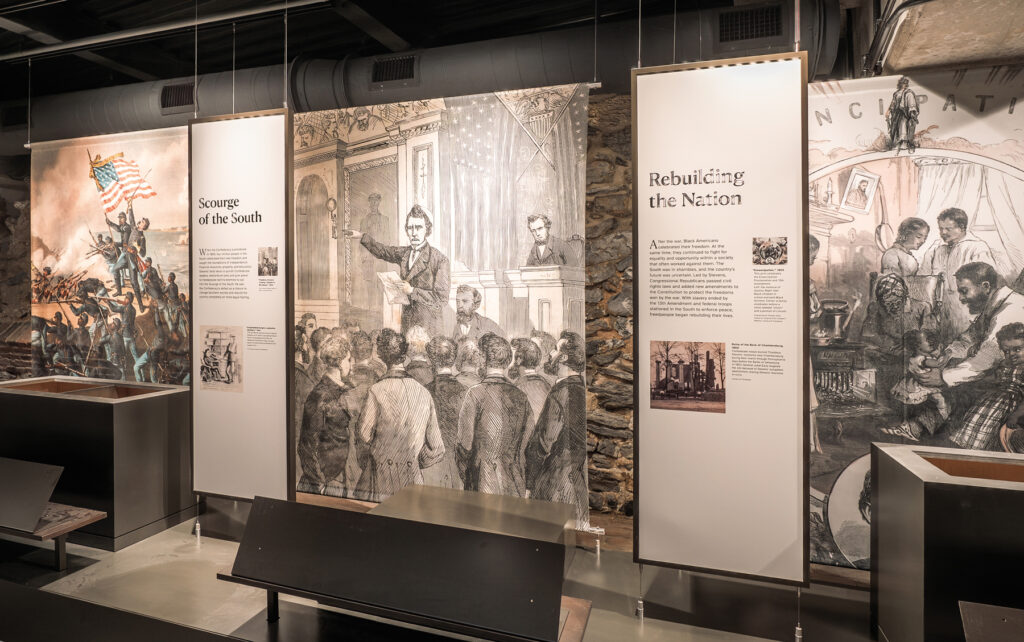
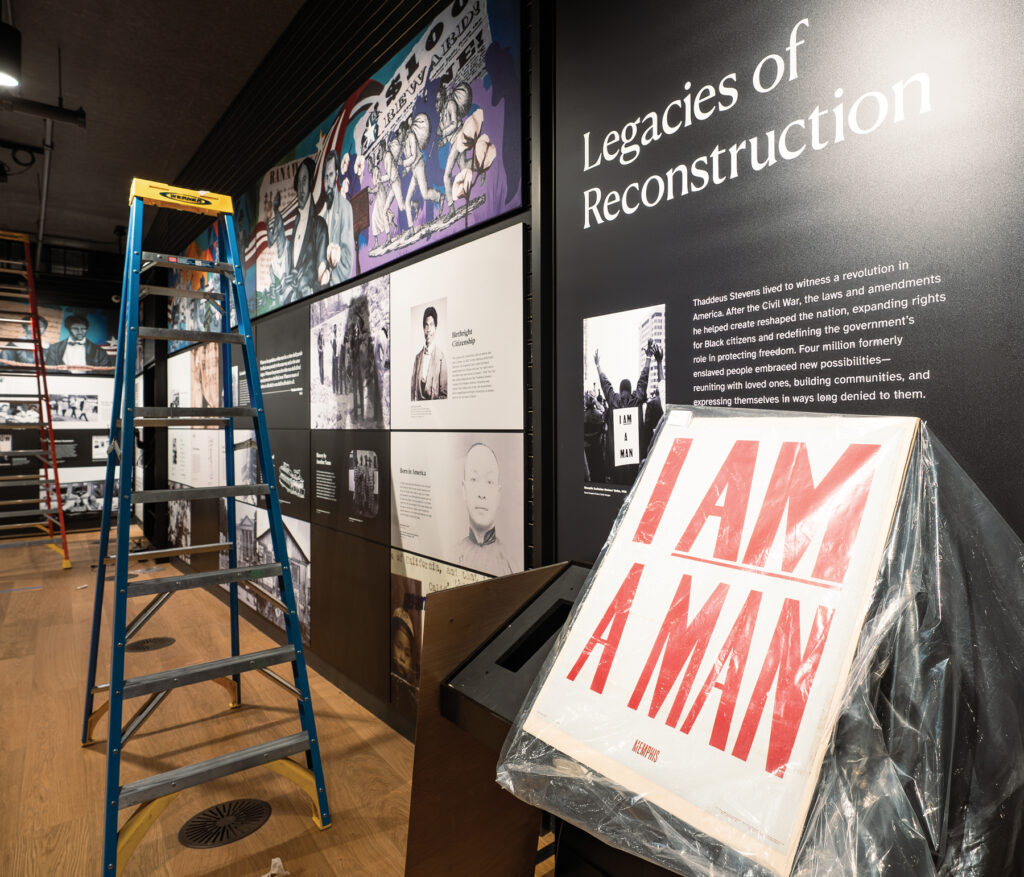
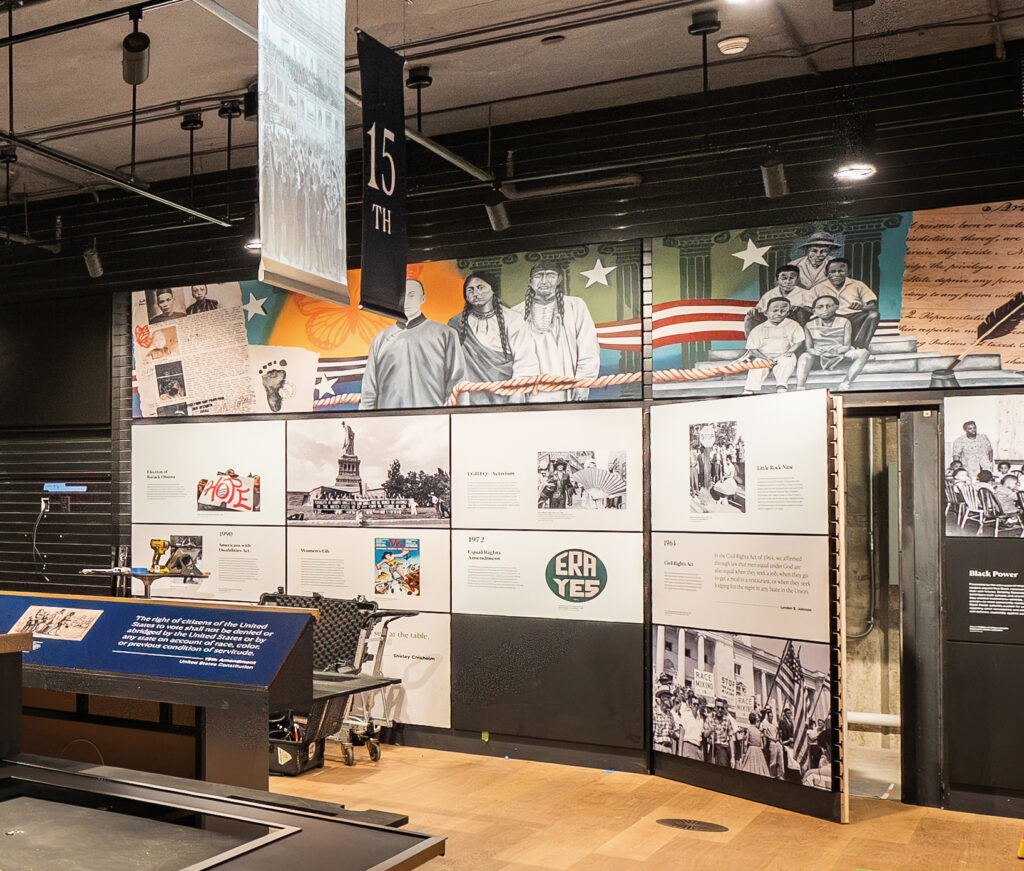
15th amendments, which Stevens championed, as well as to other civil-rights movements that impacted the nation.
After 15 years of planning and construction, the center will open its doors on May 1 at 13-15 East Vine Street, the former home and office of Stevens and the workplace of Smith. More than a museum for its namesakes, the center celebrates democracy past and present and Lancaster County’s role in the fight for freedom, equality and justice.
“Now is the appropriate time to solve the greatest problem ever submitted to civilized man.”
Thaddeus Stevens, The Selected Papers of Thaddeus Stevens: January 1814-March 1865
Thaddeus Stevens
In 1842, at age 50, Thaddeus Stevens arrived in Lancaster, packing a political will big enough to shape the nation. He built both a thriving legal practice and a reputation as a relentless opponent of slavery from his law office on South Queen Street, a building (along with an attached inn) that became a discreet station on the Underground Railroad. In town, Stevens was known as a sharp-tongued attorney and an advocate for public education, but his influence stretched far beyond Lancaster.

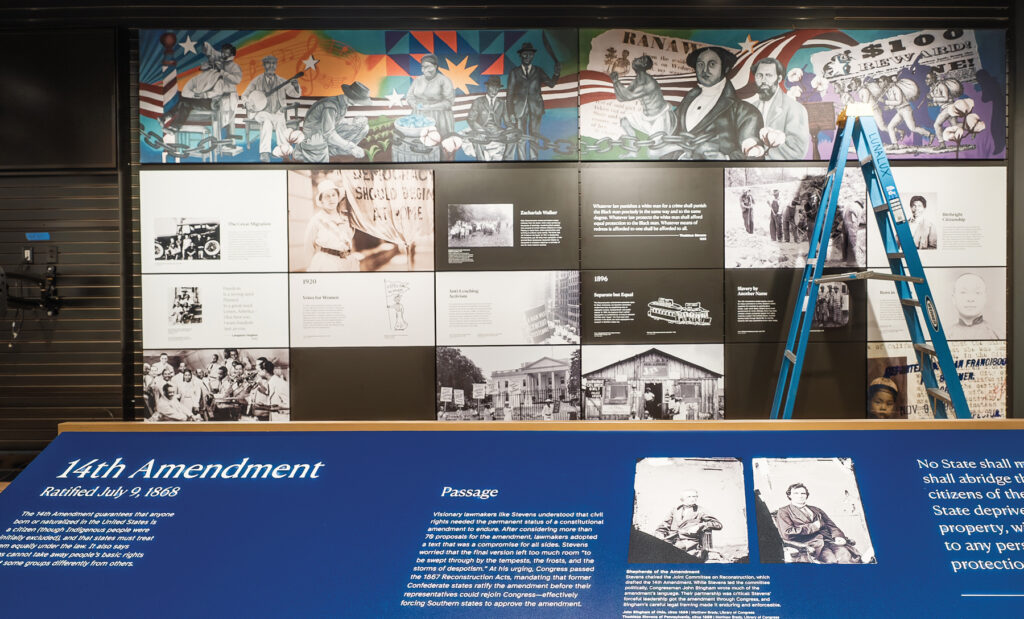
In Washington, the member of the House of Representatives became the fiery leader of the Radical Republicans, chairing the powerful House Ways and Means Committee and pushing the Union toward a broader promise of freedom during and after the Civil War. He helped shepherd the constitutional changes of the second founding, most notably the 13th Amendment abolishing slavery and the 14th Amendment guaranteeing equal protection under the law.

Stevens died in 1868; he is buried in the Shreiner-Concord Cemetery along North Mulberry Street, which at the time of his death was the city’s only cemetery open to all races.
Lydia Hamilton Smith
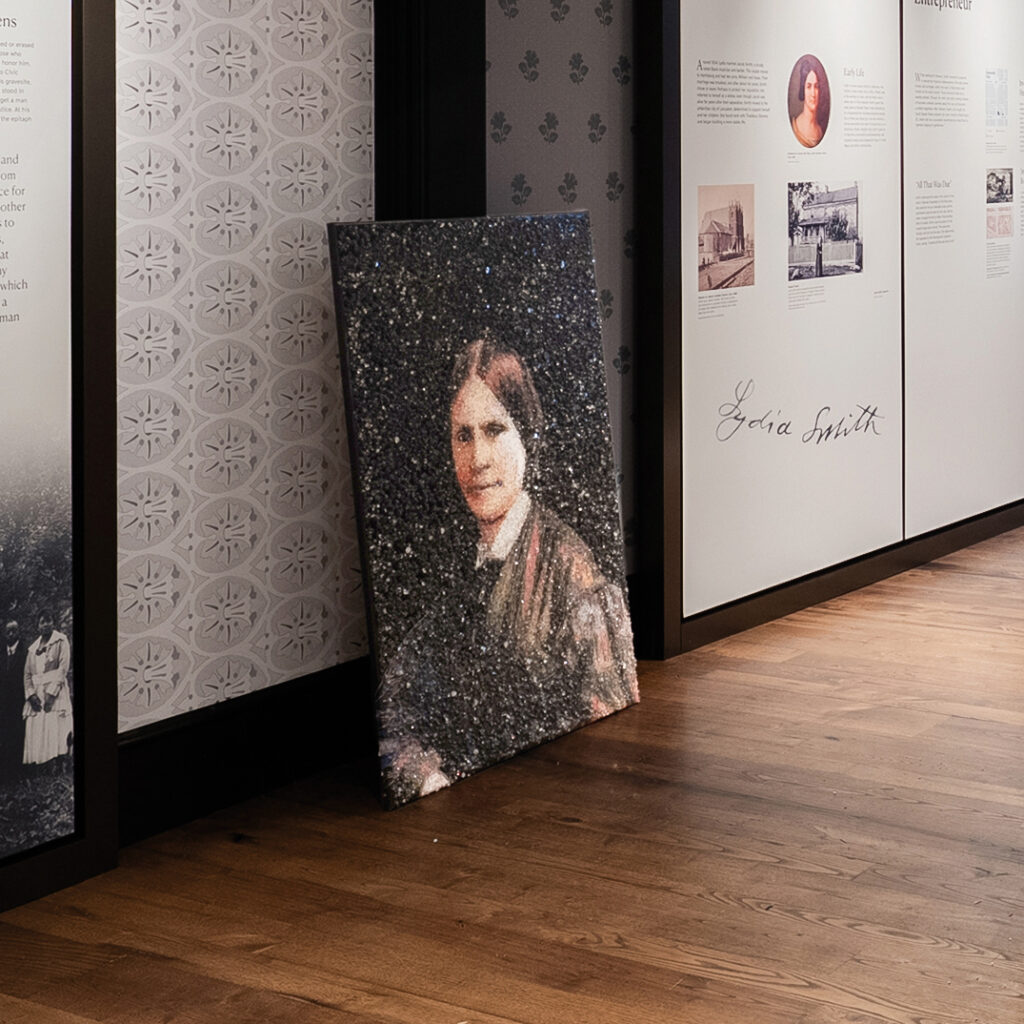
Lydia Hamilton Smith arrived in Lancaster in the mid-19th century as a free woman of color at a time when both laws and social conventions restricted opportunities for women – especially Black women. “The archival record surrounding Lydia Hamilton Smith is sparse, save for a few personal letters, documents related to her will, and depositions provided after Stevens’ death,” writes Naomi Subotnick in the thesis titled Defiant Home: A Material Biography of the Thaddeus Stevens and Lydia Hamilton Smith Historic Site in Lancaster, Pennsylvania (2022).

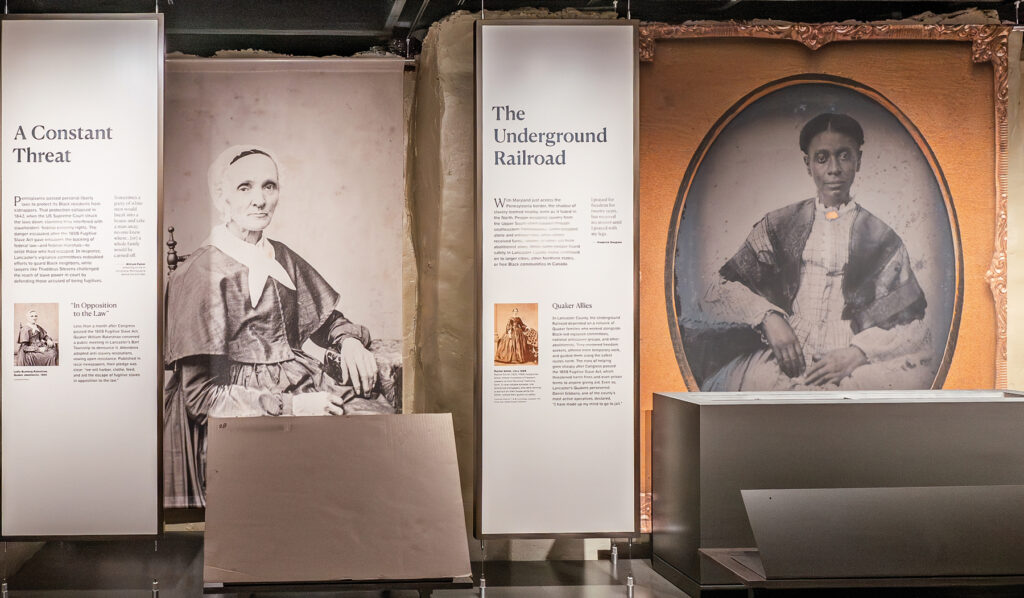
Yet, she proved to be extraordinary for her time. In Lancaster, she quickly became more than a housekeeper and served as manager of the Stevens household, political gatekeeper and property owner. She quietly participated in the Underground Railroad, offering refuge to freedom seekers moving north. She began to acquire properties across Pennsylvania and Washington, D.C., building a notable real-estate portfolio.

After Stevens’ death in 1868, Smith continued to thrive as an entrepreneur, operating a successful boarding house in Washington and managing her investments with confidence. Her legacy as a woman who quietly but firmly helped shape a household, a city and a nation will now be on full display at the center bearing her name.
“What Does Freedom Mean to You?”
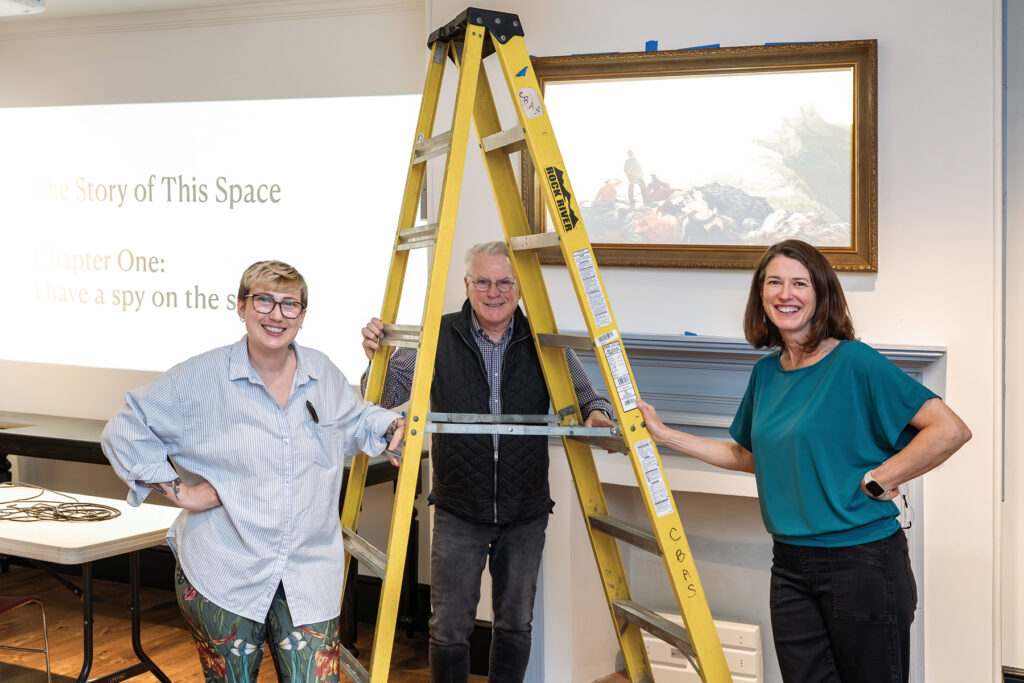
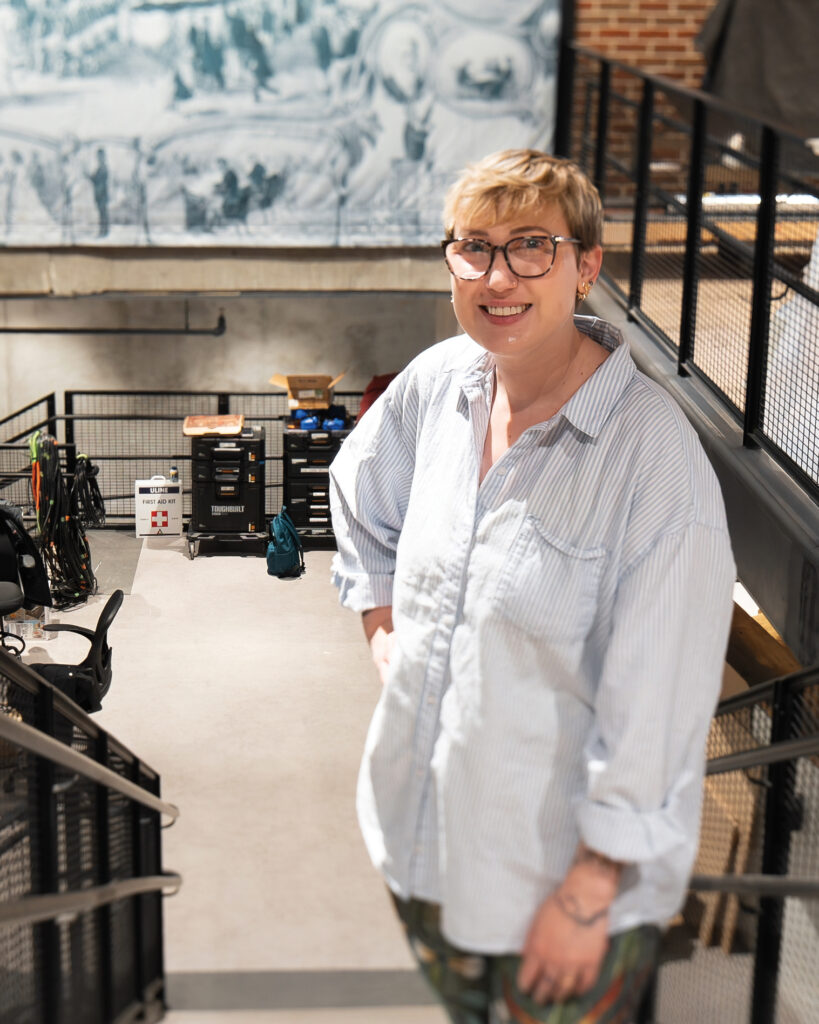
“You are really going to get a sense of the community, what was going on in the 1840s and 1850s and … recognize how – as a border community – we were on the front lines of the most important issue of the day, which was slavery,” explains Robin, walking me through the space 45 days before the ribbon cutting and opening. As we tour the space, workers are completing final punch-list tasks, installations remain protected, and “hero artifacts” are securely stored away awaiting display. To get to this point, LancasterHistory heard from over 190 different voices, from evaluating scripts to possible educational components. “We are trying to make sure that as many people in the community as possible help guide the formation of [the center],” says Robin.

Compiling public input from dozens of meetings, workshops and feedback sessions is the responsibility of Dr. Mabel Rosenheck, director of education and exhibition planning, and Starleisha Gingrich, education and programs manager. “We started strategizing with script-review sessions with educators, members of community groups and recent [high school] graduates. Their feedback on the exhibits really got us thinking,” explains Mabel.

Targeted outreach helped LancasterHistory find voices from every aspect of Lancaster County society. Planners aimed to ensure every voice was heard. “We’ve had a lot of engagement from teachers … Getting the teachers in was key,” says Mabel.
The Space
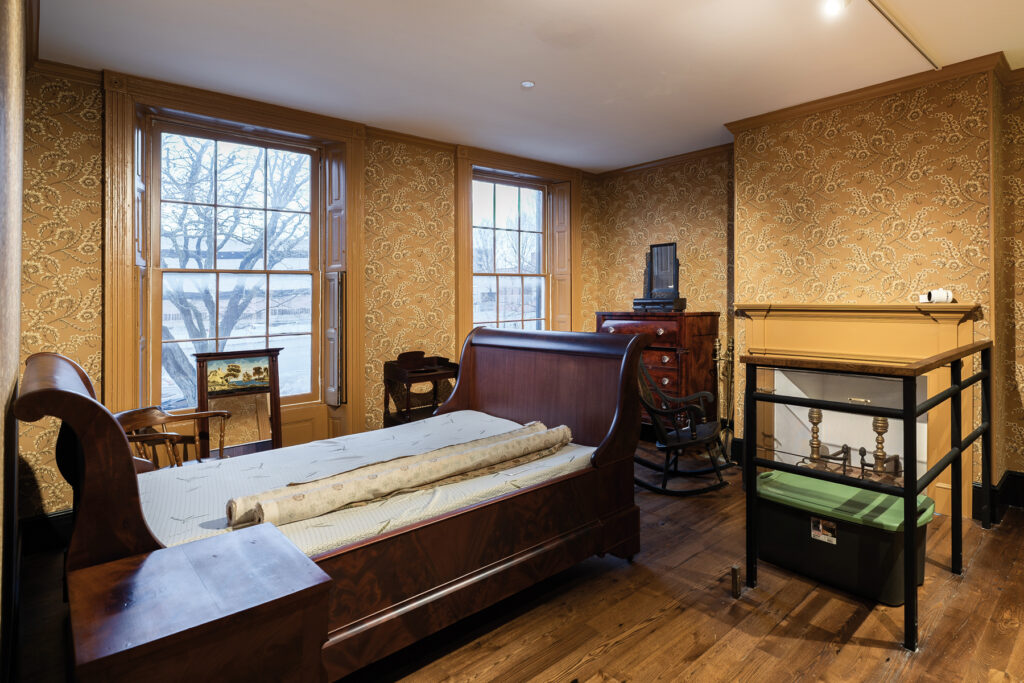
These buildings were almost lost. As Stevens’ legacy waned through Reconstruction and beyond, so did the memories of what took place on these wooden floors and behind closed doors. A simple historic marker found its way onto the façade of 45 South Queen Street in 1931. The site became apartments and retail spaces, eventually converting into an auto mechanic’s shop. In disrepair, the buildings faced demolition in 2000, until the Historic Preservation Trust of Lancaster County stepped in. In 2010, LancasterHistory took over the site.

“The Thaddeus Stevens & Lydia Hamilton Smith Center for History and Democracy will be the most important contribution LancasterHistory has ever made to our county, our commonwealth, and to our country,” said past LancasterHistory president and CEO Thomas Ryan during the site’s ceremonial groundbreaking in 2024. It is an easy truth. After 15 years in the making, the $19 million project converts spaces that were bedrooms, basements and barrooms into testimonials of local history, the Civil War, Constitutional freedom and more.

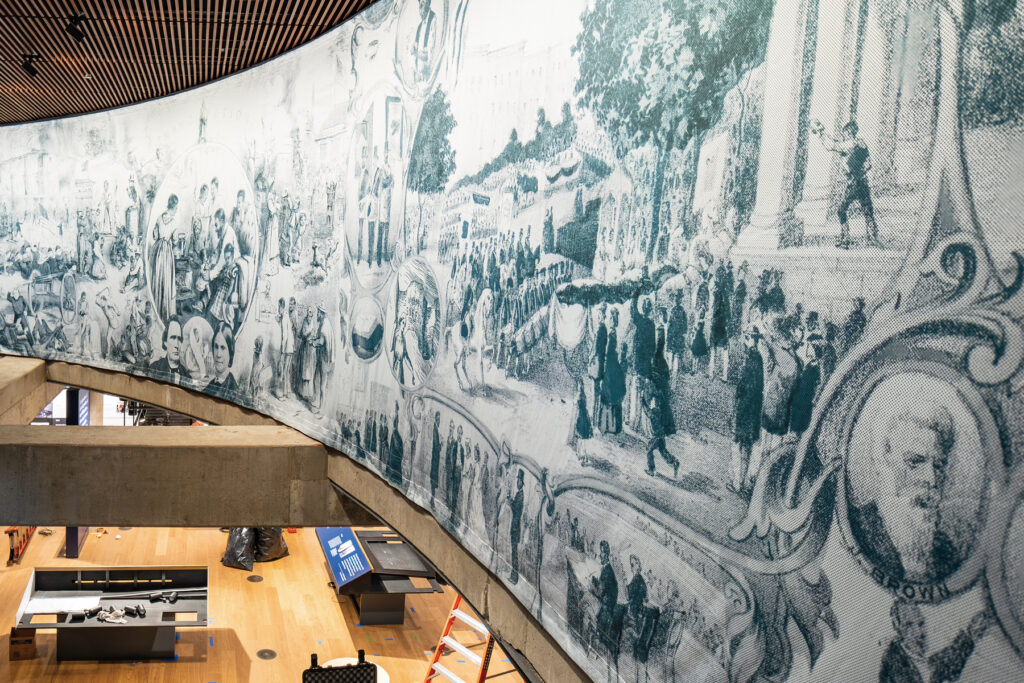
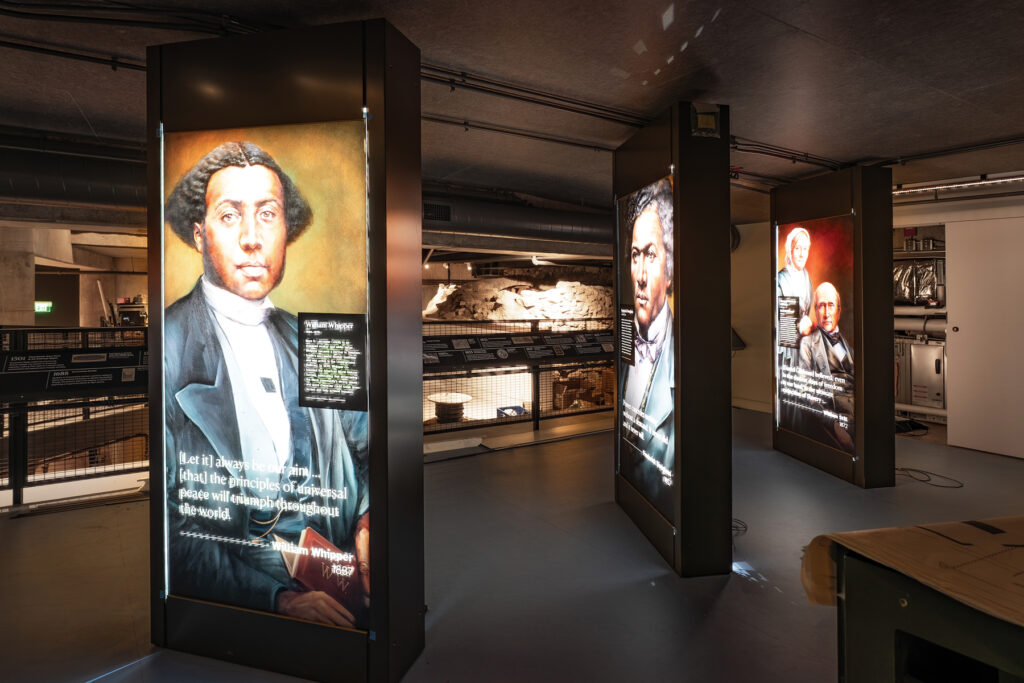
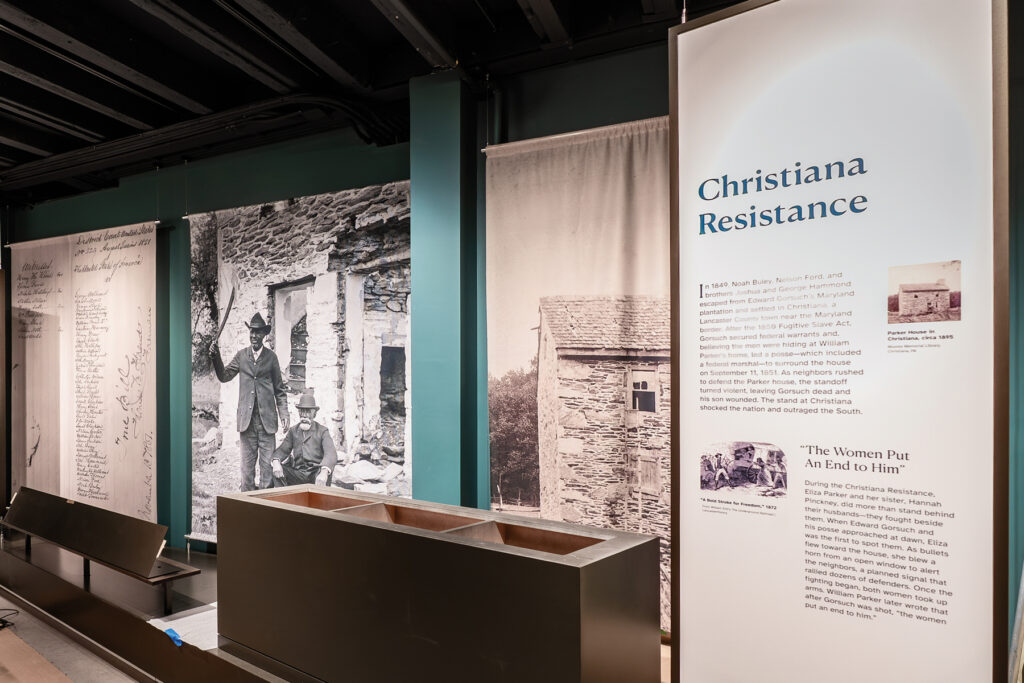
Beyond the expected information boards, the 20,000-square-foot center features state-of-the-art audio and video components, installations for blind and hearing-impaired guests, and art by local artists and makers. “Even all the talent for our film pieces are local actors,” says Robin. “This is a lot of Lancaster on display.”

The Thaddeus Stevens & Lydia Hamilton Smith Center for History and Democracy, located at 13-15 E. Vine Street in Lancaster, will open on May 1 with a ribbon-cutting ceremony (8-10 a.m.) and a First Look Fete that evening (sold out). On Saturday, May 2, the public is invited to take part in a Community Block Party that will be held on Vine Street from 12-6 p.m. The event will feature music, artists and more. Free timed entries to the museum will also be offered. For more information, visit Stevenssmithcenter.org.
Great article – so thankful to know this is happening!!! Sharing with my Lancaster friends!!