
Before you pinch, thumb or turn up your nose, hear me out. Tinned fish is a nutritious, simple snack, and extremely delicious once you’ve established your preferences. I dipped my toes into the water before diving in and was surprised by the rich flavor of these shelf-stable delights. Loaded with savory glutamate and Omega 3s, I was hooked.

Gone Fishing
Tinned fish is an obsession for a surprising number of foodies around the world. As a food category, it has long been popular in coastal regions throughout Europe (notably the Mediterranean and Scandinavia) and Asia, and is enjoying an increasing global acceptance. As a shelf-stable appetizer, snack or low-key meal, it is often considered an inexpensive and nutritious “struggle food.”
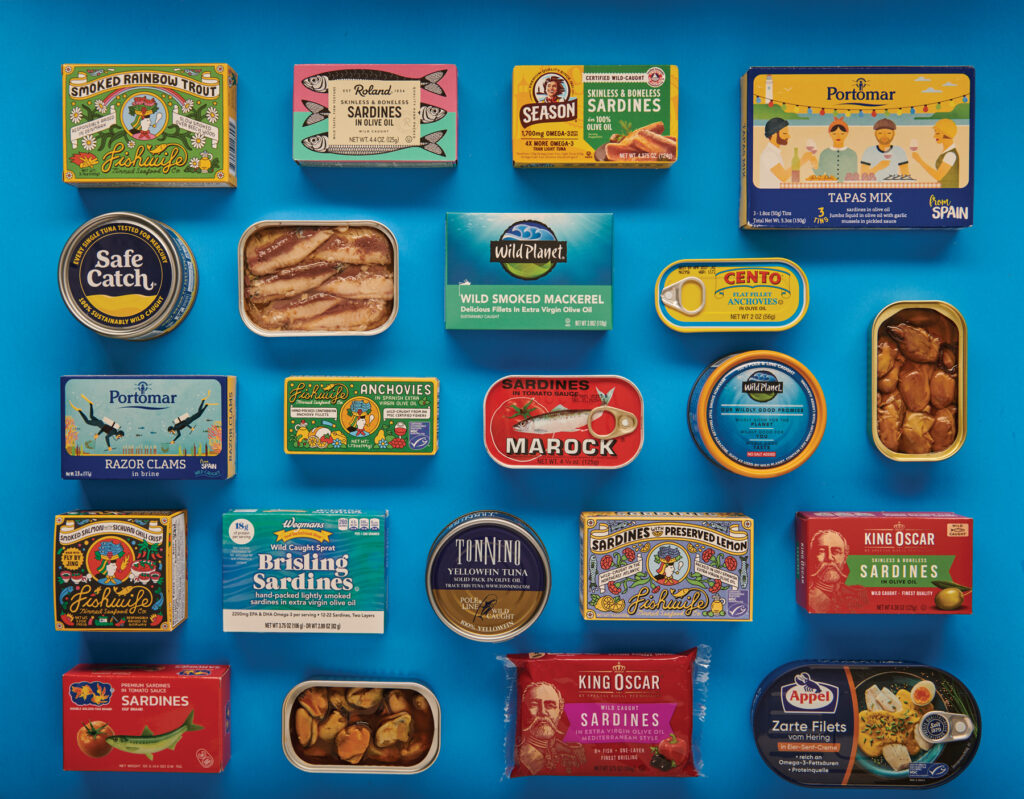
Of late, tinned fish has also gained an upscale reputation by landing on charcuterie boards and becoming a mainstay at cocktail parties. Depending on the brand, price points range from a couple of dollars per tin to $20 or more. Premium tinned fish brands include Patagonia and FishSnax (from chef José Andrés). The active Reddit forum r/TinnedFish is a popular hub discussing recipe ideas, new varieties and showcasing diverse collections of tins.

Tinned fish is an excellent source of lean protein, Vitamin D, Vitamin B12 and beneficial fat (Omega 3). Typically packaged in olive oil (not brine) to preserve the quality and texture of the fish, tins can also include garlic, olives and tomatoes preserved with lemon or smoked for deeper flavors. Playing off the rich, fatty texture, acidic foods such as tomato, pickled onions, citrus juice or zest, vinegar and vinegar-based condiments such as hot sauce and mustard complement tinned fish.
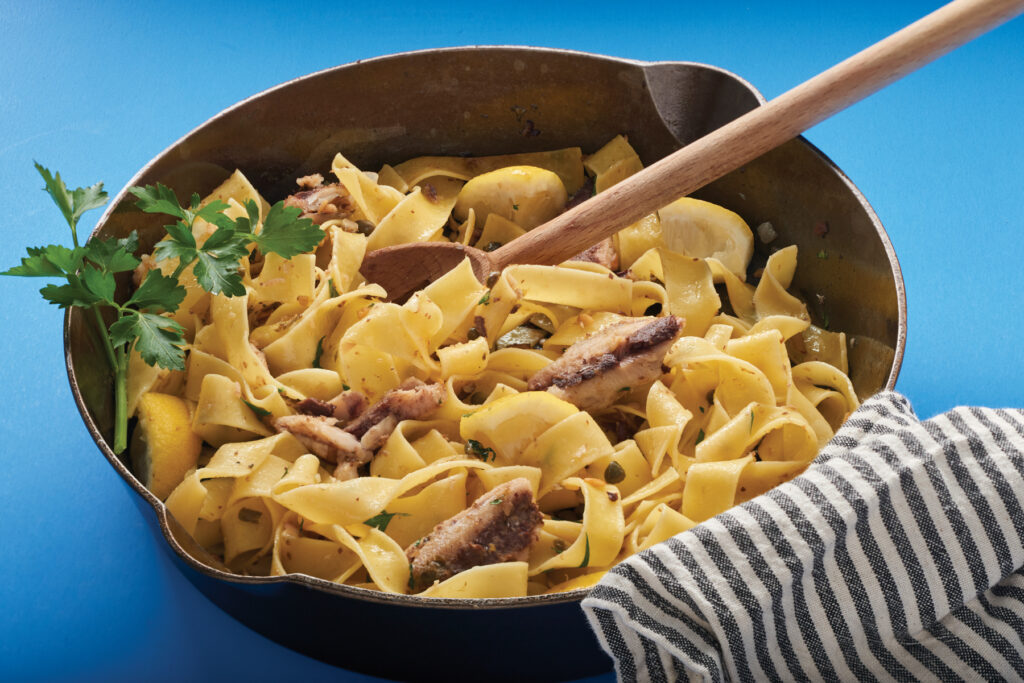
The fish can be eaten out of the tin or used to complete dishes such as pasta, rice or even pizza. With charcuterie, the inherently salty profile pairs well with soda crackers or unsalted nuts.
The contents of opened tins can be transferred to airtight glass containers and kept refrigerated for a day or two depending on the tin recommendation.
A Safe Start
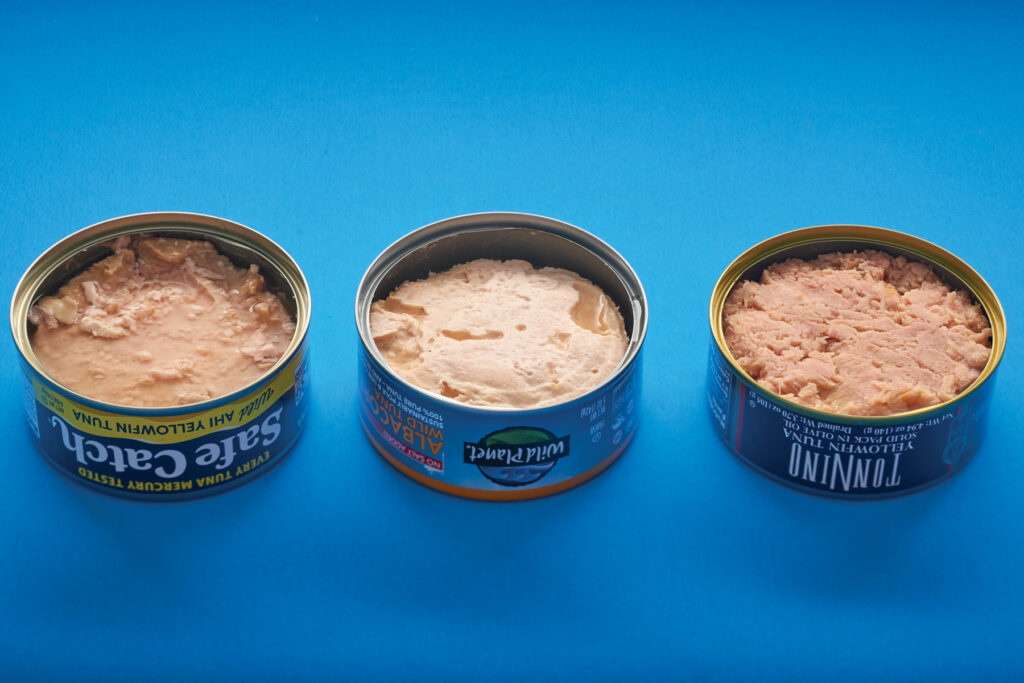
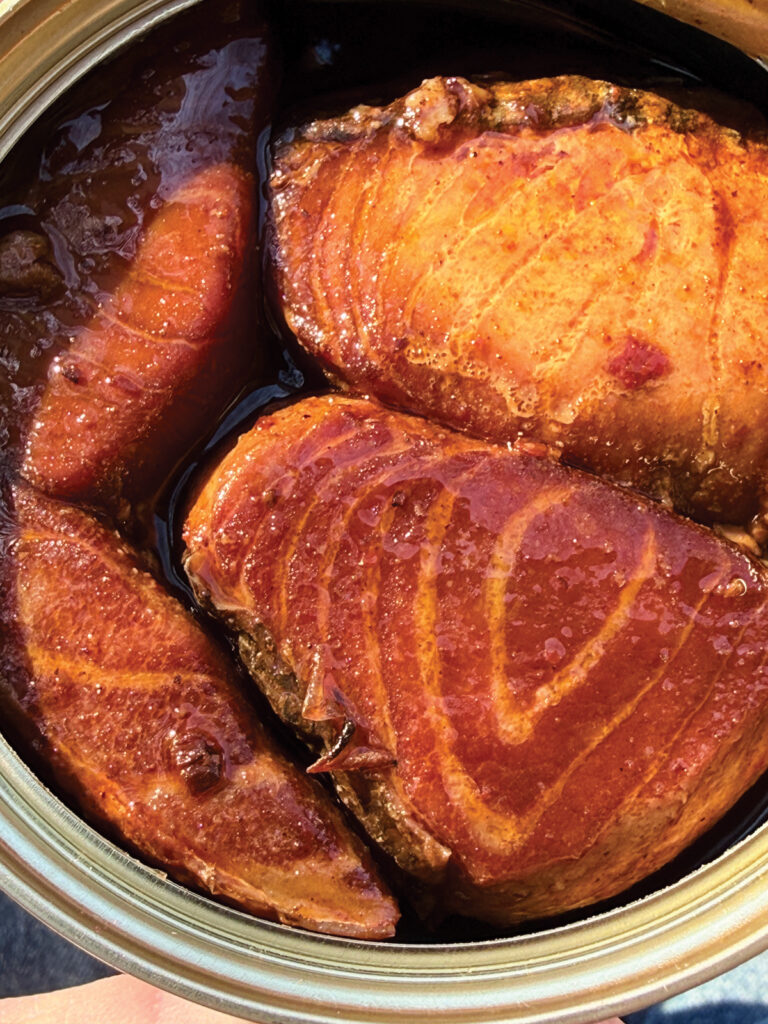
Until recently, I never loved canned tuna. This winter, as we restocked our pantry to weather winter snowstorms, we bought several tins of Fresh Catch tuna. Thinking it would only serve when the cupboards ran low, curiosity got the better of me and I cracked open a tin of the premium-grade fish. Offering a pleasant texture and flavor worthy of the higher price, this solid-cut variety of yellowfin tuna is prepared in water. Neither salty nor bland, the tuna does not need to be drained or rinsed. Being accustomed to albacore, yellowfin tuna had a more pleasing, less bashful flavor.

How good was it? I had to resist the urge to eat more than a couple of cans a week. It was clearly the best canned tuna I’d ever eaten to that point. Other well-regarded varieties include Wild Planet and Tonnino Yellowfin Tuna.
Fresh Catch claims to test every fish for mercury levels, clocking in at (25x) lower than FDA standards. Reading the label, I started to wonder how mercury accumulates in fish. Larger, predatory fish consume many smaller fish, each potentially containing small amounts of mercury. As larger fish consume more and more smaller fish ascending the food chain, accumulated mercury levels increase. Eating lower in the food chain, smaller fish are less susceptible to high mercury levels, making them an ideal choice for regular enjoyment.
On the Menu
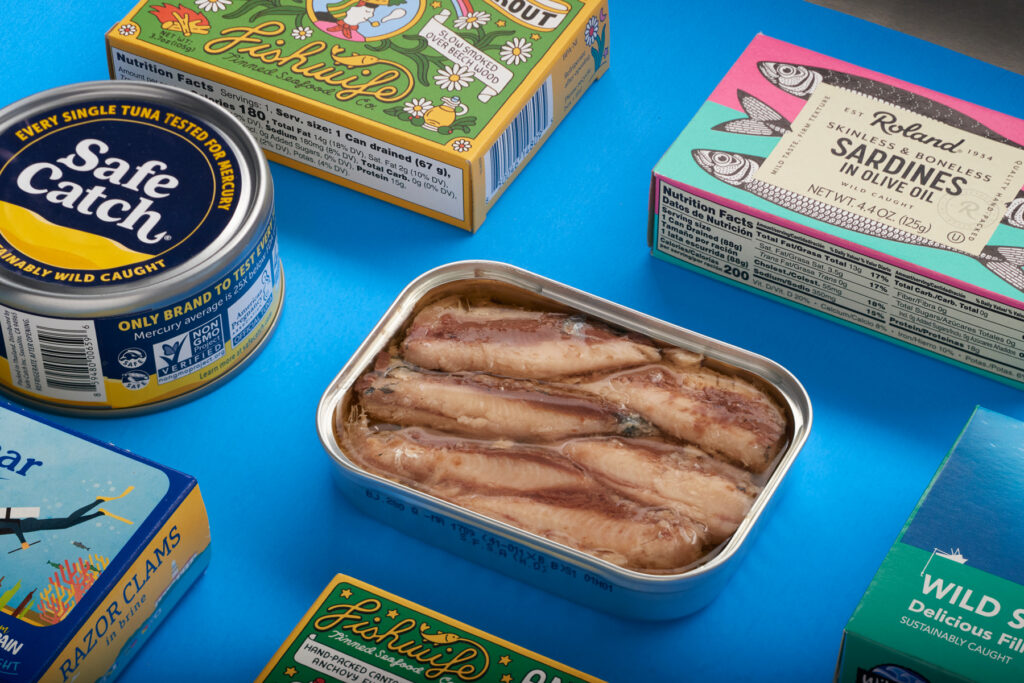
Sardines Sardines are dense, creamy in texture and, depending on the variety, neither the smell nor flavor is overpowering. I started with Season brand Skinless and Boneless Sardines in 100% olive oil, certified wild caught. While the oil was a bit heavy and needed an ingredient with fiber to offset it, the fish texture was pleasant, with intense umami notes.
Sardines from the King Oscar and Season brands are my current favorites for the value and flavor and where I’d recommend anyone to start. Boneless and skinless, they’re lighter in color and flavor, with a uniform texture. Preserved in rich olive oil, pairing them with bread, toast, pasta or crackers will add fiber. Wegmans brand sardines are another approachable tin with a high value proposition and quality.

If you want to increase calcium and Vitamin D in your diet, look for brisling sardines in extra-virgin olive oil. This smaller species is canned whole. The skin and bones (which are too delicate to remove) are an excellent source of nutrition.
Notes: If the olive oil is too rich, pair it with water crackers or bread. If a tin doesn’t specify that sardines are skinless or boneless, assume the opposite is true. Some tin lids feature a pull tab, and if opened too abruptly, can make an oily mess. Keep the container held firmly on the counter while pulling back the top.
Anchovies: Best used as an ingredient on pizza, buttered toast or in salad dressing, anchovies are salty with a thick prosciutto-like texture and flavor. The fine bones dissolve when cooking but can be needle sharp splinters if eaten out of the tin. Tinned anchovies preserve best/longer in cold storage or about a year at room temperature.

Salmon: Salmon is one of my favorite foods. I like it as raw sushi, pan-seared or baked, in that order. Kirkland’s Wild Caught Alaskan Pink Salmon is a large chunk fish with a strong but not fishy flavor. It mellows perfectly with avocado mayonnaise and bright lemon juice in a sandwich. Fishwife’s Smoked Salmon tin, however, offers large chunks of fish (with the skin) in olive oil, resulting in a tangy, smoky flavor much like jerky. With capers and cream cheese, this is delightful on a bagel.
Trout: Smoked Rainbow Trout from Fishwife is a must-try. Large fillets fill the length of the can. Packed in olive oil and diced garlic, the flavor is strong on smoke. It’s also relatively lower in sodium, with 180 mg per tin.
Mackerel: Another satisfying variety from Wild Planet, the Wild Smoked Mackerel in extra-virgin olive oil uses alder wood to infuse flavor. The large filets offer a dense texture similar to tuna but with a richer flavor.
Herring: The largest fillets have few to no bones. Almost a to-go meal in a tin, some herring is prepared with a creamy marinade such as a mustard sauce. It cuts the oil but dominates the flavor; I’d opt for a plain variety and make vinaigrette from scratch.

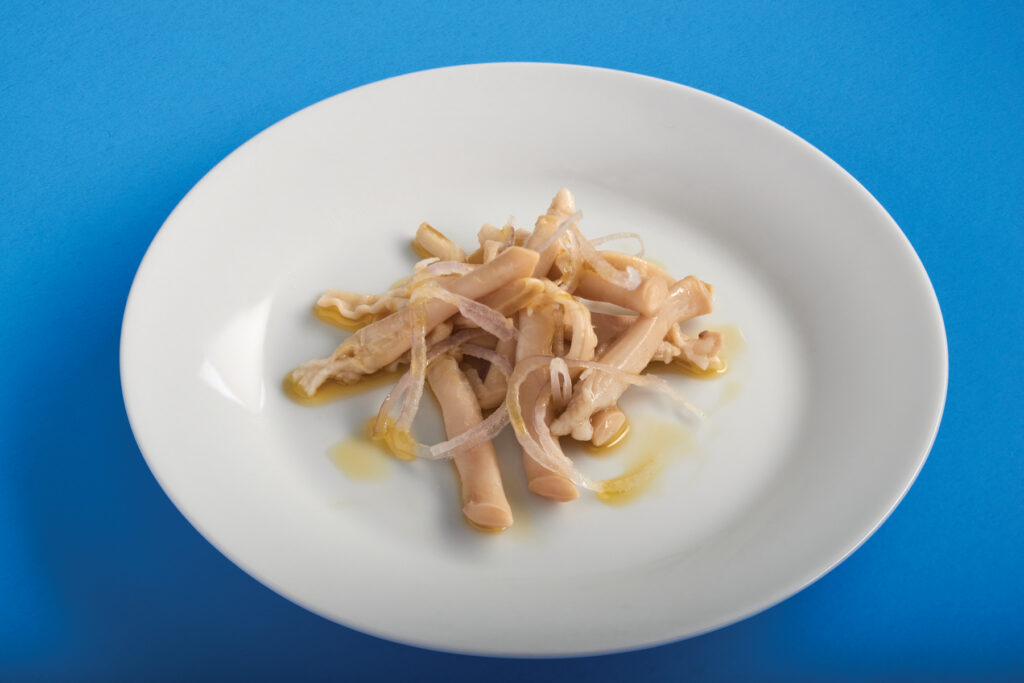
Razor Clams: Unlike fish fillets, the texture of clams is best preserved in brine and should be rinsed (remove from the can) to lower the sodium content and remove sand. Chef Andrew Zimmern, a fan of tinned fish, offers a simple treatment (see it on YouTube) for razor clams that includes sliced shallots, lemon juice and olive oil. Equally applicable is his lemon-Dijon vinaigrette: three parts olive oil to one part vinegar, emulsified. Add 1 Tbsp. mustard, lemon juice to taste and freshly ground black pepper.
Oysters: I love oysters but with that said, I’ve been reluctant to eat Gulf Coast oysters ever since photographing the Deepwater Horizon Oil Spill in 2010. Wegmans Smoked Oysters pair well with “Cilanktro” Hot Sauce from Hank Sauce in Sea Isle City, New Jersey (made with garlic, cilantro and salted butter). I found the soft oyster texture to be surprisingly pleasing, but the smoke flavor intensity is extreme, even with pasta and olive oil.
Mussels: A nice addition to dress up a cold pasta dish with panko and lemon zest. Nice texture, heavy on the smoke.
Considerations
- The texture of fish fillets is generally preserved best in olive oil, not water.
- Olive oil is calorie-dense, though it might not be the best place to skimp. Quality olive oil is nutritious and can absorb nutrients from tinned fish, which can be leveraged as an additional ingredient, as with pasta.
- Always check the sodium content.
- If you include fish oil supplements in your diet, the Omega 3 fatty acids in tinned fish can easily match or exceed those amounts, potentially reducing or replacing them with an underrated superfood.
Premium tins with alluring packaging can lead to wonderful finds, though at a cost. Reputable brands should also be ethically sourced and be mindful of the origin, as some bodies of water are cleaner than others.
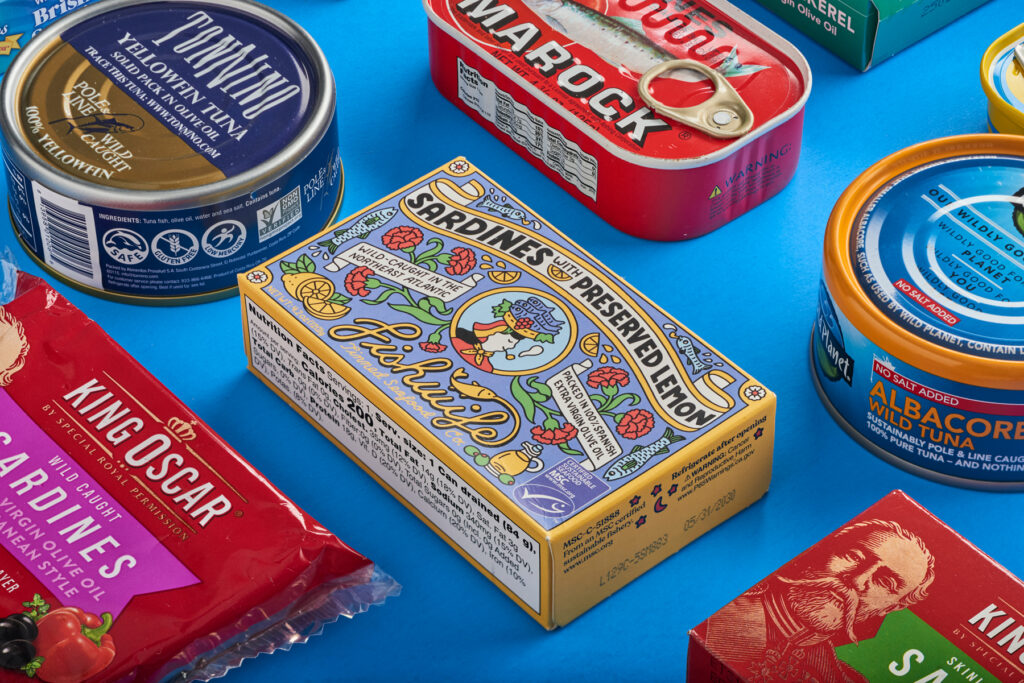
The health of our planet’s oceans is at risk, as cited across many sources, as it’s on track to host more plastic than fish by 2050. Mercury and microplastics are considerations when consuming fish, in addition to how we reduce, eliminate or dispose of waste to protect our oceans. For example, Fishwife, founded in 2015 by Becca Millstein and Caroline Goldfarb, sources fish from canneries in Washington State, Spain, Denmark and Scotland, with an emphasis on sustainability and stewardship. Their packaging has stylistic branding created by illustrator Danny Miller and is easy to spot. Less expensive tins may offer an excellent value for experimentation and learning your preferences.
It’s Not For Everyone, Maybe
If you’ve made it this far, you’re either treading water or are hooked. I’ve grown to enjoy eating two or three of my favorite tins on a weekly basis, preferring meaty sardines in extra-virgin olive oil or lemon preserves with a handful of Simple Mills Almond Flour Sea Salt Crackers.

In the middle of researching this story, Covid found me, and I lost my sense of taste and smell. Known as parosmia, it’s something I’ve experienced before, and my senses usually return in a couple of weeks after some weird interpretations. For a few weeks, bacon tasted metallic, coffee was off-putting, and I went from ravenously craving tinned fish to being utterly repulsed. About a month later, I was back to enjoying most varieties of tinned fish that didn’t include tomato.
Getting past the texture of sardines with skin and fine bones is another consideration. I’m slightly neurodivergent (sensory processing disorder, or SPD), and struggle with specific food textures. I’ve never been able to tolerate skin on a pickle, stuffed peppers or dry seaweed in sushi rolls, but I’ve gotten past it in regards to tinned fish. I was surprised to eat through a tin of Fishwife’s Sardines in Lemon Preserves in their entirety, and enjoy it. The skin was beautiful in color, the flavor bright with savory notes and the crunch astoundingly satisfying.
As with stinky cheese, you might love tinned fish or hate it. I’d suggest you take the bait and give it a try.
Leave a Reply