
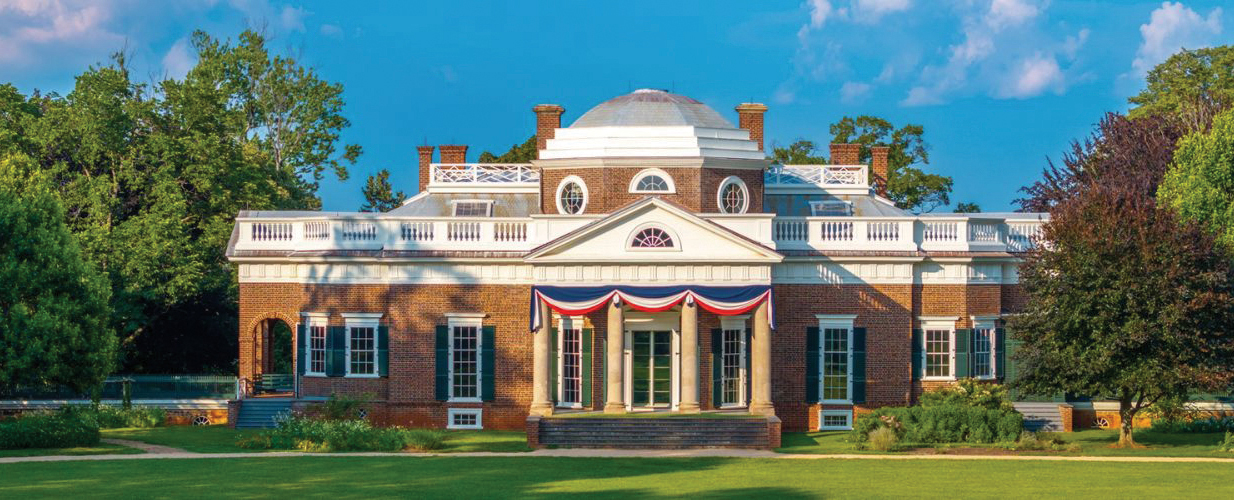
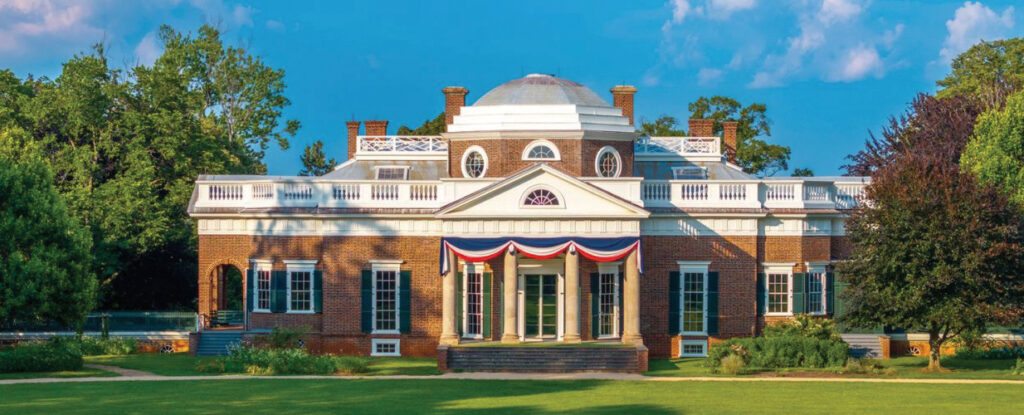
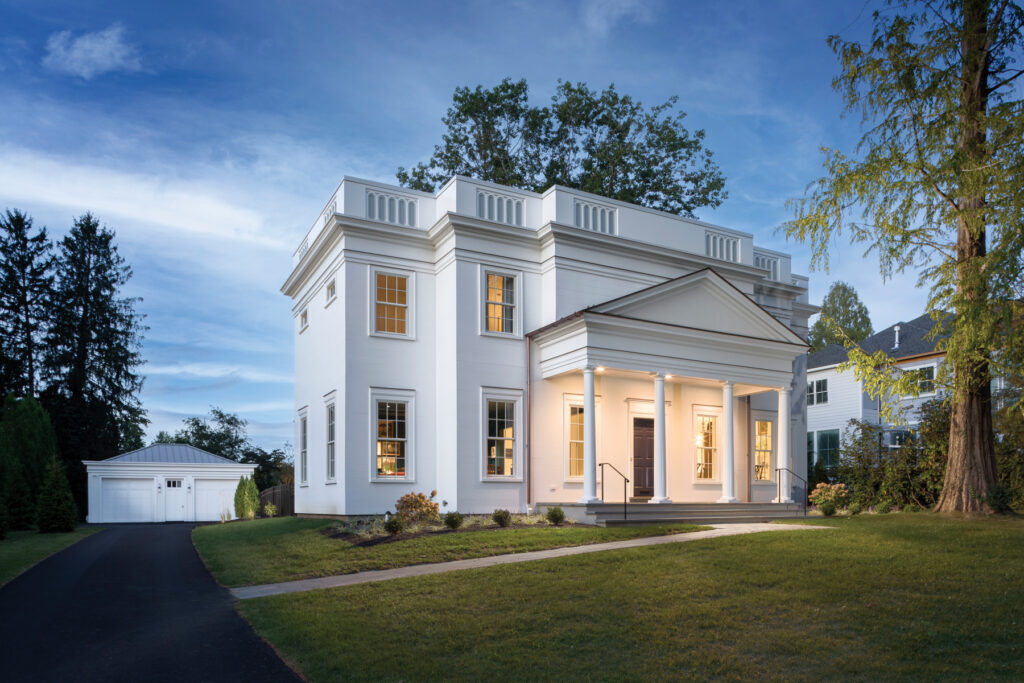
While it took Thomas Jefferson 40-plus years to arrive at a point where he was nearly satisfied with the design of his home, a Lancastrian spent almost that long envisioning his own dream home, which takes its inspiration from Jefferson’s beloved Monticello. No doubt, Mr. Jefferson, as Virginians refer to the country’s third president, would approve.
The plan began to take shape in childhood. “I’ve known Wendy Tippetts since I was a kid and told her that one day, she would design my house,” says the Lancaster resident of the architect who is a principal with the firm Tippetts/Weaver Architects. In the meantime, he went about his life.
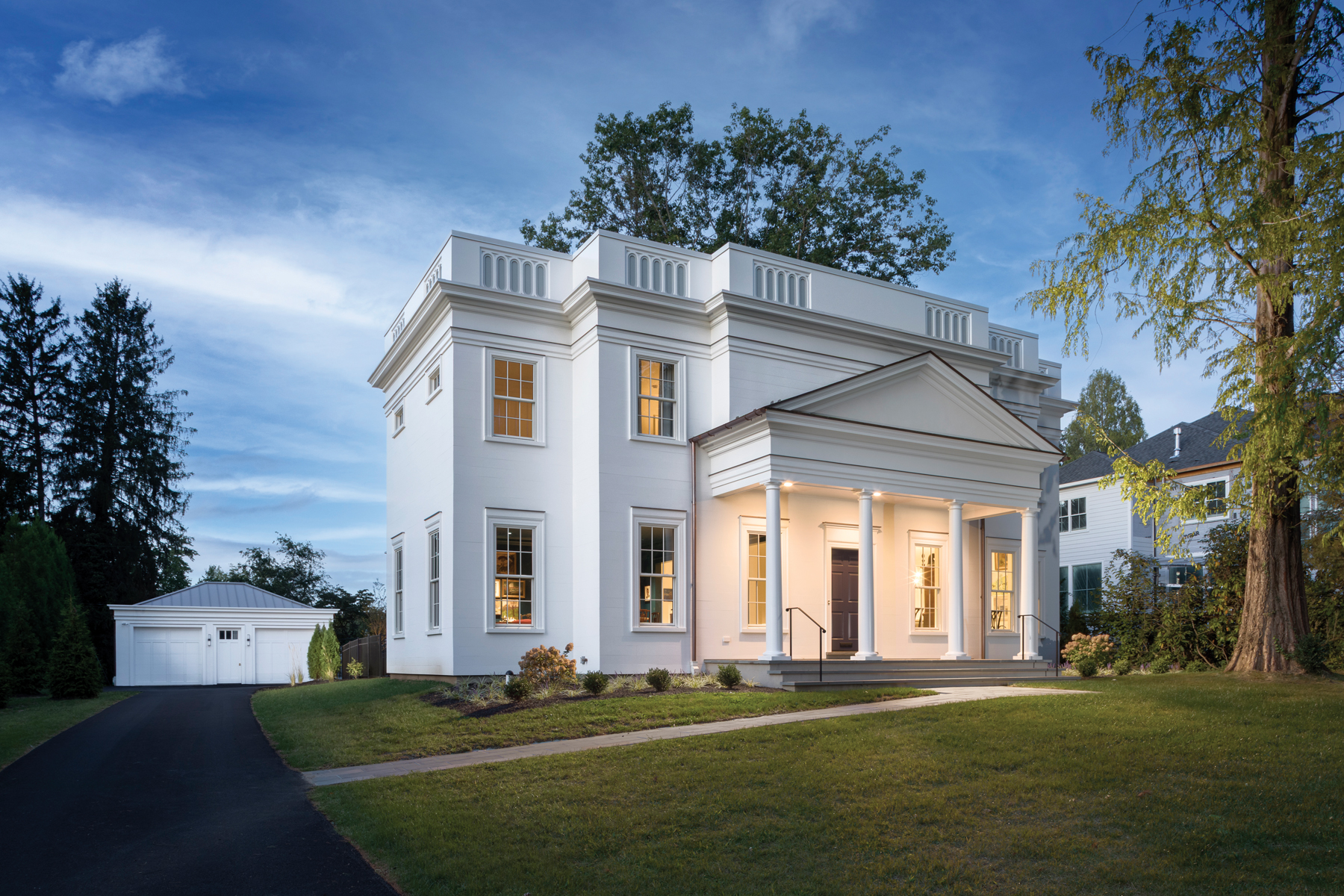
Like Jefferson, his interests and tastes constantly evolved. “I’ve always had a fascination for Jefferson,” he says, noting that the interest is probably rooted in the fact that, “I come from a family that loves history, antiques and art.” It was only natural that he would follow in their footsteps. “I’ve always loved classical architecture,” he says of Georgian and Federal styling, adding that he was also drawn to a Modern Greek Revival in Upstate New York that was designed by architect Peter Pennoyer. He also lists Americana, Art Deco and art as major interests. “I’ve been collecting Americana and art for a long time,” he notes.
Fate!
Several years ago, the Lancaster resident became a guide at Monticello and moved to Charlottesville, which is the home of the University of Virginia, where many of the campus’ original buildings were designed by Jefferson, as was the state capitol building in Richmond.
In the meantime, a building lot on the outskirts of Lancaster had been languishing for nearly 15 years. Owned by the home-building company Kreider and Diller Builders, the lot came with the stipulation that prospective buyers would need to agree to have the company build their home. “The lot was narrow and really woody,” says company owner, Don Diller. “I think people had a difficult time envisioning what could be done with it.”
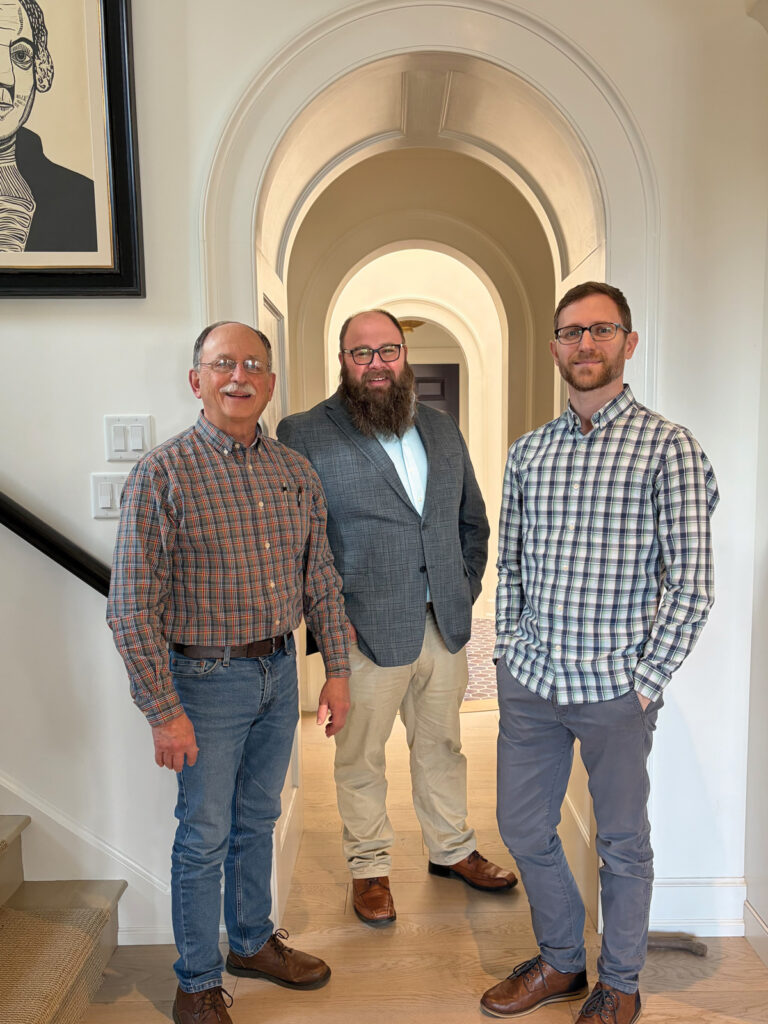
As they say, it takes just one buyer and as fate would have it, the Lancaster resident was familiar with the lot and asked realtor Gil Lyons to further investigate it. Family matters were bringing him back to Lancaster and he deemed it was time to build the home of his dreams. He also contacted Wendy Tippetts, who brought her colleague, Jon Sullenberger, into the project. “The goal wasn’t to create a replica of Monticello, but rather to have it serve as an influence,” says Jon of their new client’s vision. One of the first things Jon did was to delve into Jefferson’s world by visiting Monticello. “I had the best tour guide,” he says of his client.
Team Effort
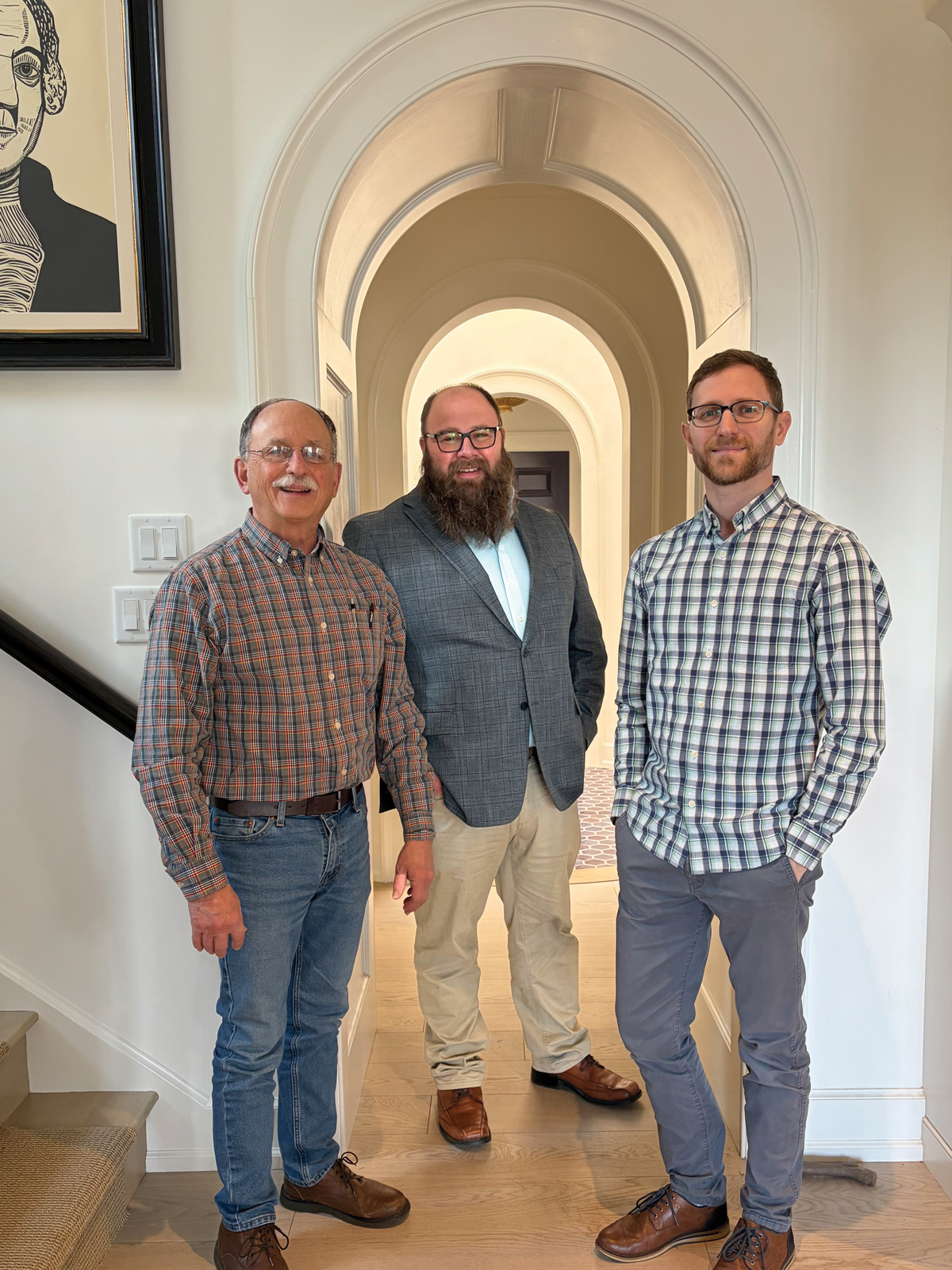
It was obvious from the outset that in order to weave the client’s interests and ideas into the final design, the project would need to be a collaborative one and would require experienced craftsmen at every level.
Don Diller, for example, is a second-generation builder (the company was founded in 1959) who also happens to be the consummate problem solver. The project was also blessed with a bonus team member. Don’s son, Steven, a registered architect, had returned to Lancaster after working in Philadelphia for 10 years and joined the family business. He became the perfect intermediary for the project. (Another son, Adam, is also a partner and Don reports a fourth generation is waiting in the wings.) The company also had an ace on staff in William Rehak, who served as the job foreman. “Bill is the kind of guy who questions everything,” says Steven of the now-retired Rehak. “He’d call all the time with questions and updates.” Jon also has high praise for Rehak’s work ethic. “He was the man for job,” he says. “He had the experience to do a house like this.”
As for Tippetts/Weaver, which was founded in 1987 by Wendy Tippetts and Gary Weaver, the firm is renowned for restoring, renovating and creating new uses for historic buildings, as well as honoring timeless architectural styles where designing modern structures is concerned.
The firm follows the Secretary of the Interior’s Standards for Rehabilitation (part of the National Park Service’s Historic Rehabilitation Tax Credit Program) when approaching such projects. According to Tippetts/Weaver’s website, “Our expertise in working with existing and historic structures, coupled with our beliefs that architecture of the twenty-first century should speak to our time, our social context and to the construction technologies of this era, create a very interesting and compelling dialogue between the modern aesthetic and the historic or existing context.” In this case, they would utilize that philosophy to design a home influenced by what is considered to be one of America’s architectural masterpieces.
It fell to Don to determine if the client’s ideas were in budget and to Jon to break the news that modifications would be needed. “Even if modifications were required, we never compromised on the end result,” says Jon.
18th Century Aesthetics, 21st Century Amenities
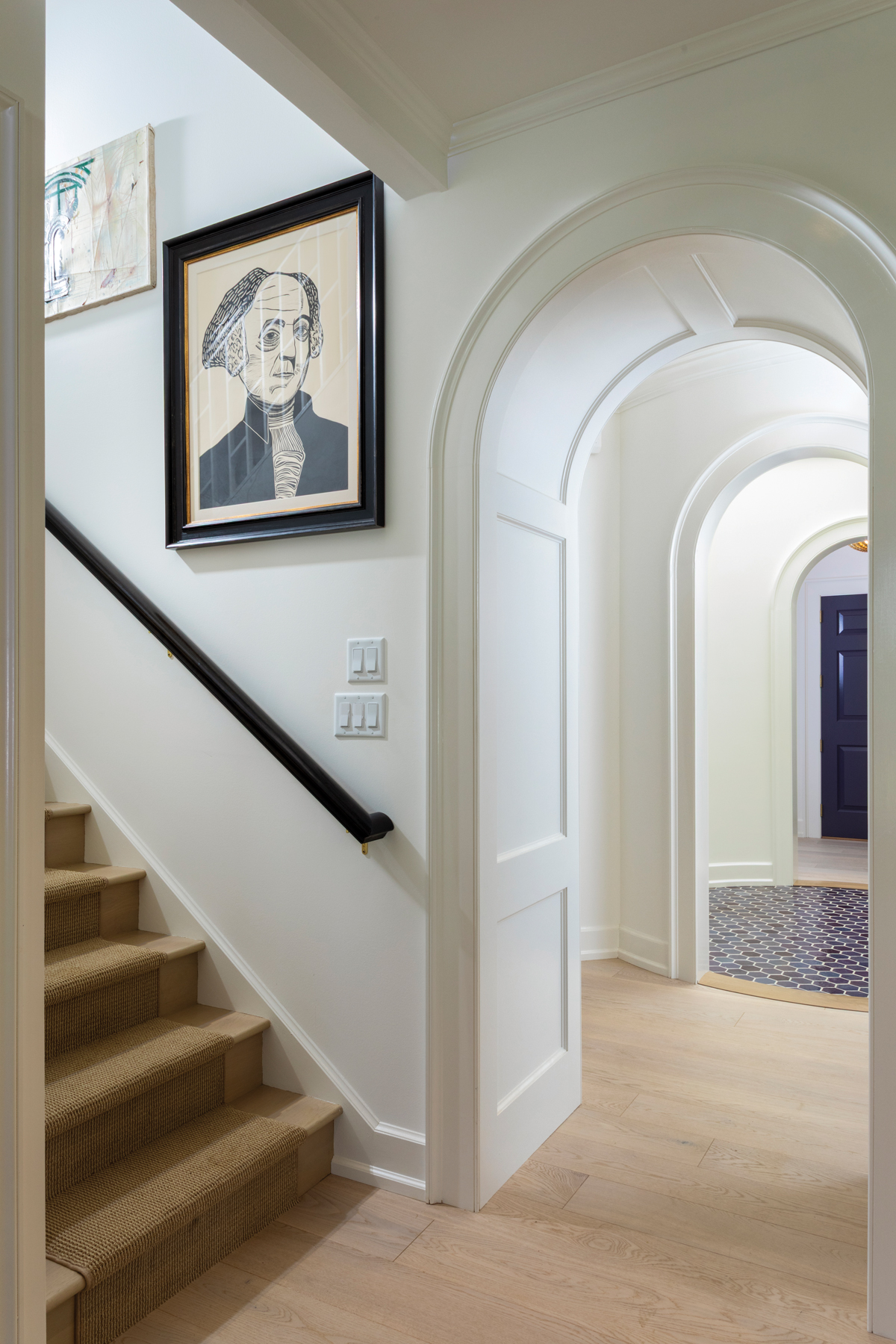
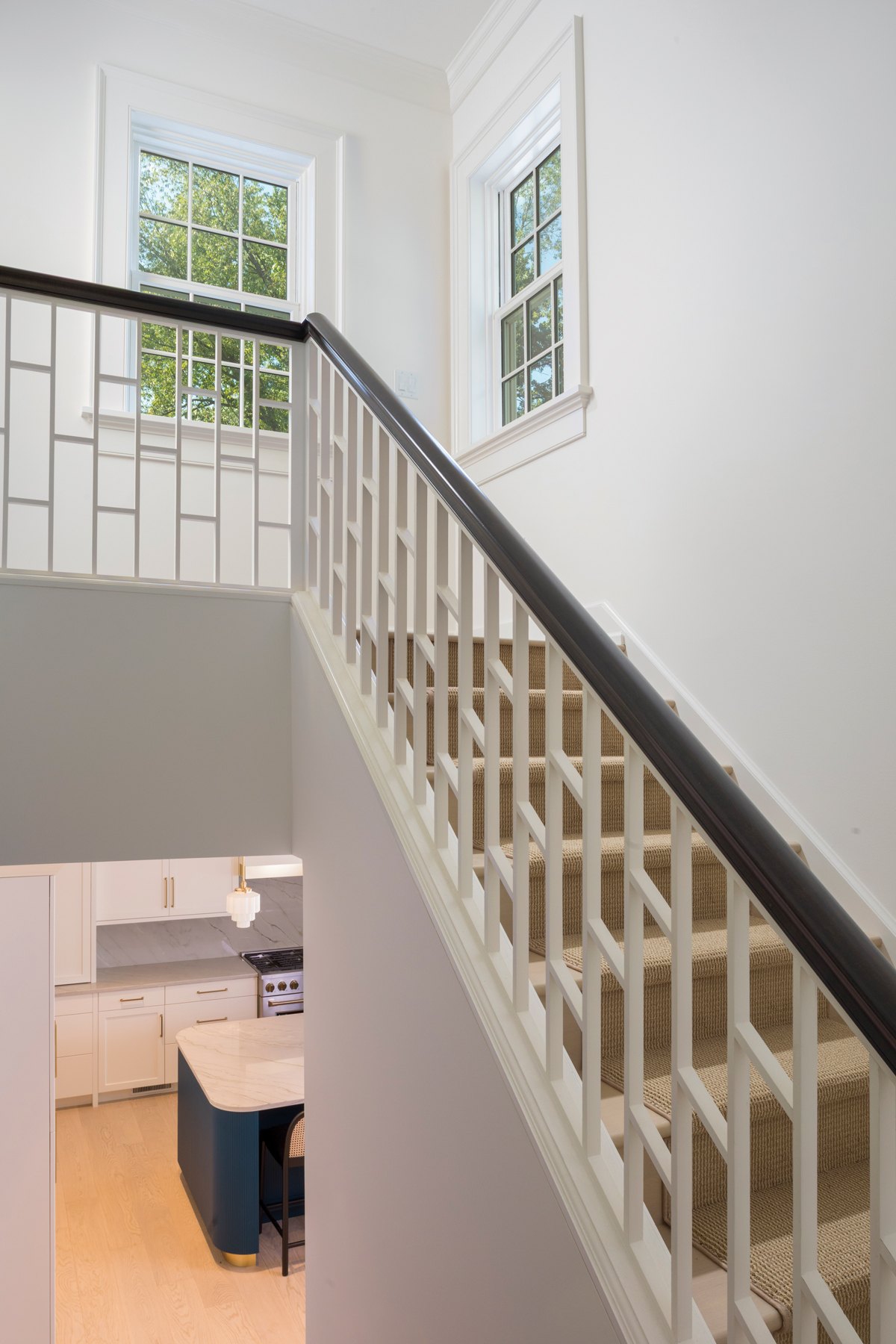
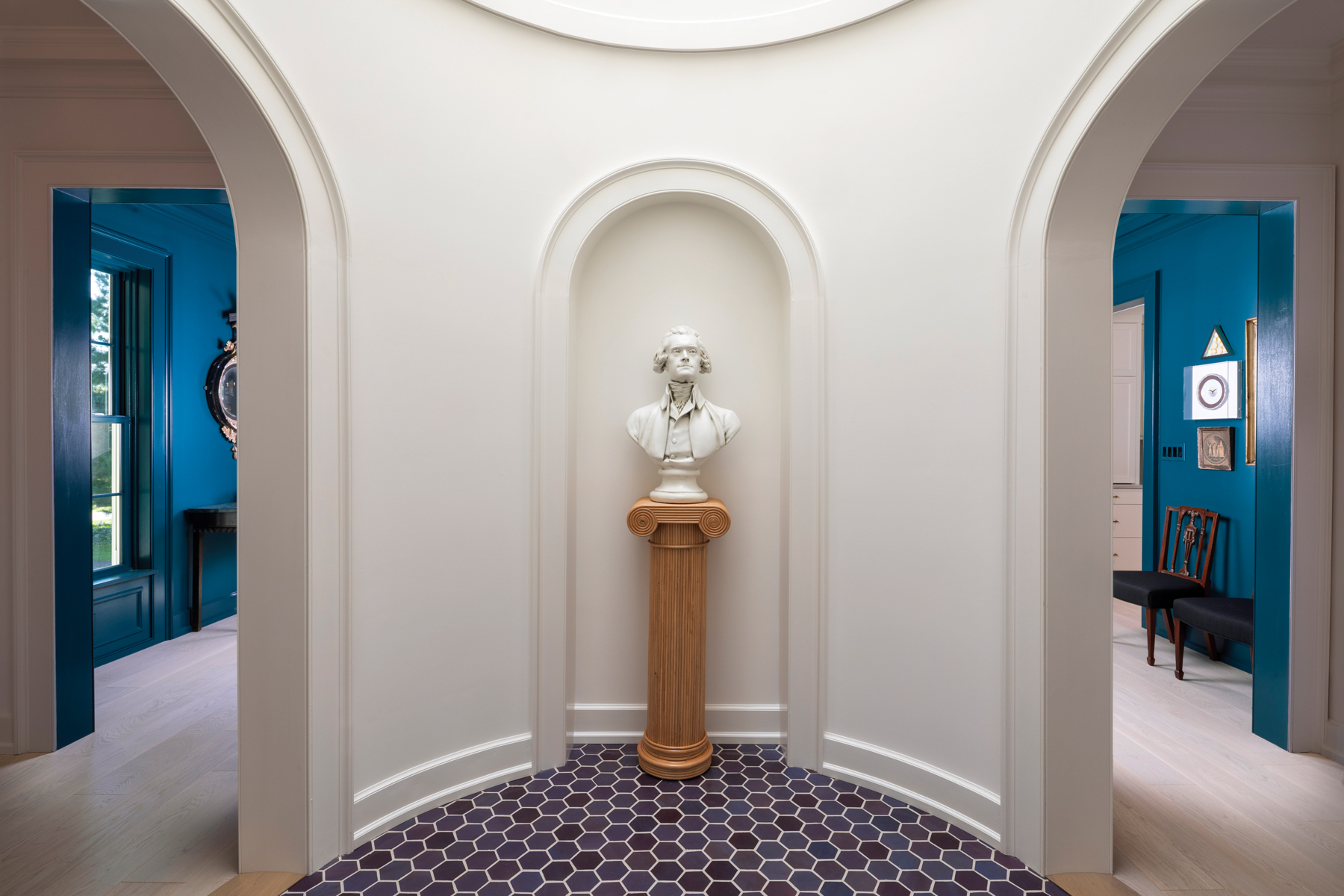
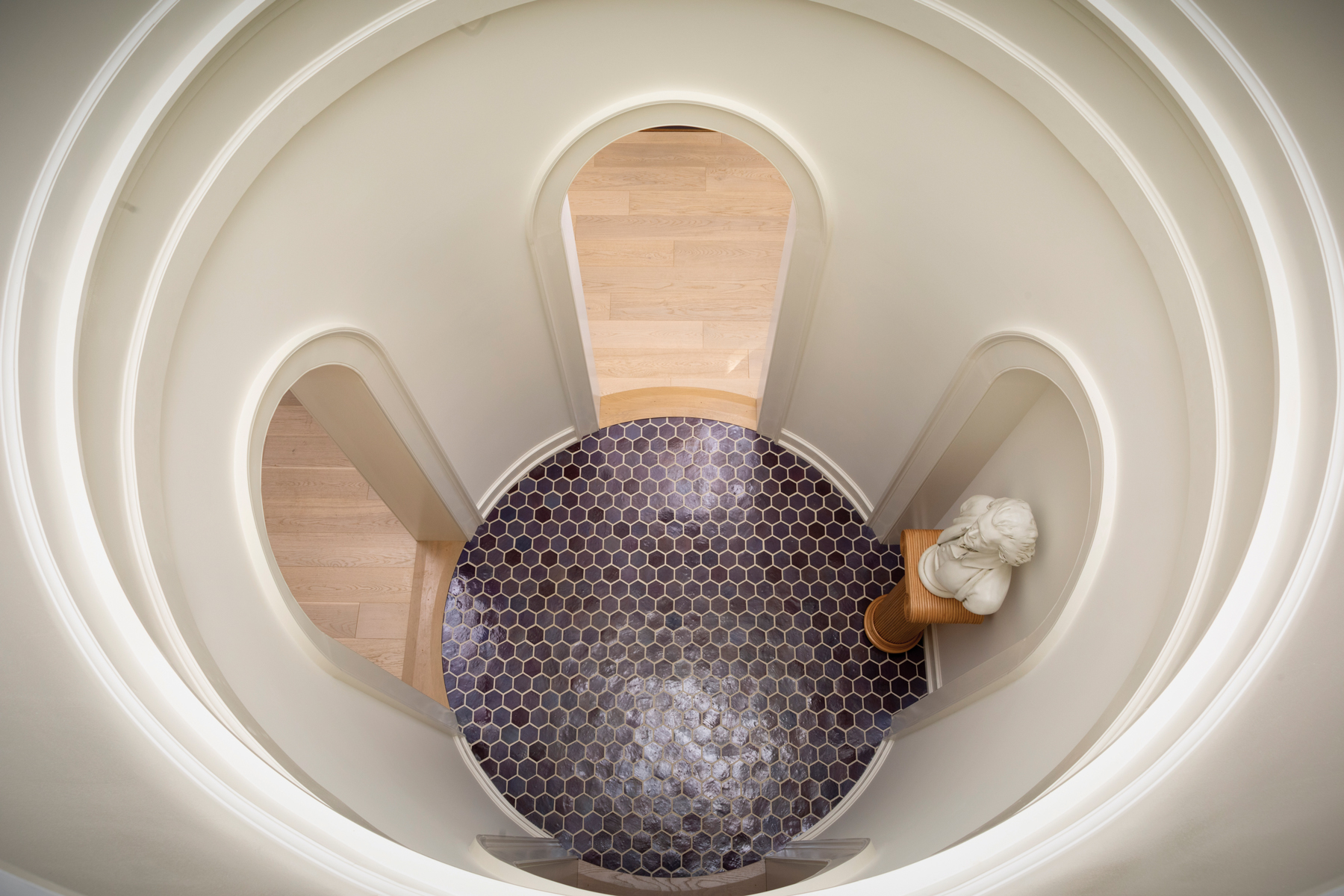
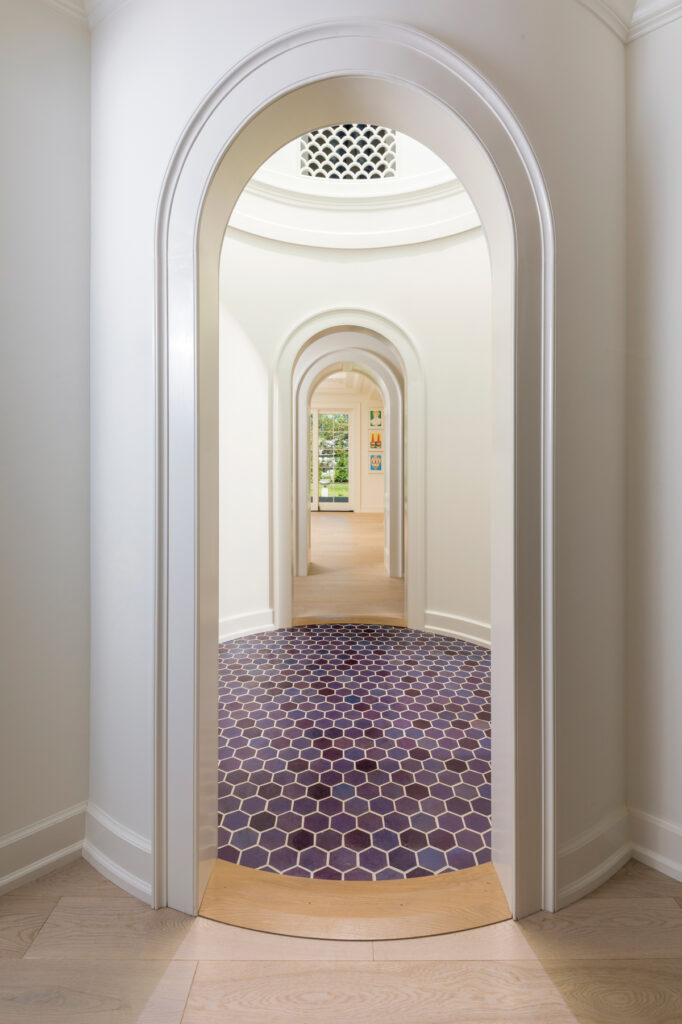
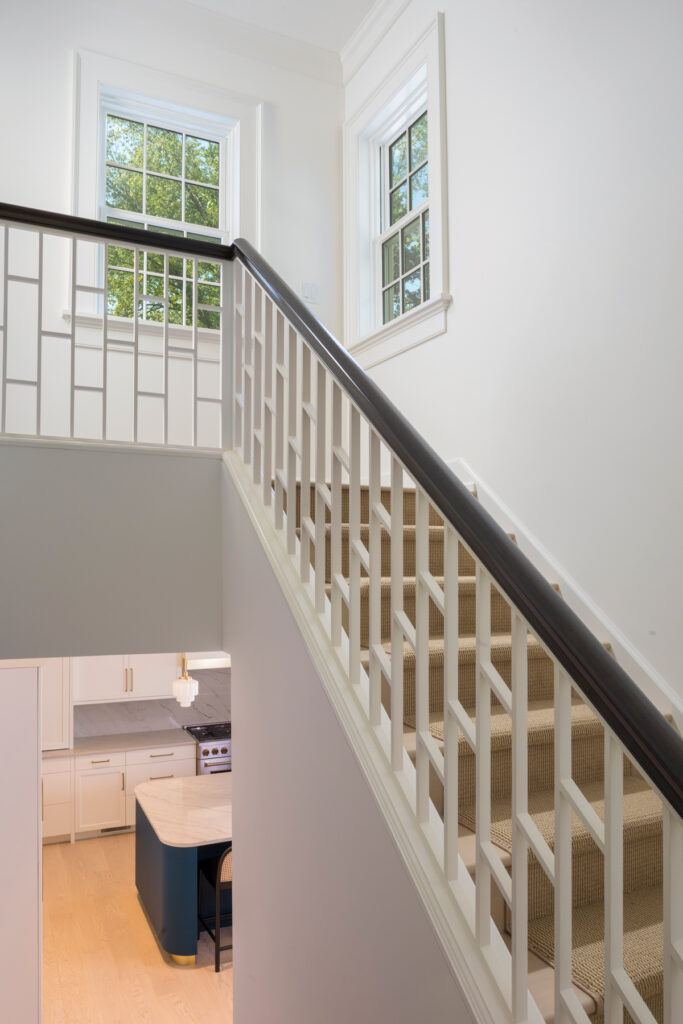
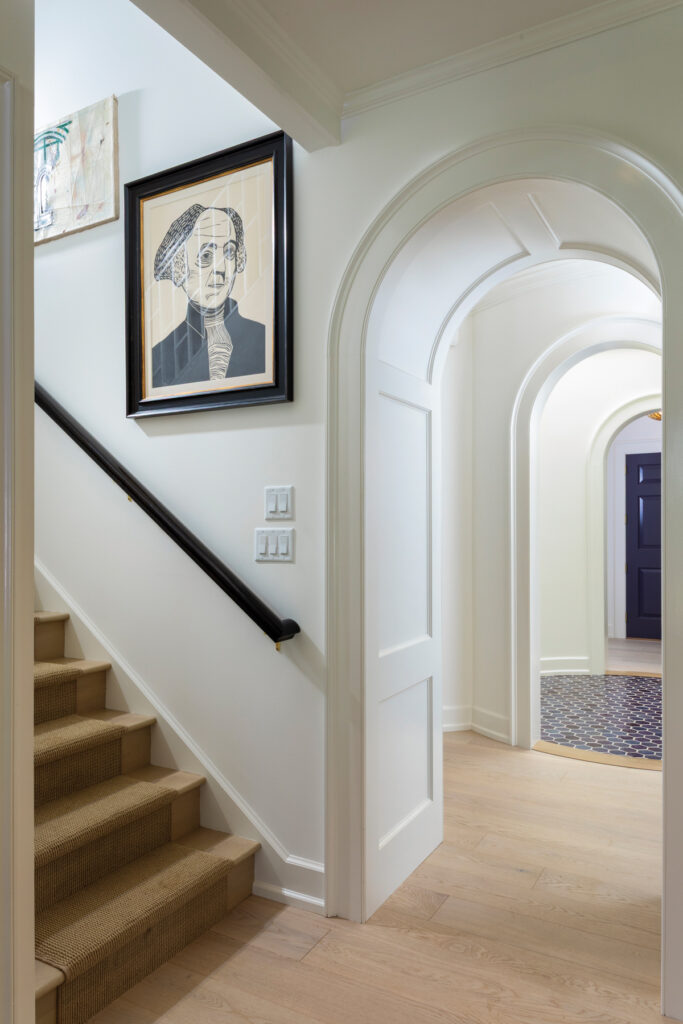
Upon entering the house, you immediately take note of the main level’s floor plan. It’s more akin to the 18th century than to the 21st, as each room is an entity unto itself. Open concept would look out of place in such a home. Still, it feels open and airy thanks to high ceilings, arched doorways, light oak floors, oversized windows, cream-colored walls, white kitchen cabinetry and a unique dome feature that extends from the edge of the foyer to the rooftop. “The first floor has a great flow, which makes it perfect for entertaining,” the homeowner says, noting the first test came with a housewarming party held during the holiday season. Two bedrooms and an office define the second floor that is accessed by a staircase in the kitchen area. An unfinished basement provides more potential living space.
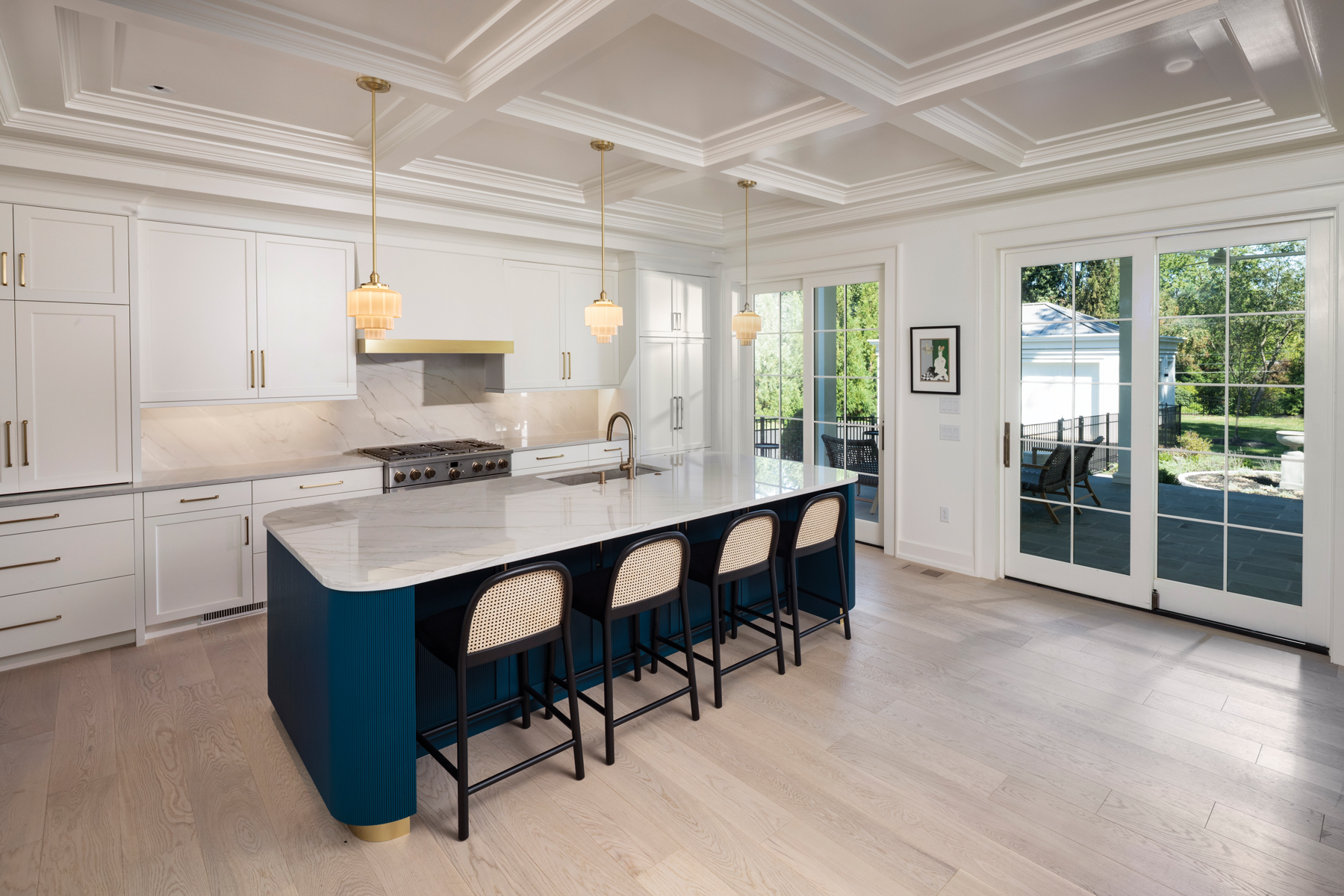
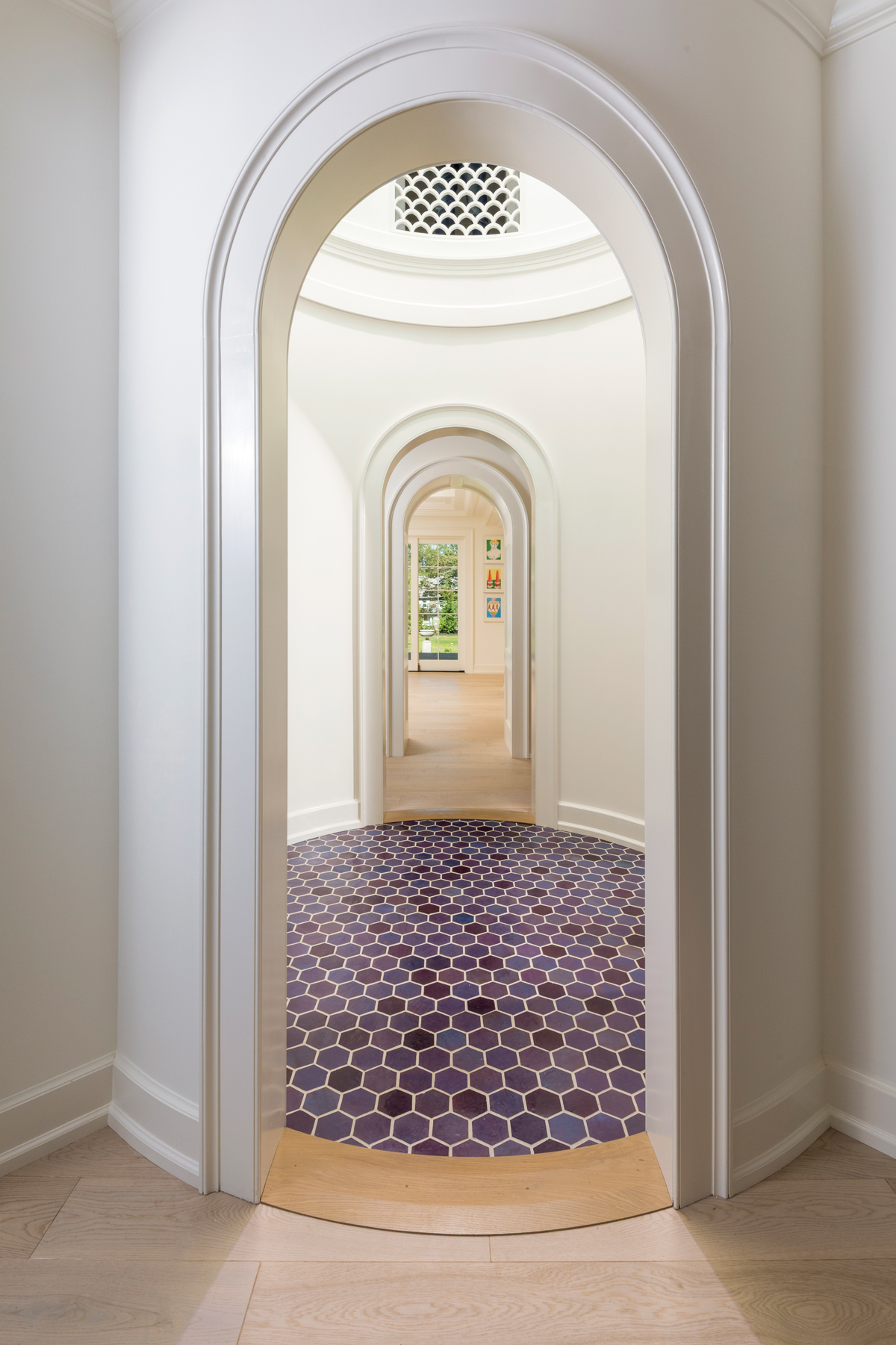
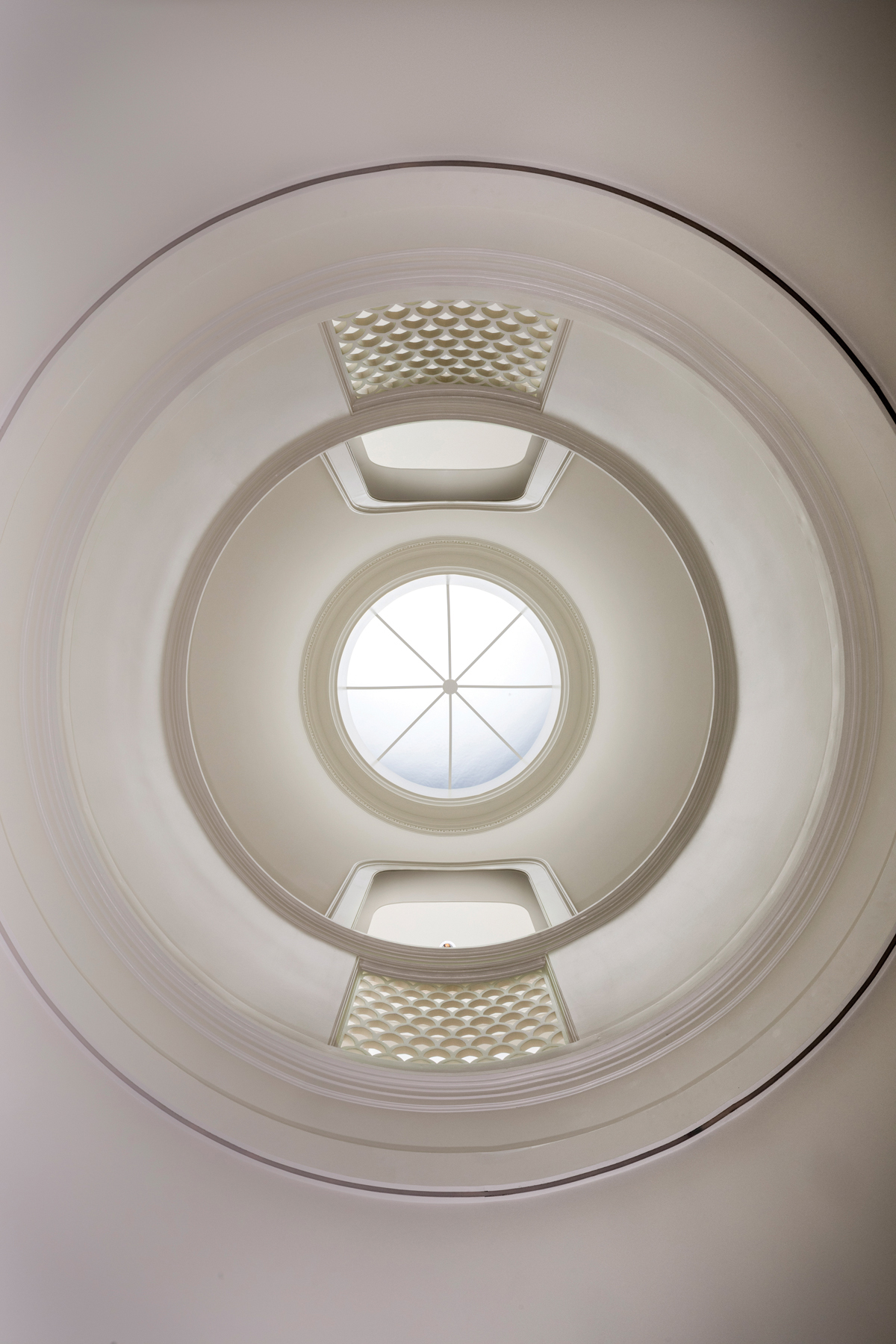
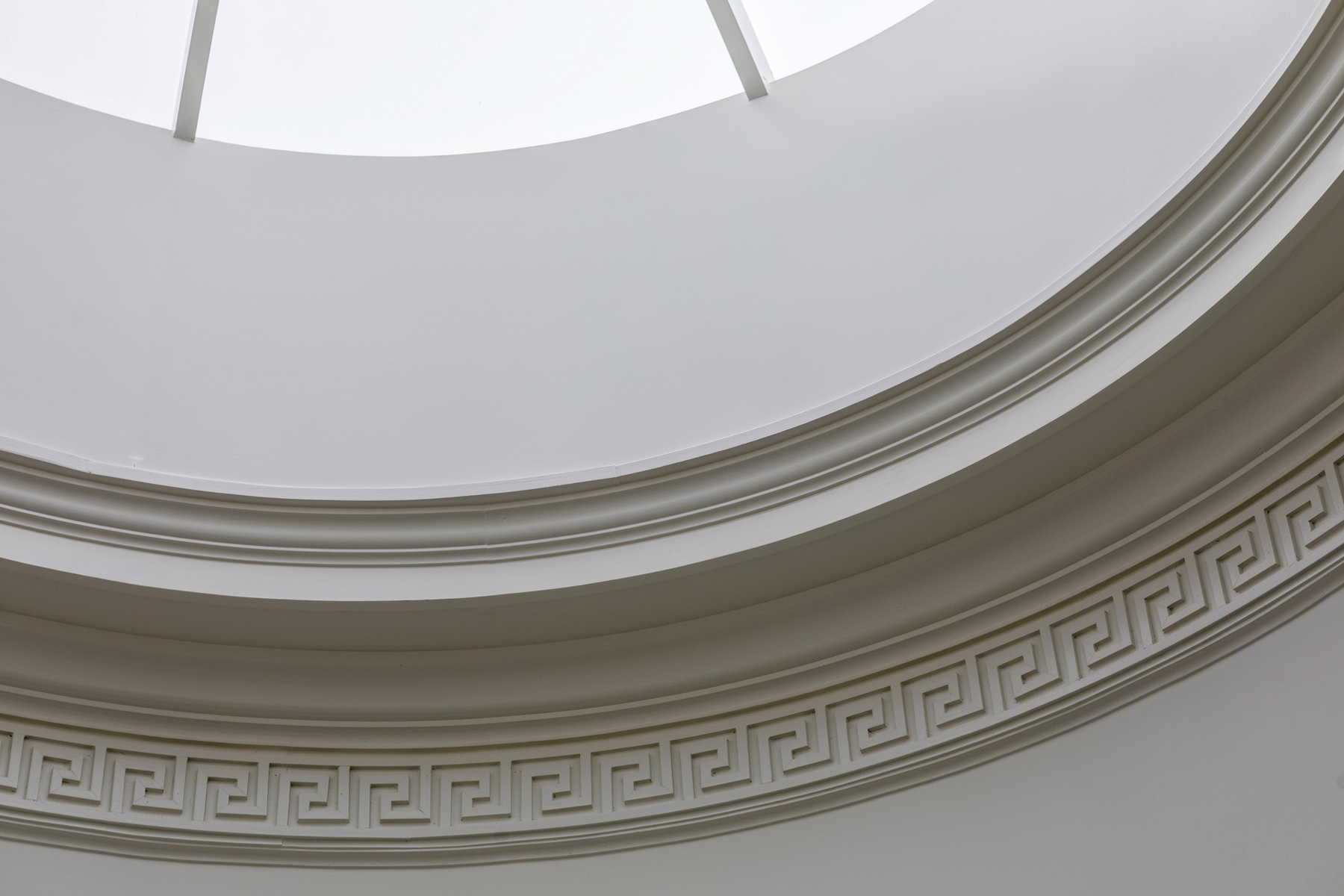
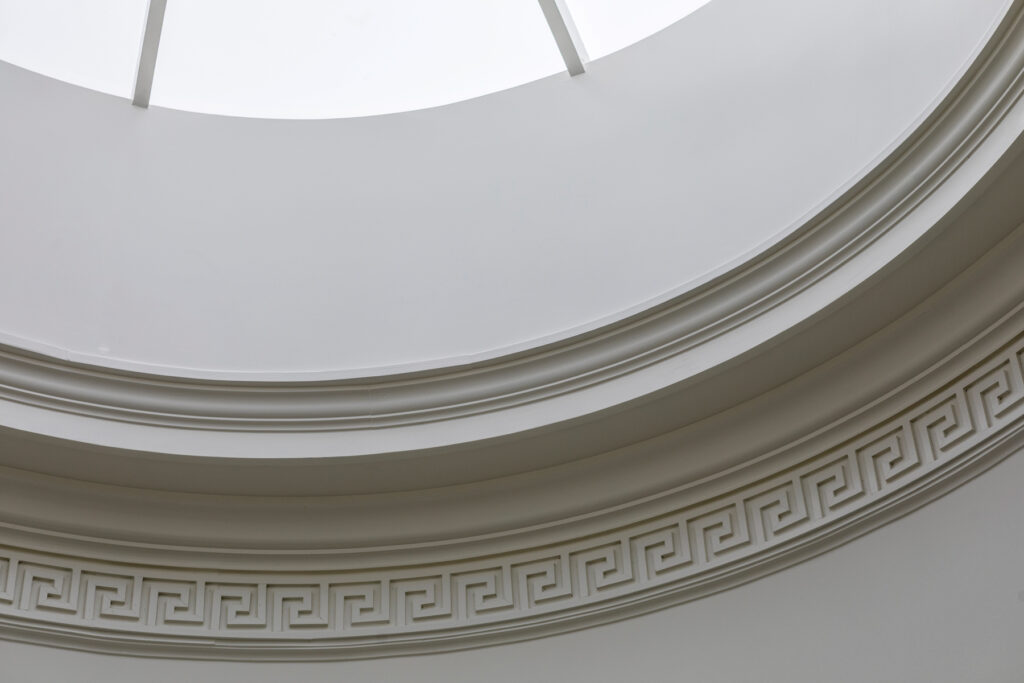
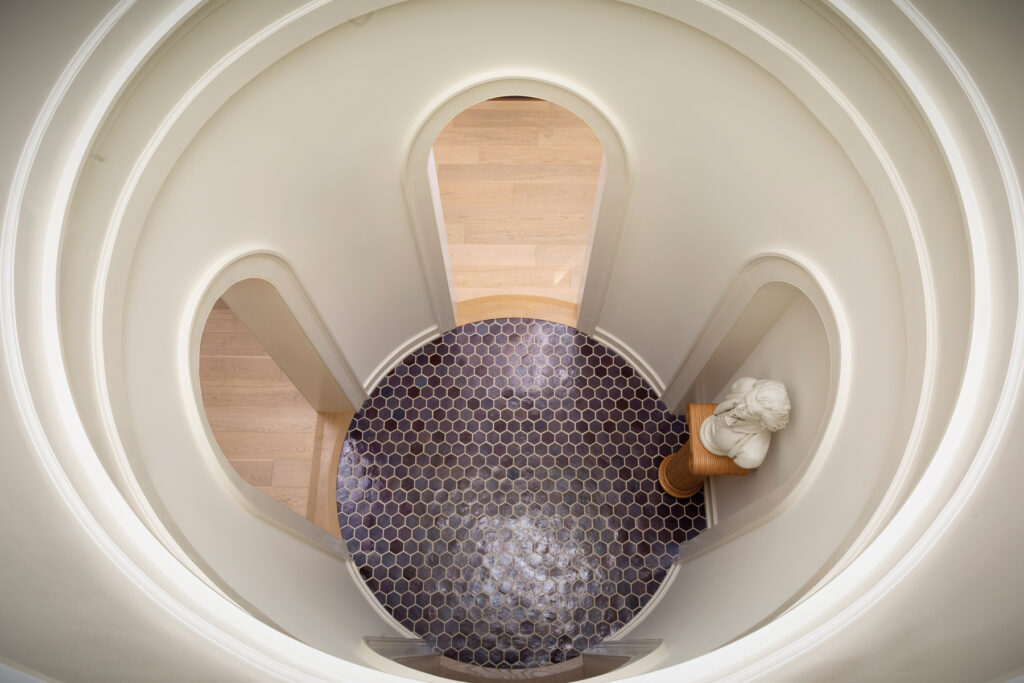
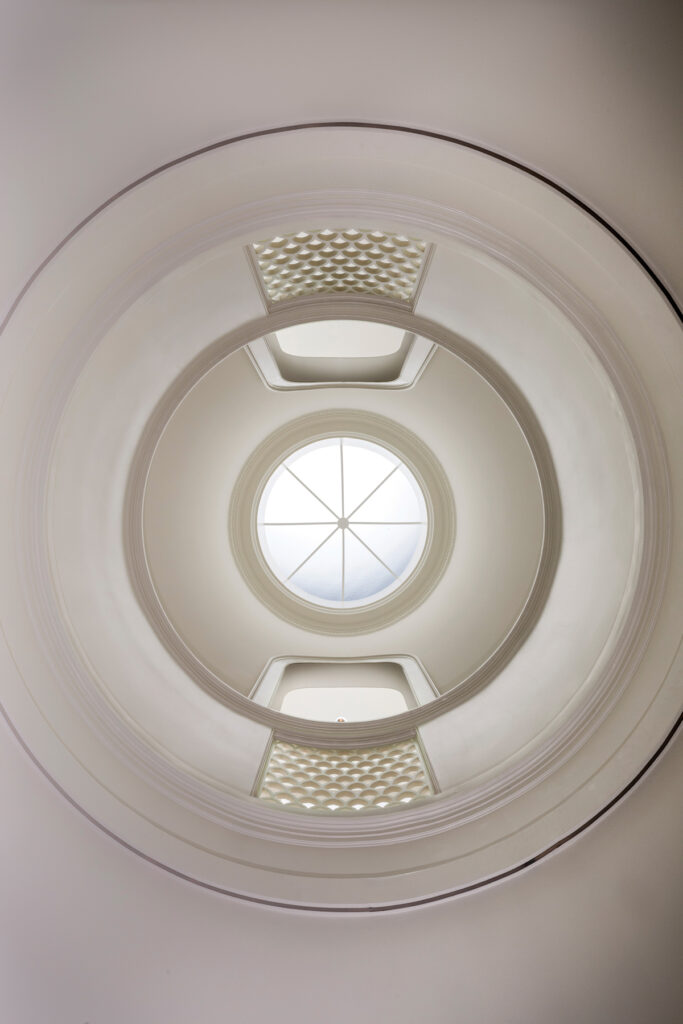
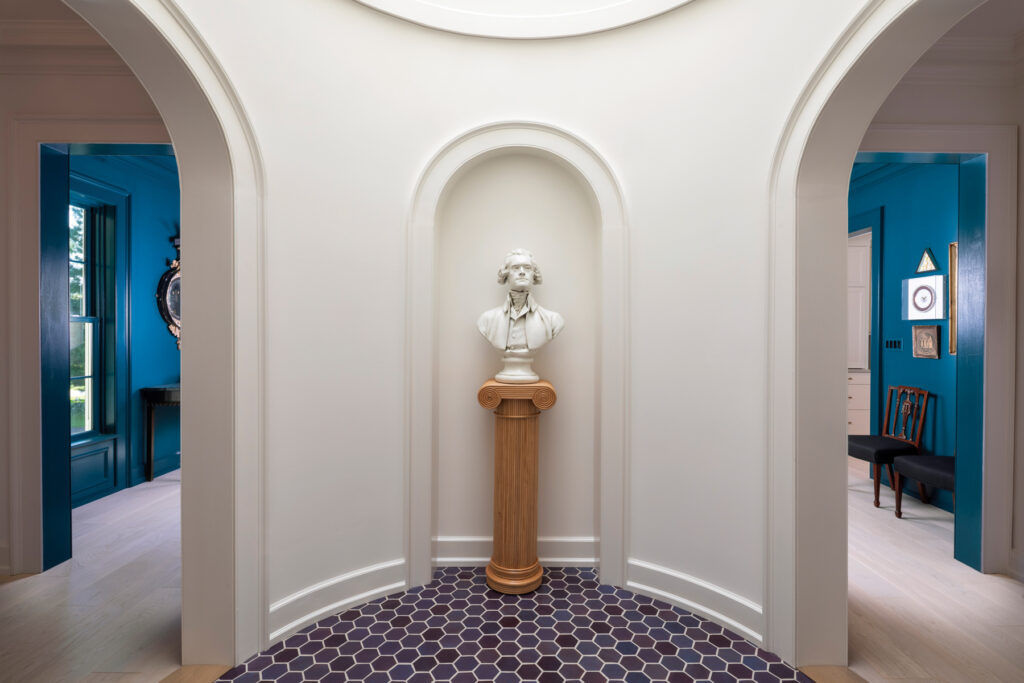
As for the dome feature, paying homage to the homeowner’s favorite aspect of Monticello – the iconic Dome Room – was a must-have. The challenge: how to create the intricate molding that would encircle its interior. “Flexible molding provided the solution,” Don says, adding, “GR Mitchell did all the millwork – and there was a lot – for the house.” The dome is topped with an oculus (Latin for “eye”) that admits natural light. The dome is further illuminated by LED lighting that curves behind the moldings. “It’s beautiful at night,” says the homeowner.
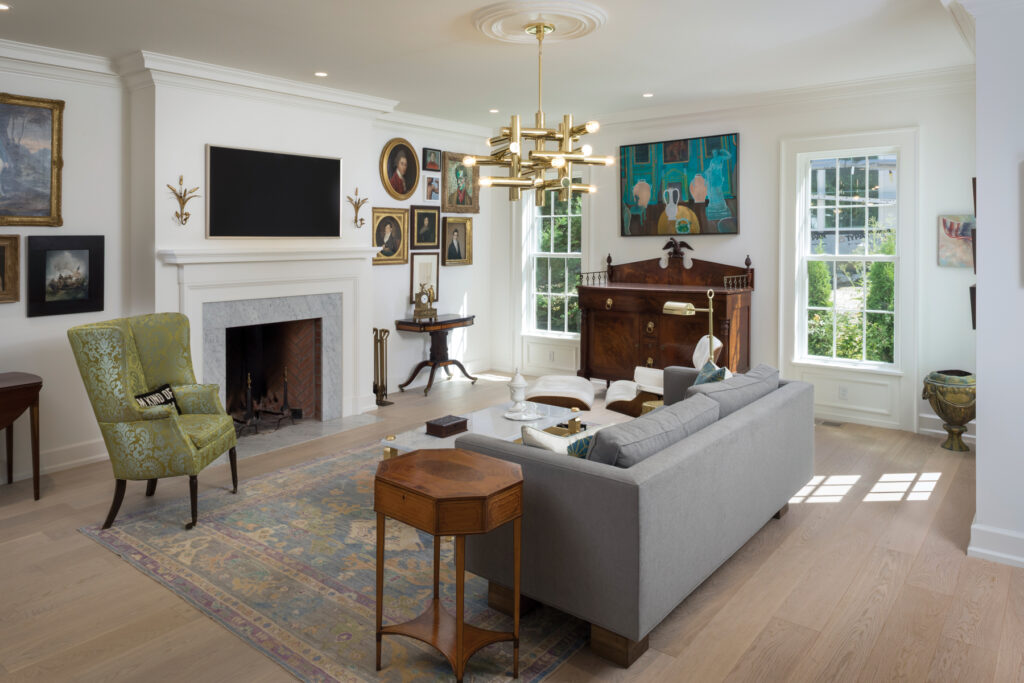
Art and furnishings such as a highboy and a chest he had inherited from an uncle, prompted the homeowner to request specific wall sizes that would accommodate his treasured pieces. Jon’s designs – notably in the living room – provided the specifications that were needed. Yet another request was to somehow incorporate the homeowner’s favorite color, purple, into the design. That was achieved by painting the front door that hue and tiling the floor of the dome in shades of purple and blue.
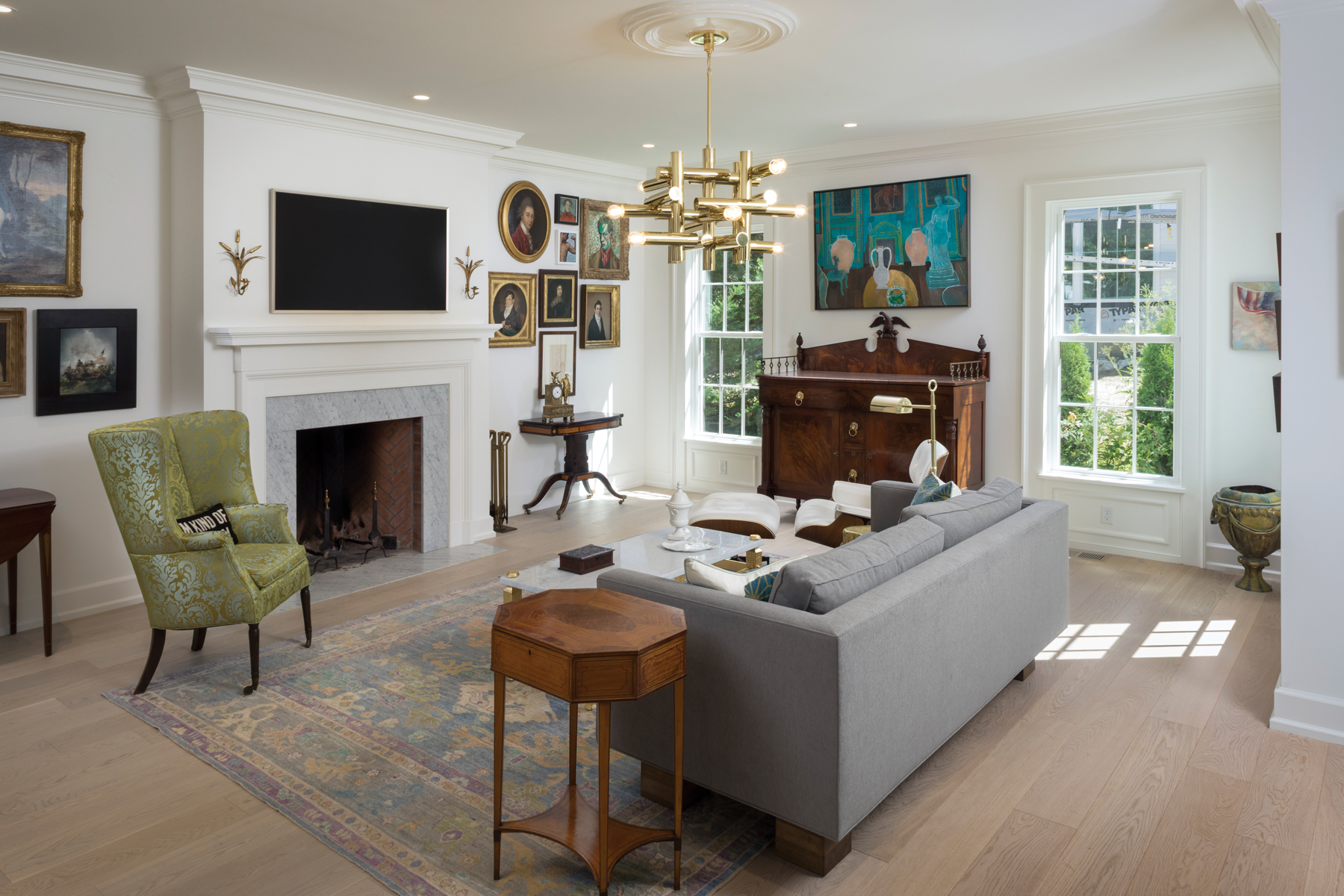
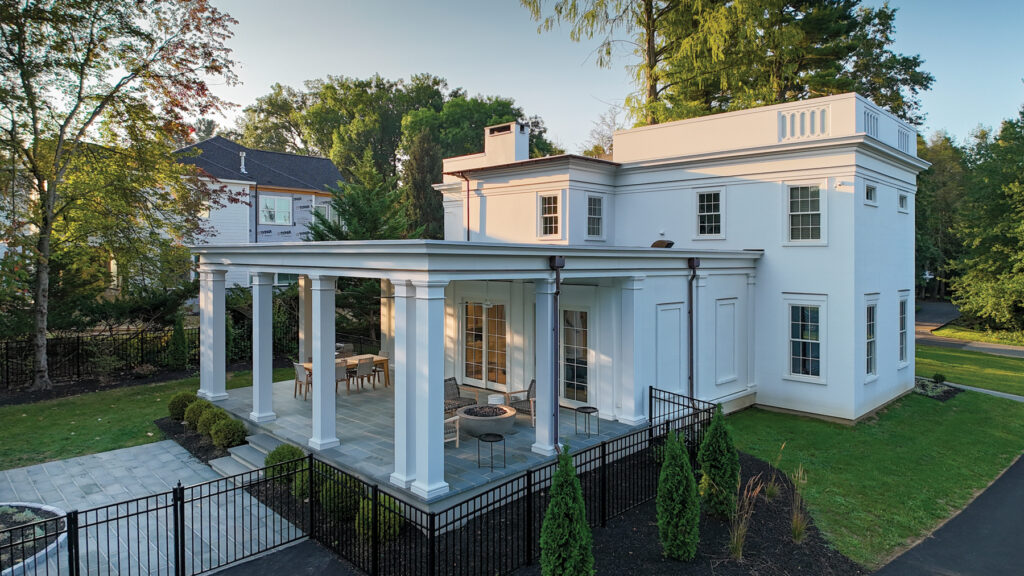
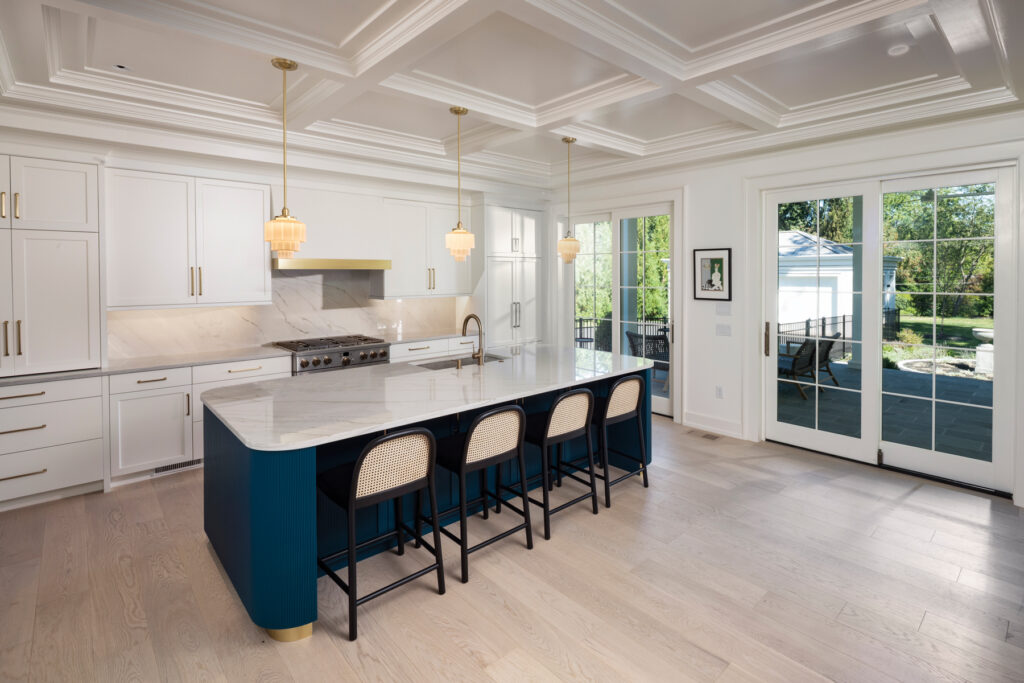
The homeowner’s love of Art Deco is reflected in the kitchen, where a large island is defined by curved reeded panels that are painted a vivid shade of blue. It’s complemented by gold accents and period lighting. Jon credits KBE Design Build for interpreting the desired styling. To bring a sense of neoclassic architecture to the space, a coffered ceiling completed the design. Modern living enters the picture thanks to ample storage and a wall of patio doors that connects the kitchen with the spacious outdoor living area.
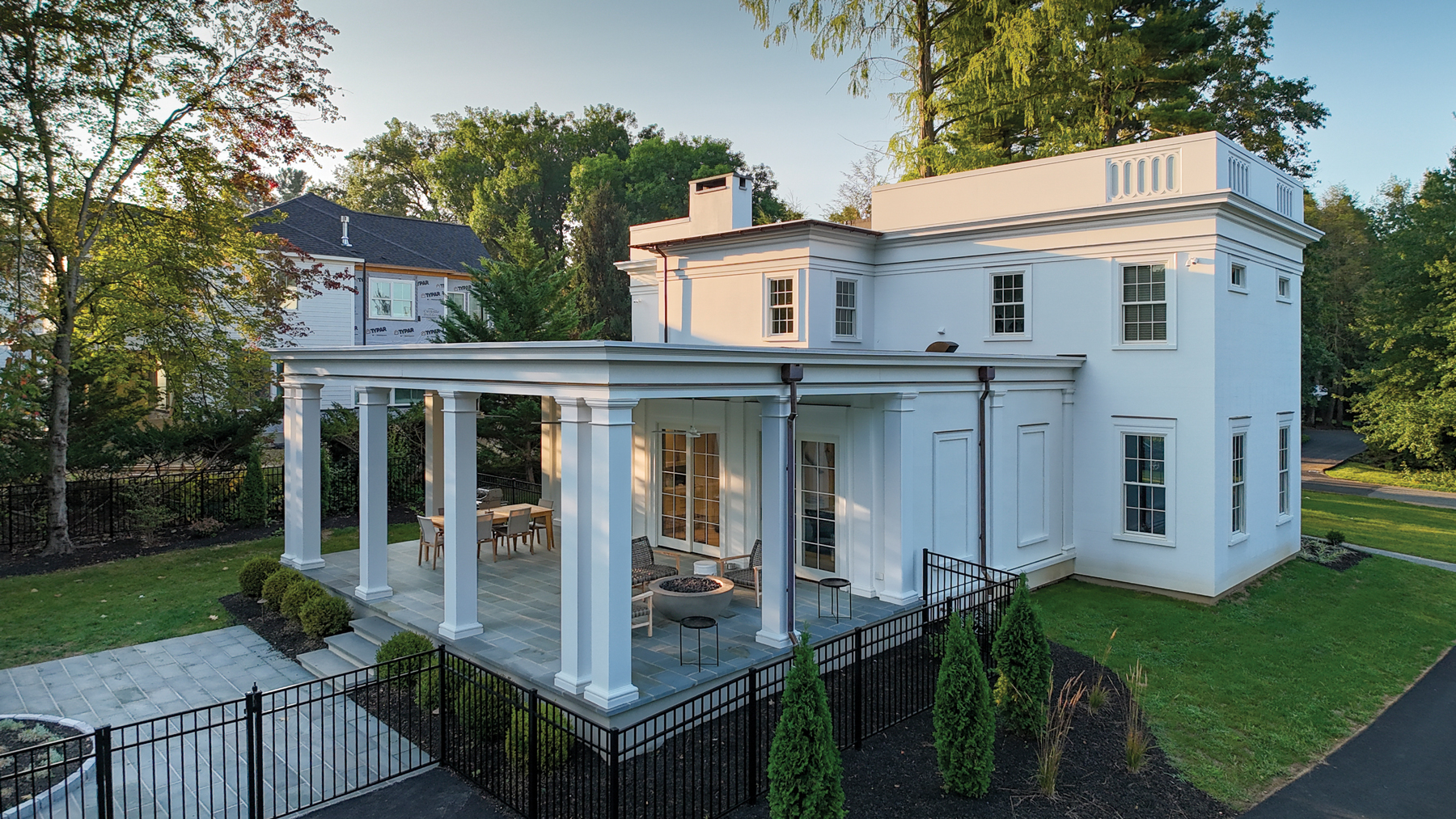
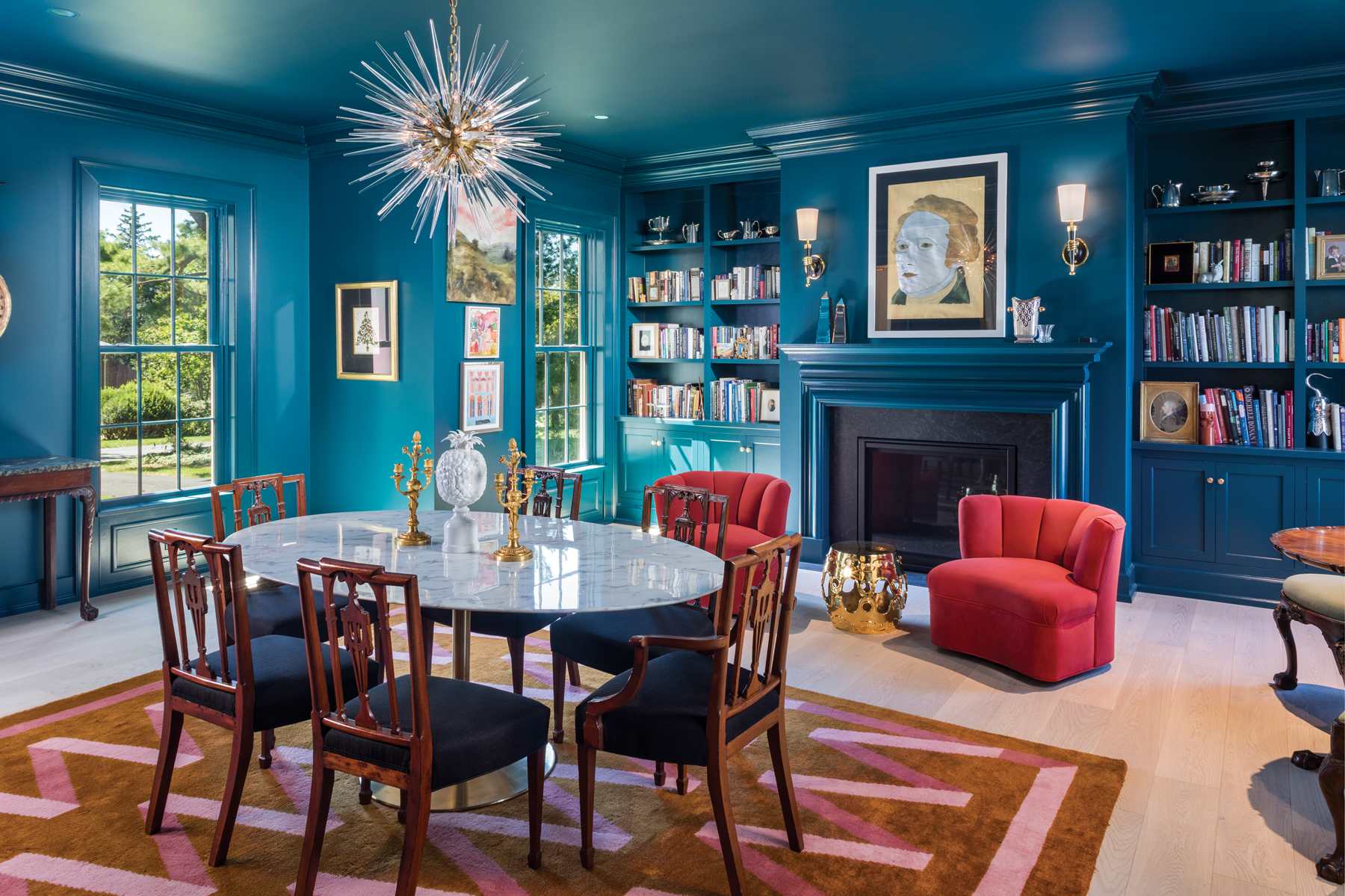
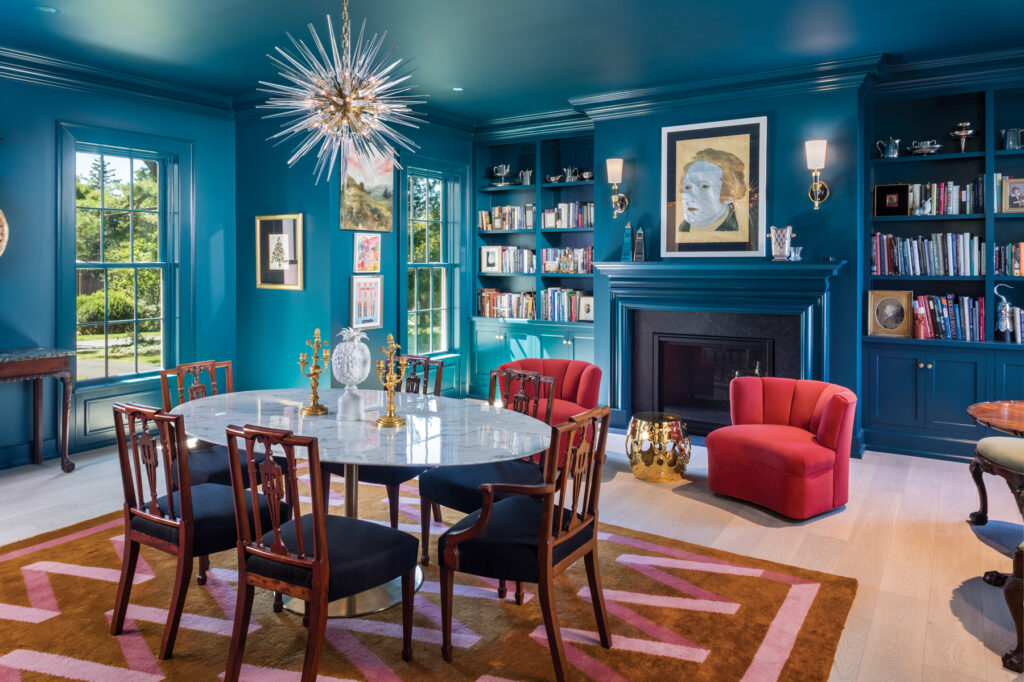
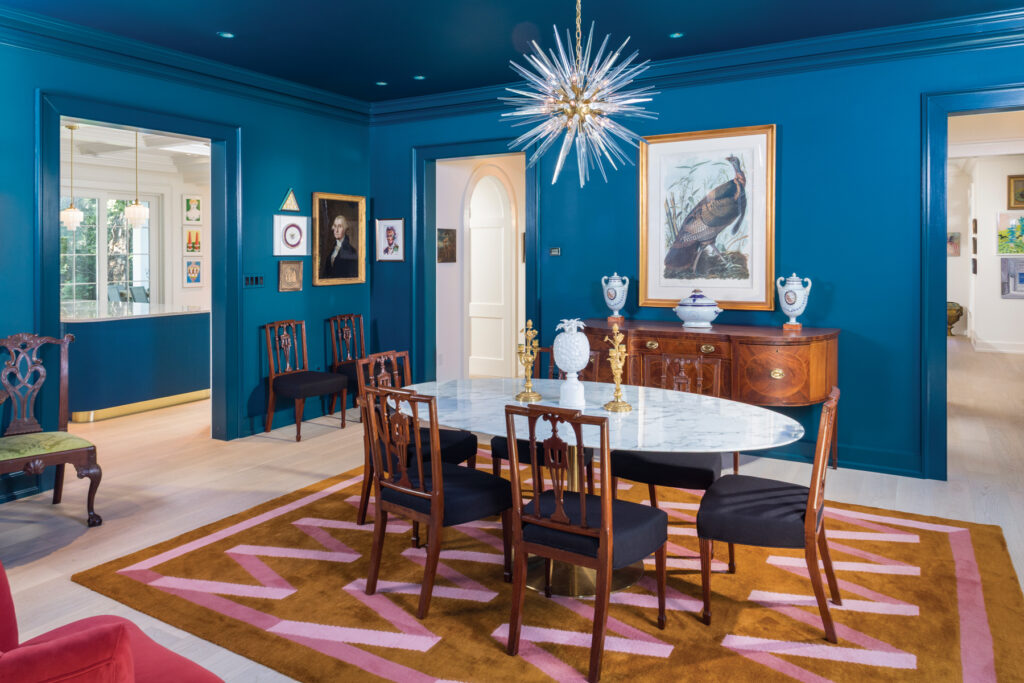
Period design and modern living are also showcased in the dining room-library, where the homeowner describes the décor as “Federal meets Art Deco.” This is definitely a room that speaks of his interests, as it’s filled with antique furnishings, art, books, Art Deco pieces, modern lighting and personal items. It’s not a staid dining room or library. Instead, it’s a space that’s simply fascinating due to the mix of furnishings and decorative items. Color enlivens the room. “I love this [space],” says Don. “It’s a room that really conveys his personality.” Indeed, it’s the perfect spot to enjoy dinner, read, play a game of cards or have cocktails on a Friday evening. The homeowner was hesitant about the dramatic color that drenches the entire room. “I asked Wendy for her advice, and she encouraged me to go for it,” he reports. “I love it!”
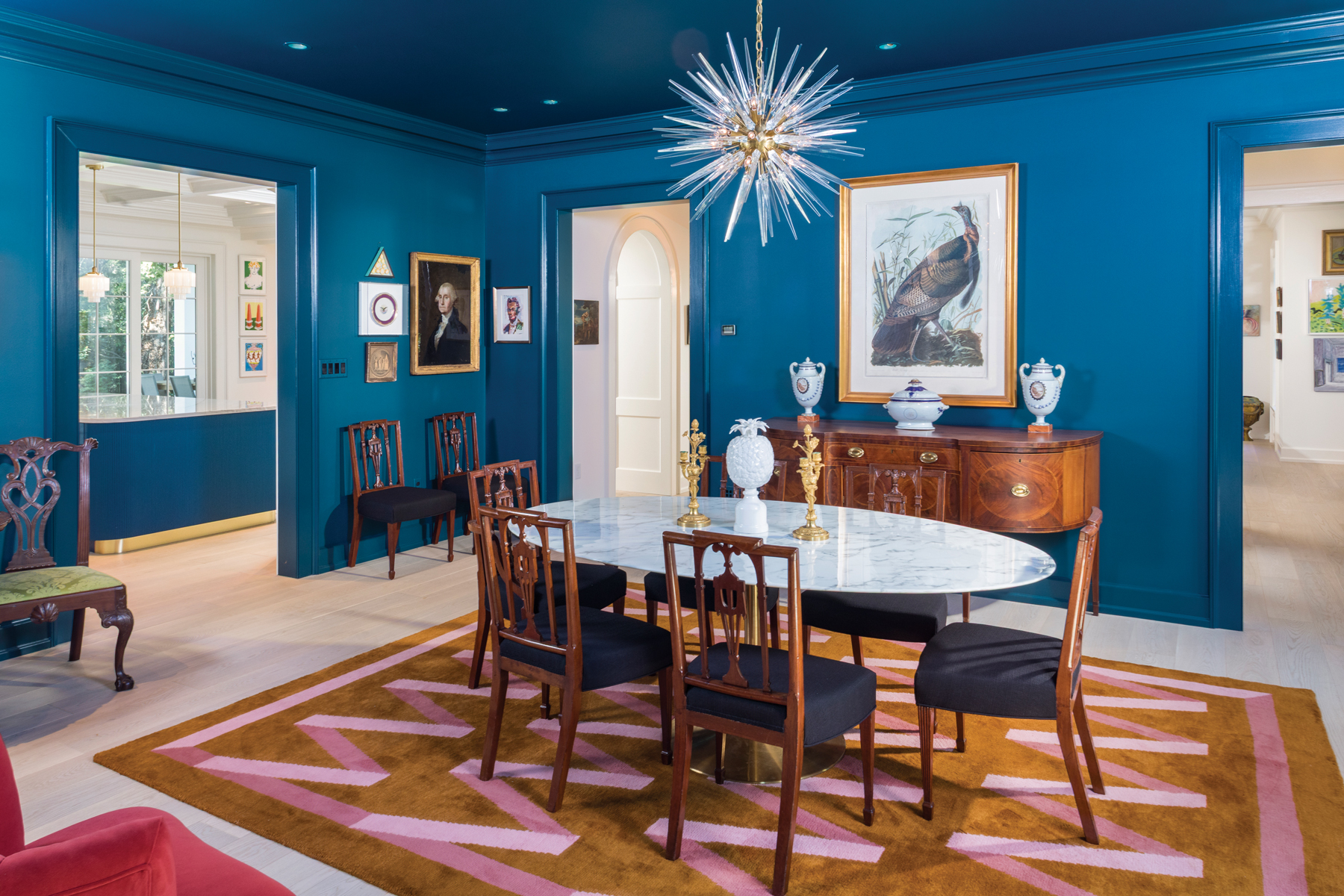
Ground was broken in the spring of 2024 and the house was completed in May 2025. “I ended up with a bit of everything,” says the homeowner of the results that indeed are interwoven with his ideas and interests. The details that define each space of this home speak of the design expertise and craftmanship that transformed one man’s idea into reality.
“I’m glad the homeowner was open to sharing it,” Don says of the project’s appearance in the magazine. “We’re all very proud of it.”
Credits
- Architects: Wendy Tippetts and Jon Sullenberger, Tippetts/Weaver Architects, Lancaster, tippettsweaver.com
- Builder: Kreider and Diller Builders, Lancaster, kdbuilders.com
- Kitchen and Bath Design: KBE Design Build, Brownstown
- Kitchen and Bath Cabinetry: Signature Custom Cabinetry, Ephrata
- Painting: Two Dudes Painting Company, Lancaster
- Flooring: Cloister’s Flooring America, Ephrata
- Lumber, Trusses and Interior & Exterior Custom Millwork: GR Mitchell, Willow Street
- Civil Engineer: Steven P. Gergely, Harbor Engineering, Manheim
- Site Excavation: BN Excavating, Marietta
- Poured Concrete Foundation: Weiler Walls, Lititz
- Foundation Waterproofing: Weaver Commercial, East Earl
- Framing Contractor: Zook Home Builders, Strasburg
- Siding & Exterior Millwork Installation: Pequea Roofing & Siding, Willow Street
- Insulation: Keener Insulating & Supply, Lancaster
- Trim Contractor: Dale H. Martin Trim Carpenter, Ephrata
- Roofing & Gutters: Shea Roofing, Mountville
- Sierra Pacific Windows: J&L Building Materials, Landisville
- Drywall: Rock & Metal Systems, Quarryville
- Stucco: Weiler’s Masonry, Richland
- Concrete Flatwork & Masonry Fireplace: AC Masonry, Quarryville
- Bluestone Porches: River Valley Landscapes, Wrightsville
- Plumbing: Mervin Zimmerman, Lititz
- HVAC: JK Mechanical, Willow Street
- Electric: Criswell Electric, Lancaster
- Kitchen Pendants: Olde Brick House Shoppes, Lititz
- Photography: Bill Psolka, Psolka Photography, Somerset, New Jersey
Thomas Jefferson
“I think that this is the most extraordinary collection of talent, of human knowledge, that has ever been gathered together at the White House, with the possible exception of when Thomas Jefferson dined alone.”
John F. Kennedy, upon welcoming 49 Nobel Prize winners to the White House
Having inherited 5,000 acres of land from his father, 25-year-old Thomas Jefferson broke ground on his dream house in 1768, calling it Monticello (Italian for “little mountain). It was the sort of house that was never finished, as Jefferson constantly remodeled and expanded it.
Jefferson became the Minister to France, serving from 1785-1789, during which he became enamored of French style, notably architecture. When he returned to the U.S., he brought along books, art and furnishings. Brimming with ideas for Monticello, he launched a major remodeling project in 1793. Among the renovations were the addition of a central hallway, a remodeled second story and an octagonal-shaped dome atop the entrance area. Bricks were made onsite using clay from the property, which also supplied the lumber, stone and limestone used in the project. Nails were manufactured onsite, as well.
The property reflected Jefferson’s diverse interests that included politics, philosophy, architecture, archeology, botany, bird watching, wine, music, cooking and horticulture in that it was filled with formal gardens, orchards, vineyards, vegetable gardens and ponds. Throughout his life, he kept detailed journals relating to the weather, crop success, etc.
Jefferson could also be described as a contradiction. History.com notes that while his home was filled with books that addressed the Enlightenment (or Age of Reason), they were dusted by enslaved people. While he wrote the words, “all men are created equal,” he was not convinced of that from a personal perspective.
Ironically, Jefferson died on July 4, 1826, at the age of 83. John Adams died within hours of him, passing away at the age of 90. The day marked the 50th anniversary of the U.S.
Jefferson had been in poor health at the time of his death. Monticello suffered the same fate. The estate, which was deeply in debt, was left to Jefferson’s daughter, Martha Randolph, who sold it to James Turner Barclay, who in turn sold it to Uriah Levy, who aimed to return the property to its former grandeur. It remained in the Levy family for decades, after which time Jefferson Levy sold it to the Thomas Jefferson Foundation in 1923. It is the only presidential property to be designated as a UNESCO World Heritage Site.
For more information, visit Monticello.org.
Leave a Reply