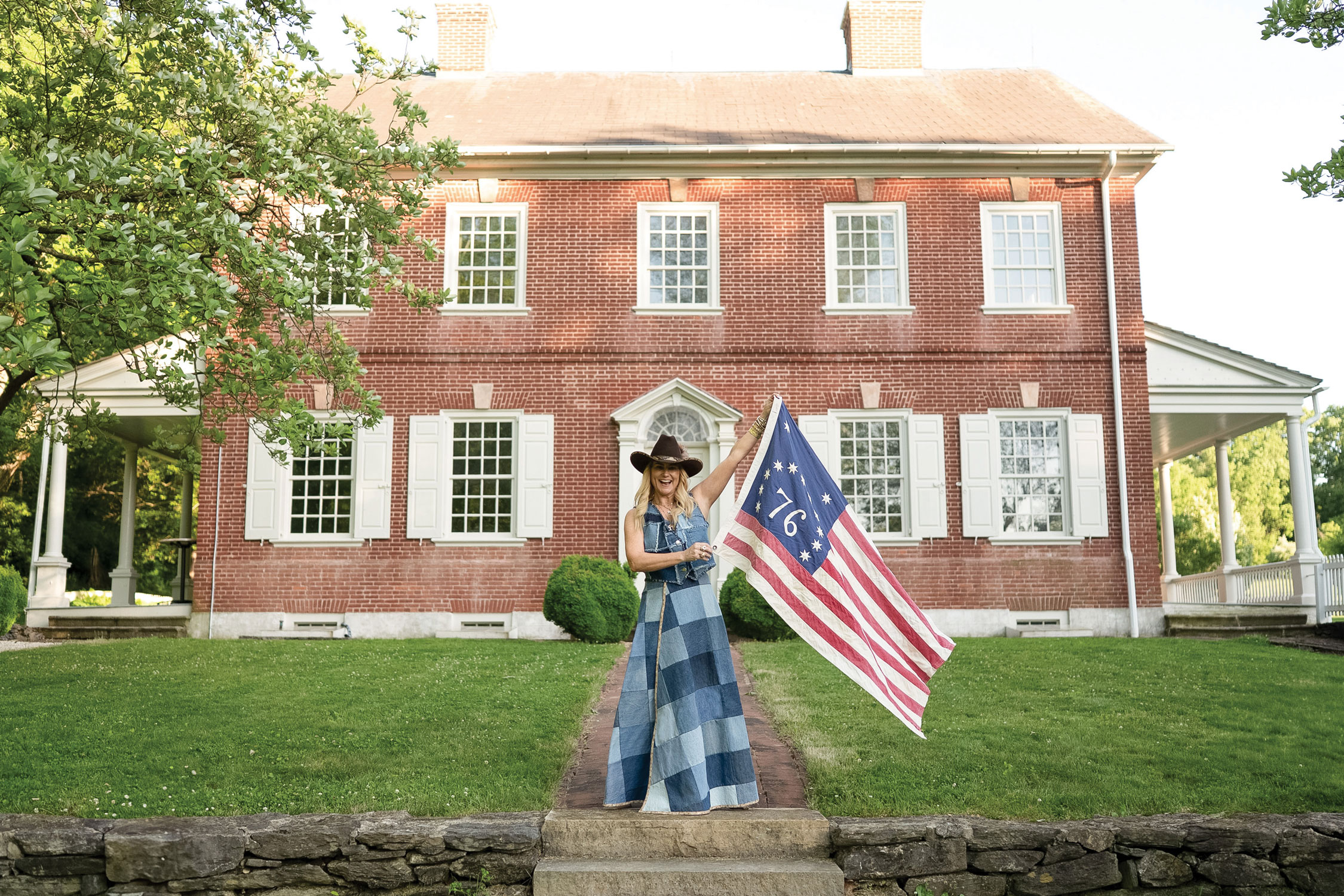
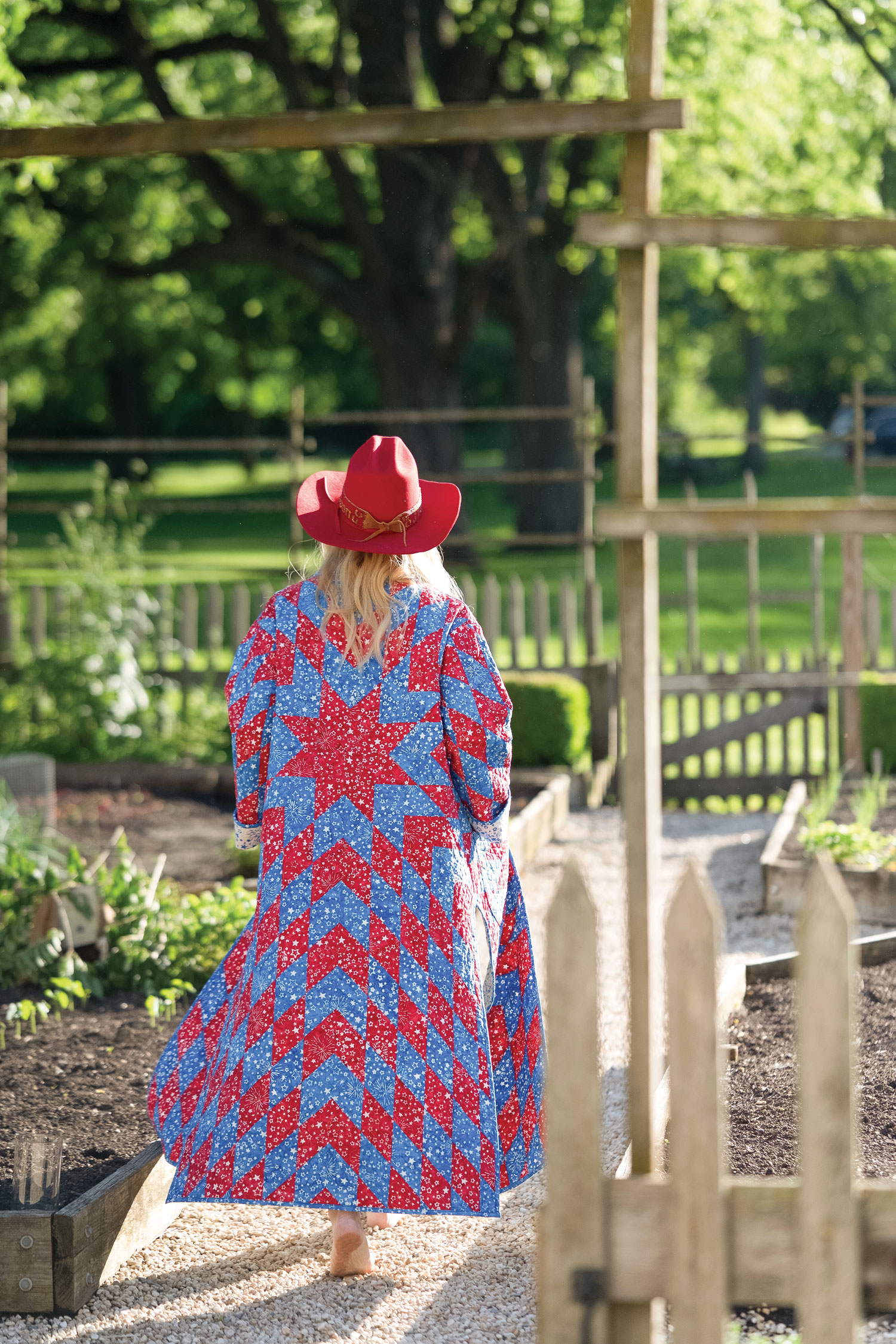
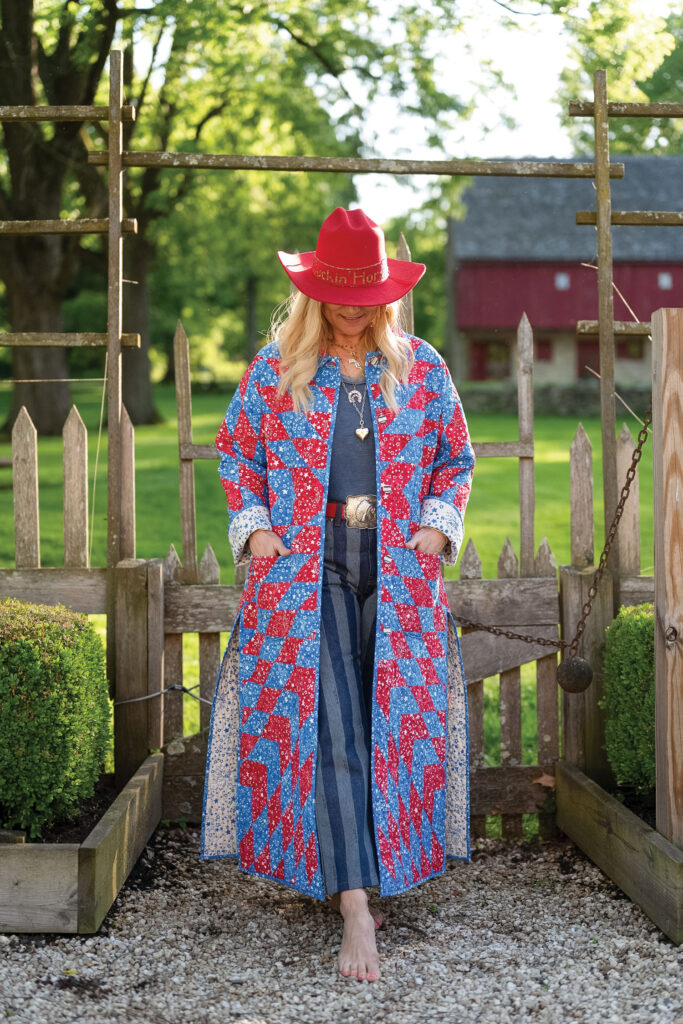
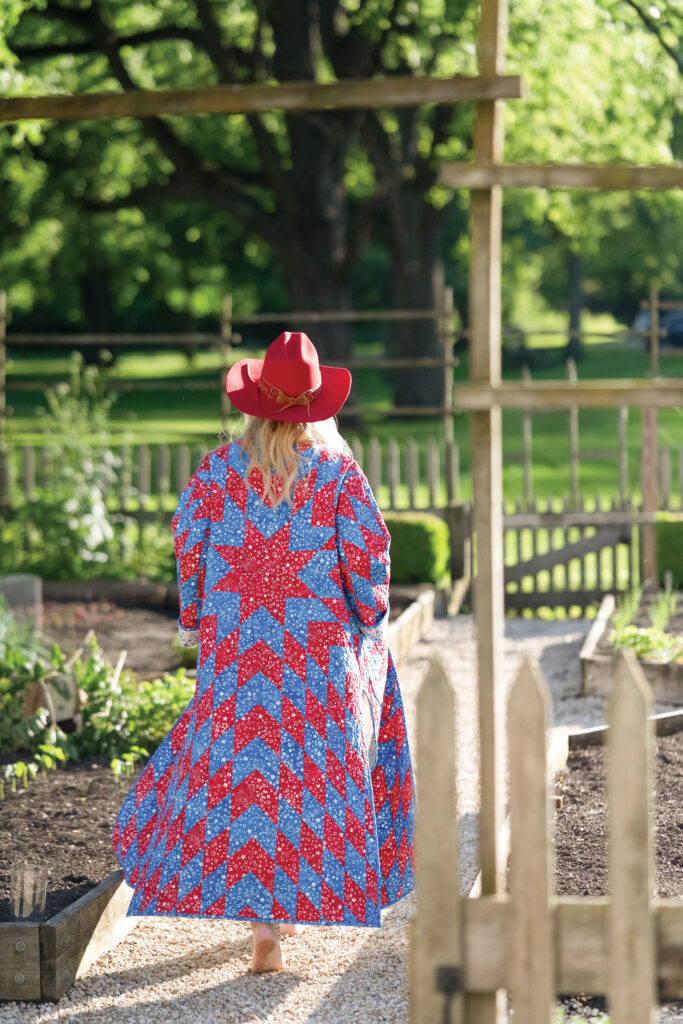
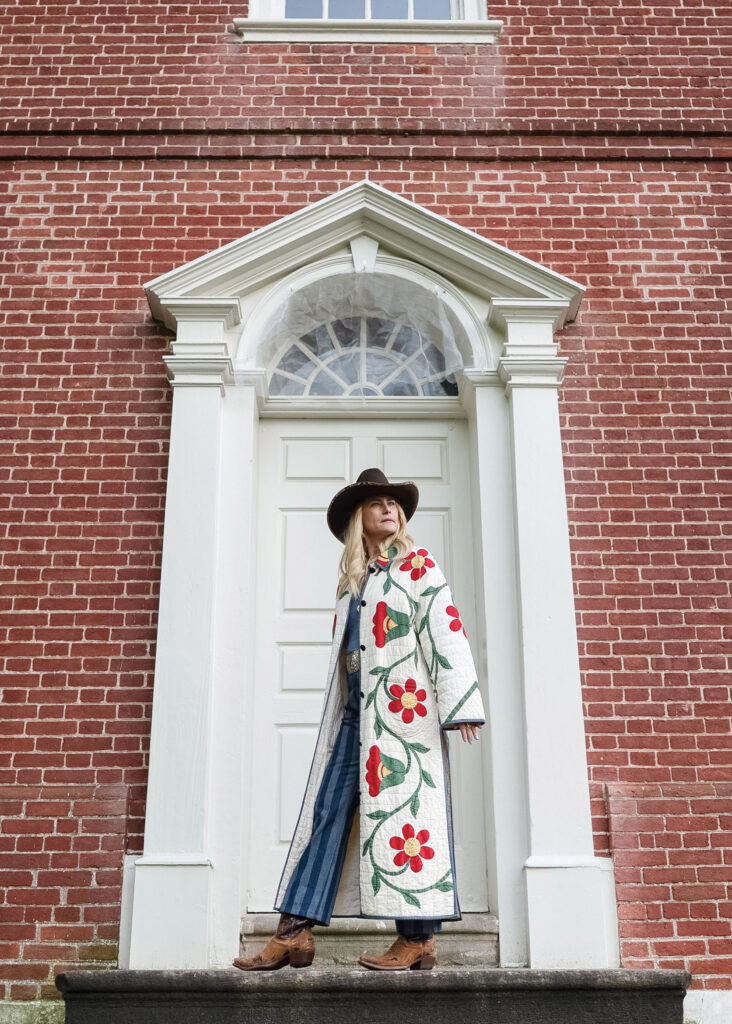
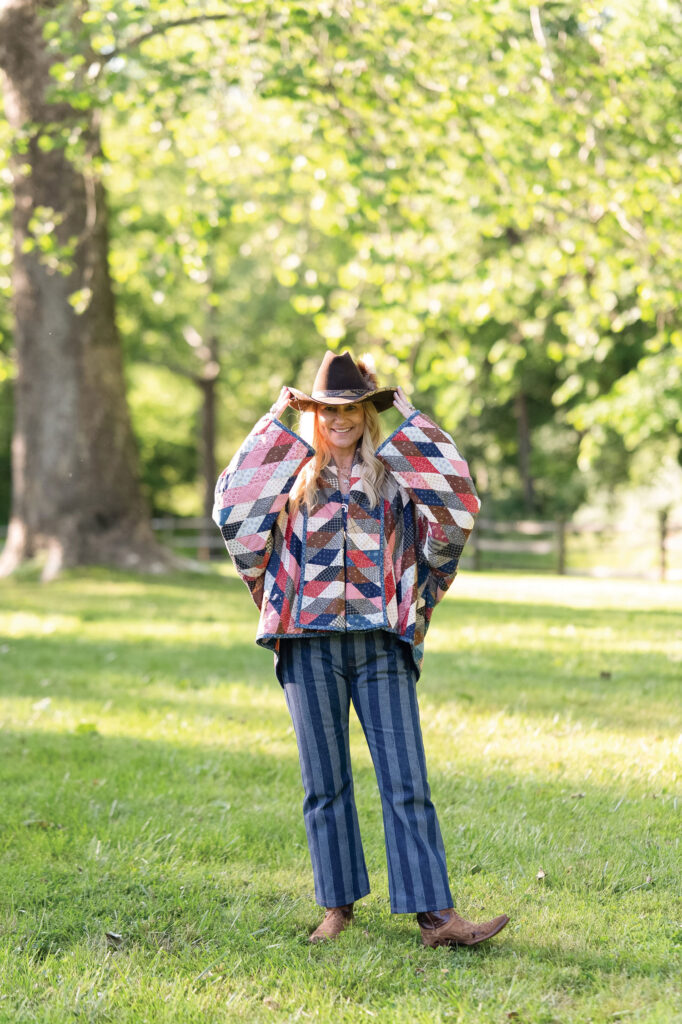
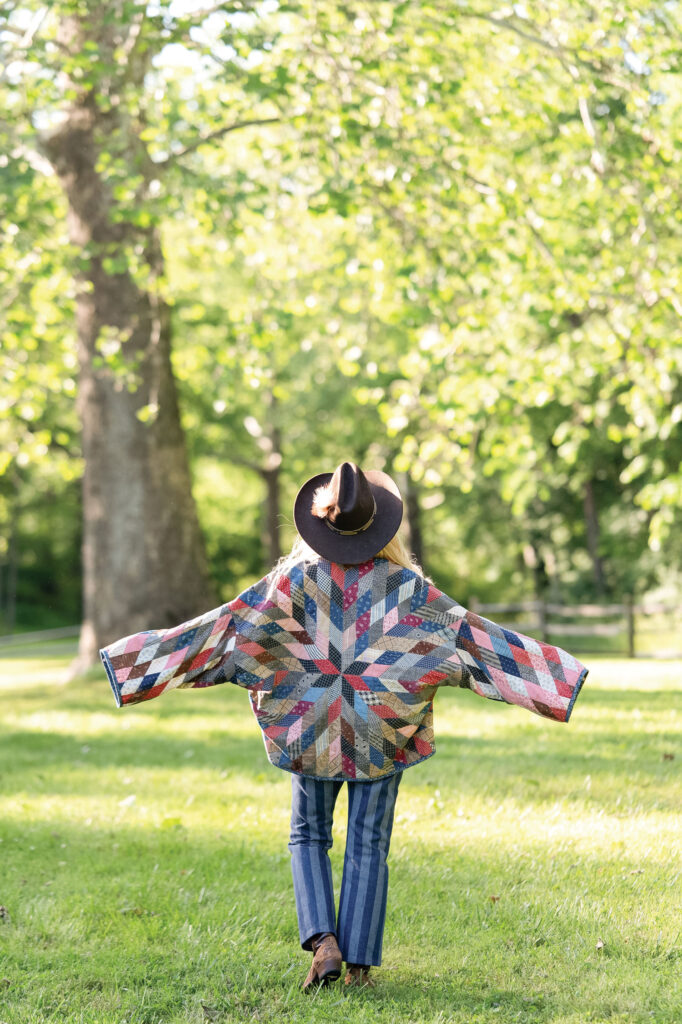
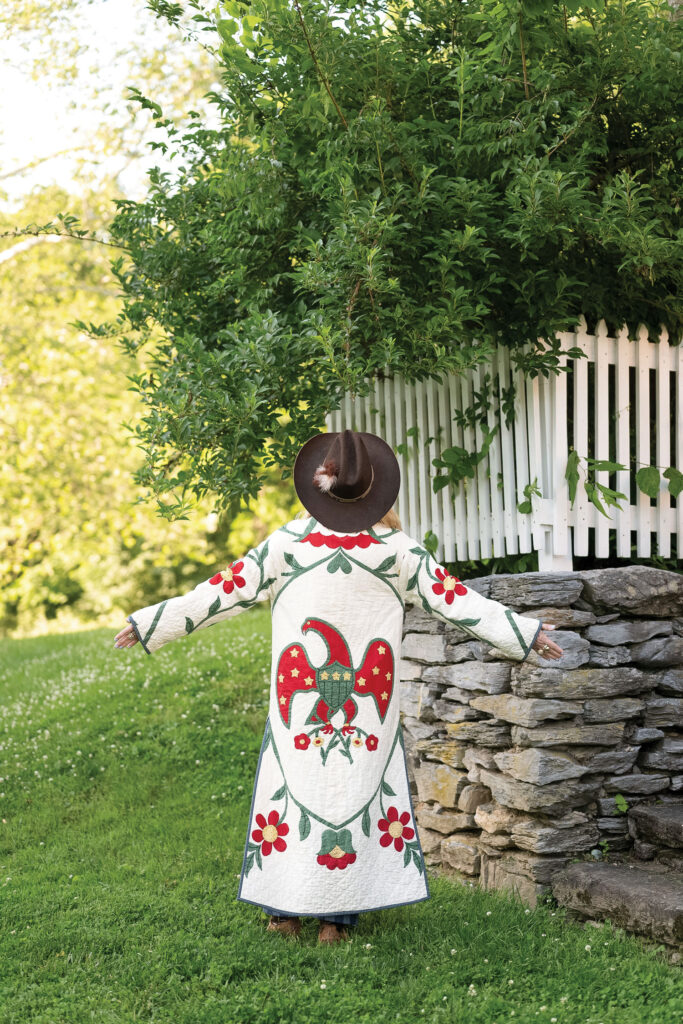
Elizabeth Leaman’s quilted coats and jackets have been known to literally stop traffic. “I’ve had people stop me on the street and offer to buy what I’m wearing,” she reports. “I’ve had cars do U-turns so that the drivers can ask where they can buy what I’m wearing.” As they come to learn, the label – Lady Lancaster – is homegrown and its pieces are made right here in Lancaster County.
As a youngster growing up in Washington Boro, Elizabeth did not pay much attention to the quilts and other sewing projects that occupied the women in her family. “I was surrounded by quilt makers,” she recalls. As a student at Lancaster Mennonite High School, she barely gave a glance to the frame that was set up for quilting circles. “Quilts were a massive part of my culture, but I just wasn’t interested in them,” she says.
Instead, Elizabeth had other things on her radar, namely vintage clothing and interior design, both of which are reflected in the personal style she has curated over the years. In 2011, those interests led her and a friend to organize the Boro Bazaar, which continues to be held at holiday time in Washington Boro. When it debuted, the bazaar was on the vanguard of the vintage, maker and thrifting movements that are so popular today. When Elizabeth’s co-organizer moved away from the area, she stepped away from the bazaar, as well.
As often happens when one reaches adulthood, Elizabeth gained an appreciation for what is often dismissed in childhood: one’s heritage, culture and roots. This newfound interest was reflected in quilts of all things. “I became obsessed with quilts,” she shares. She credits Eugene Rappaport, a collector and consultant who rode the wave of quilt mania during the ’80s, for educating her about antique quilts. “He would buy Amish quilts and take them to New York. His knowledge about quilts is incredible,” Elizabeth says. “I’m blessed he took an interest in me.”
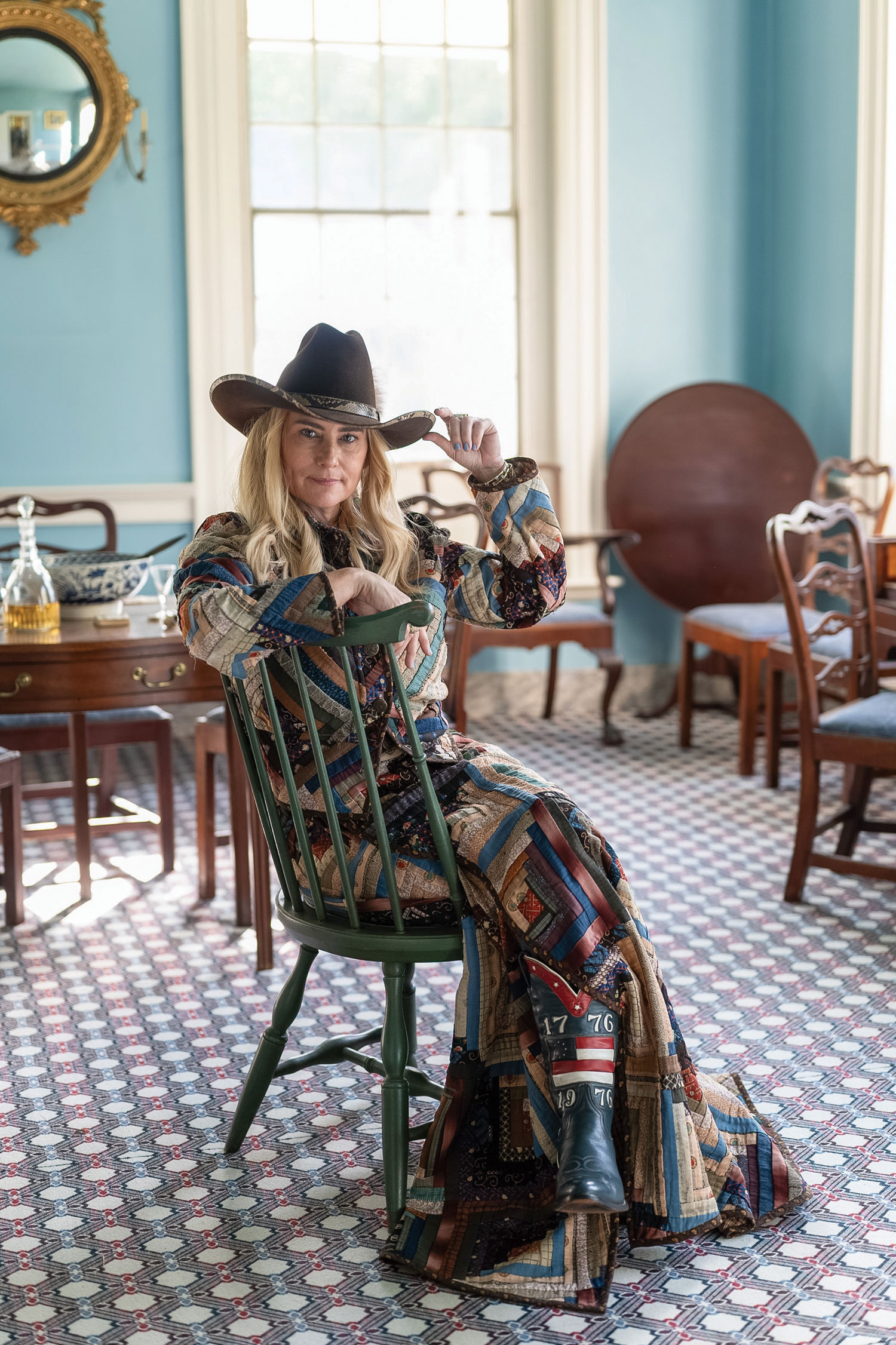
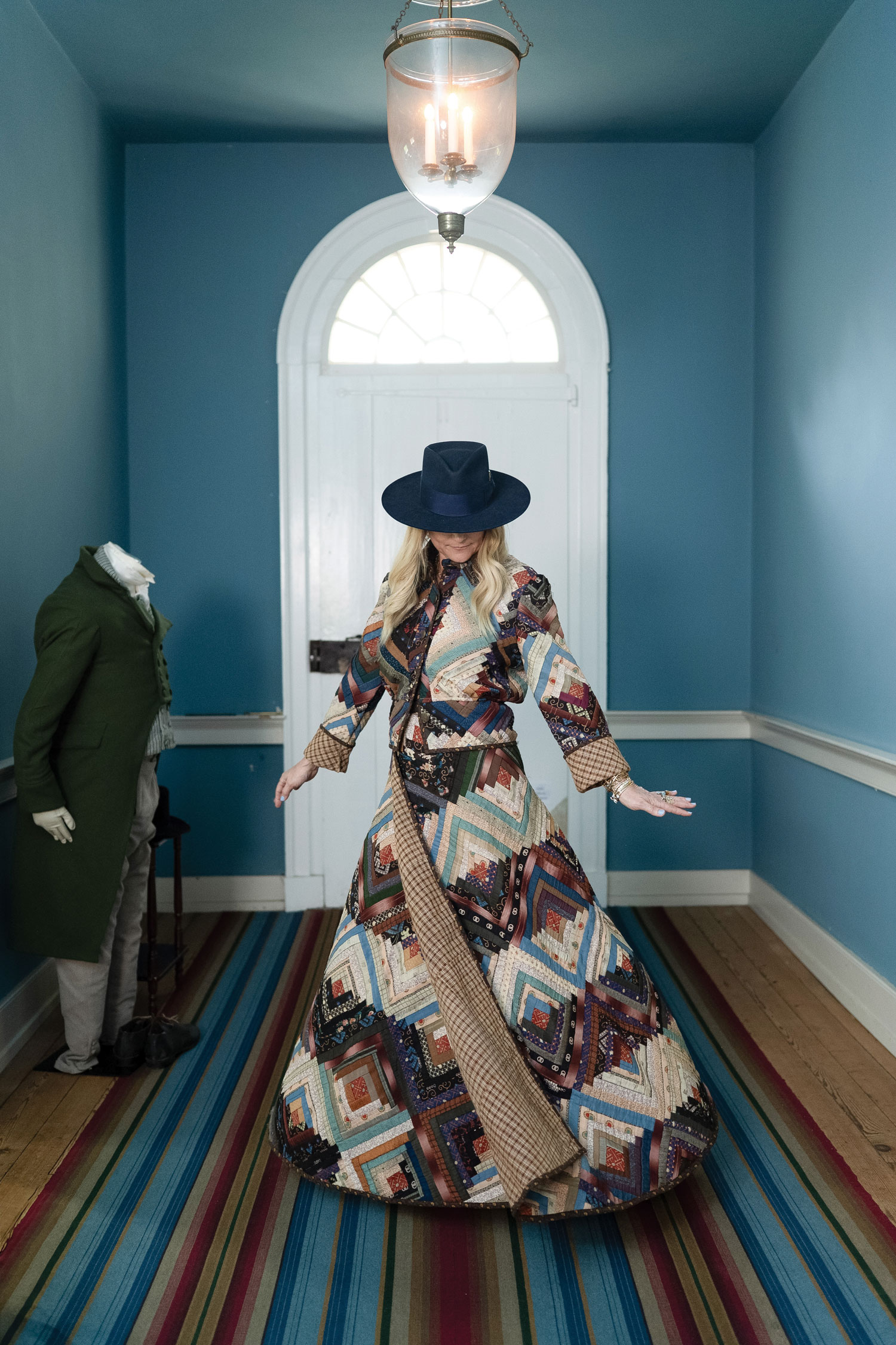
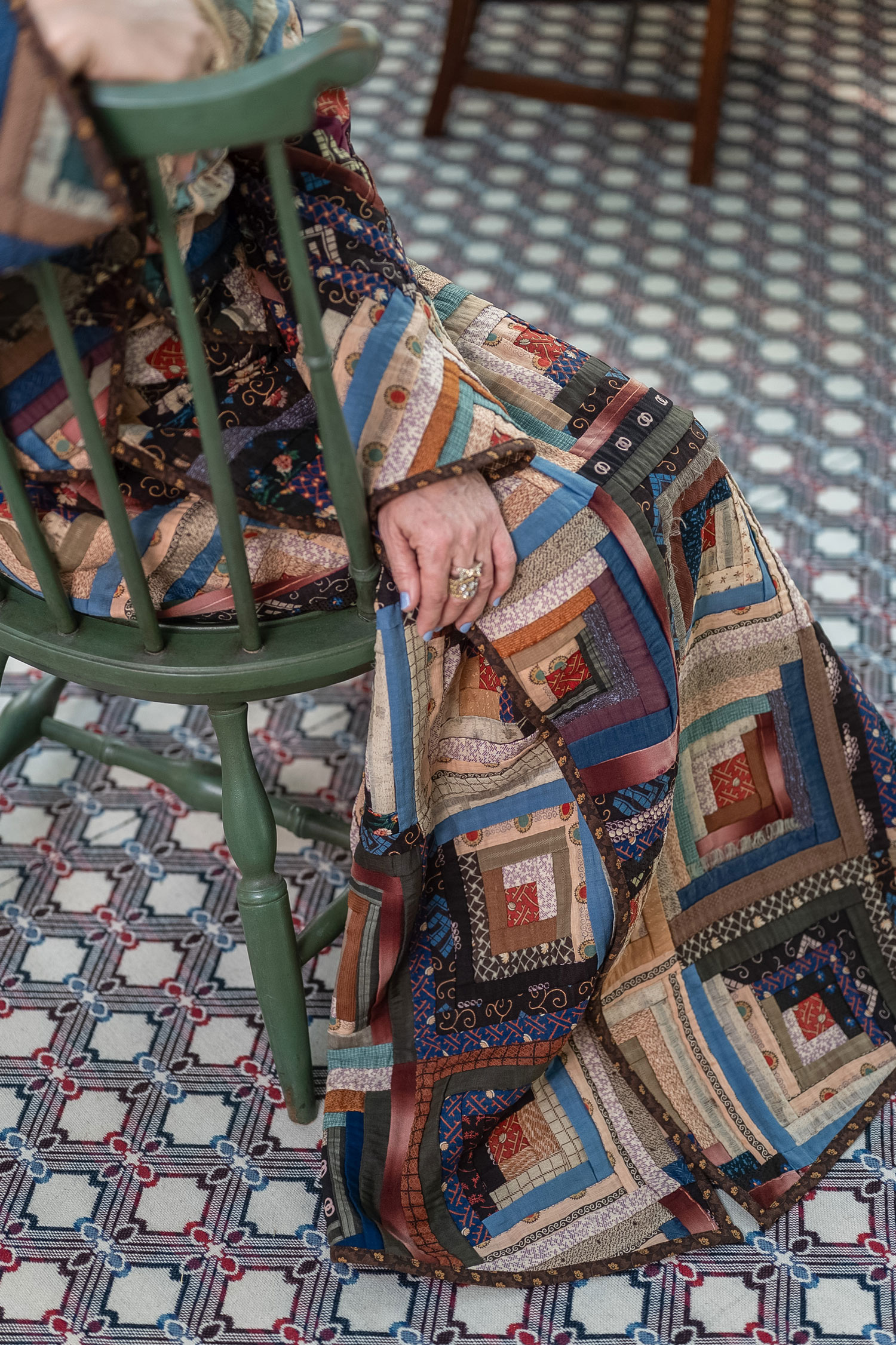
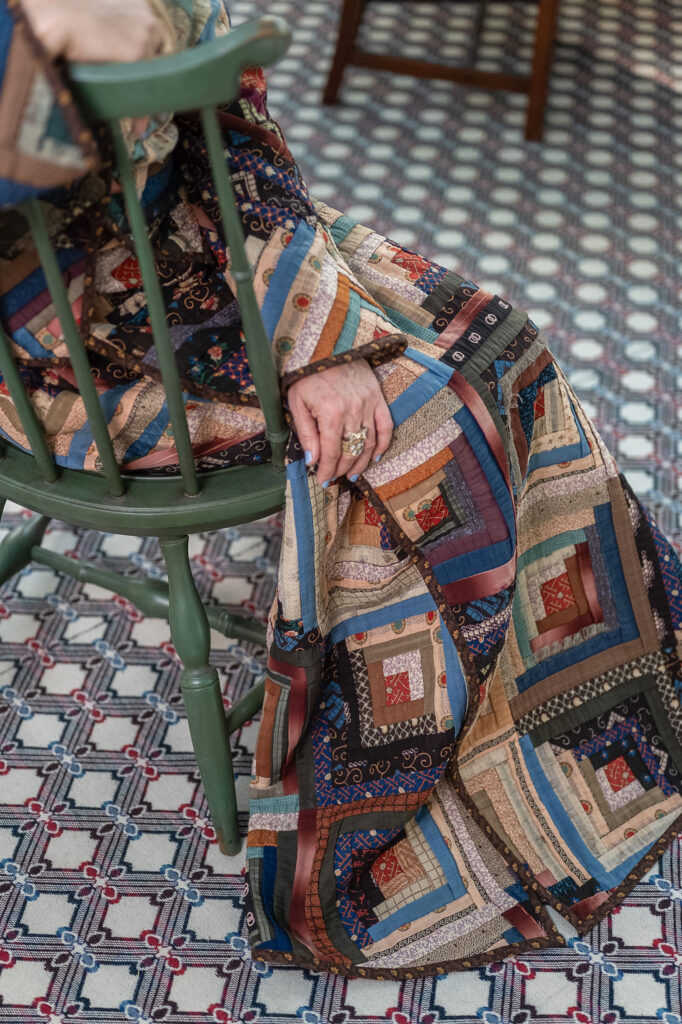
Elizabeth’s personal collection dates as far back as the 1860-’70s period. She names 1880 through the 1920s as her favorite quilt-making period. While Lancaster County continues to be the epicenter for coveted antique Amish quilts, Elizabeth has widened her horizons and will travel to wherever there are good quilts to be had. She loves that each and every quilt has a story to tell, with each having served a specific purpose. She explains that quilts provide a clue to its maker’s economic situation. For example, quilts made with fabric from Europe convey wealth, while those made with patches salvaged from other pieces of clothing signify a life in which nothing was wasted. “I love crazy quilts,” she says, equating them to modern art. Elizabeth also shares that she and her staff are often surprised by what they discover when quilts are deconstructed. “We’ve found money, notes, even other blankets inside the quilts,” she shares. “It’s so fascinating.” She also finds it fascinating that quilts were used to guide enslaved people along the Underground Railroad as they made their way north.
Lady Lancaster is Born
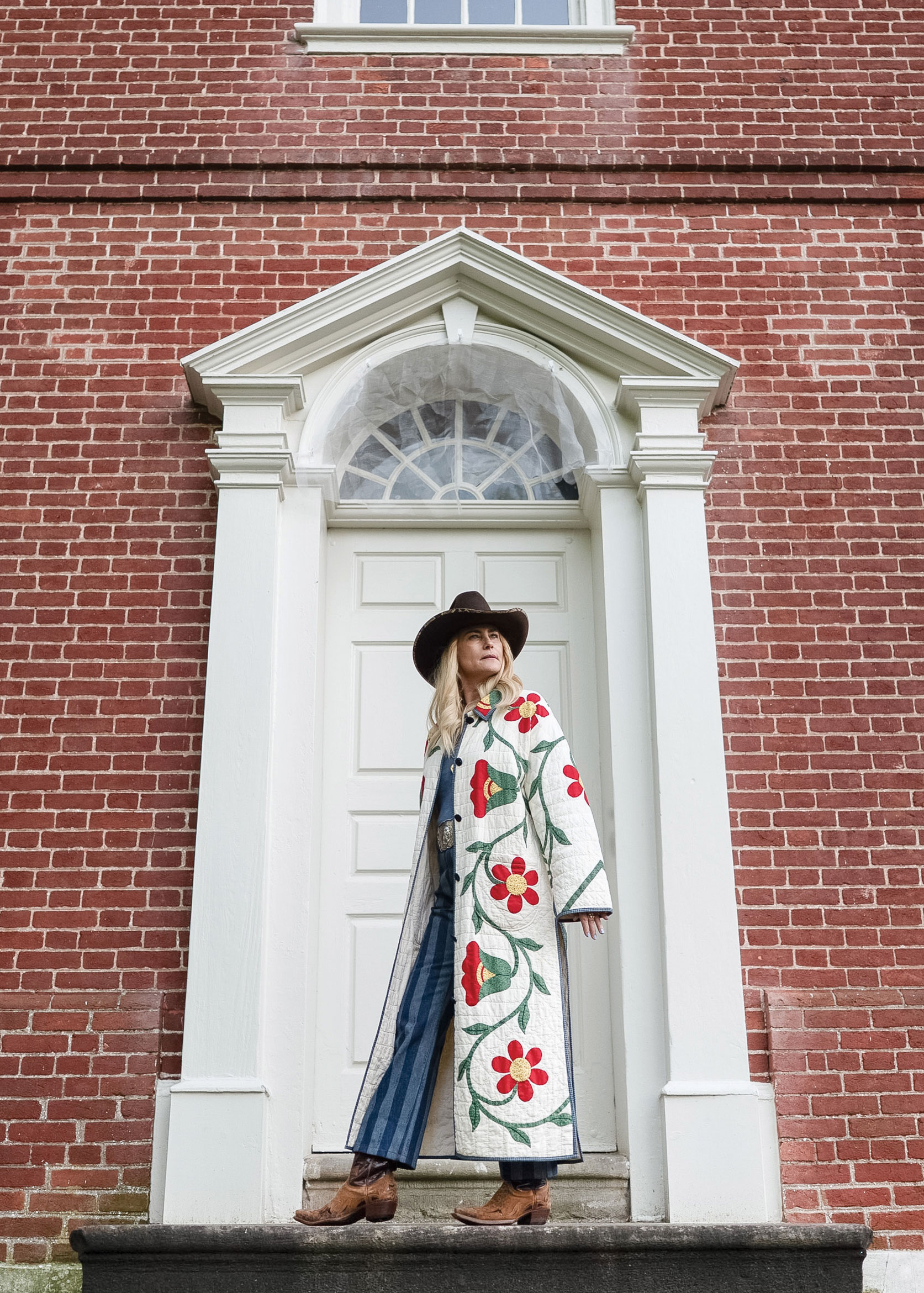
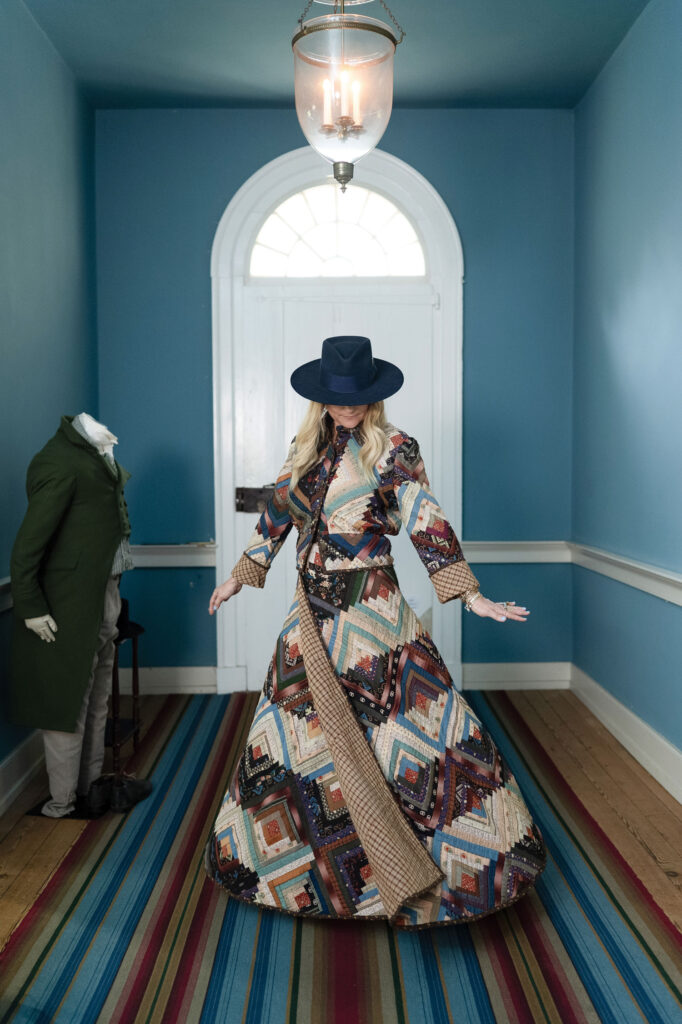
Despite being a collector of the decorative arts, Elizabeth was not interested in using quilts to cover beds or hang on walls. As an experiment, she began using quilts to create coats. “I began by making things I wanted to wear,” she notes. When she wore one of her creations, it created a frenzy of interest, especially from members of younger generations, who have become fans of repurposing items in order to put a modern spin on them. Research told her that quilted coats and jackets were nothing new; they are connected to history, having kept wearers warm over the course of centuries.
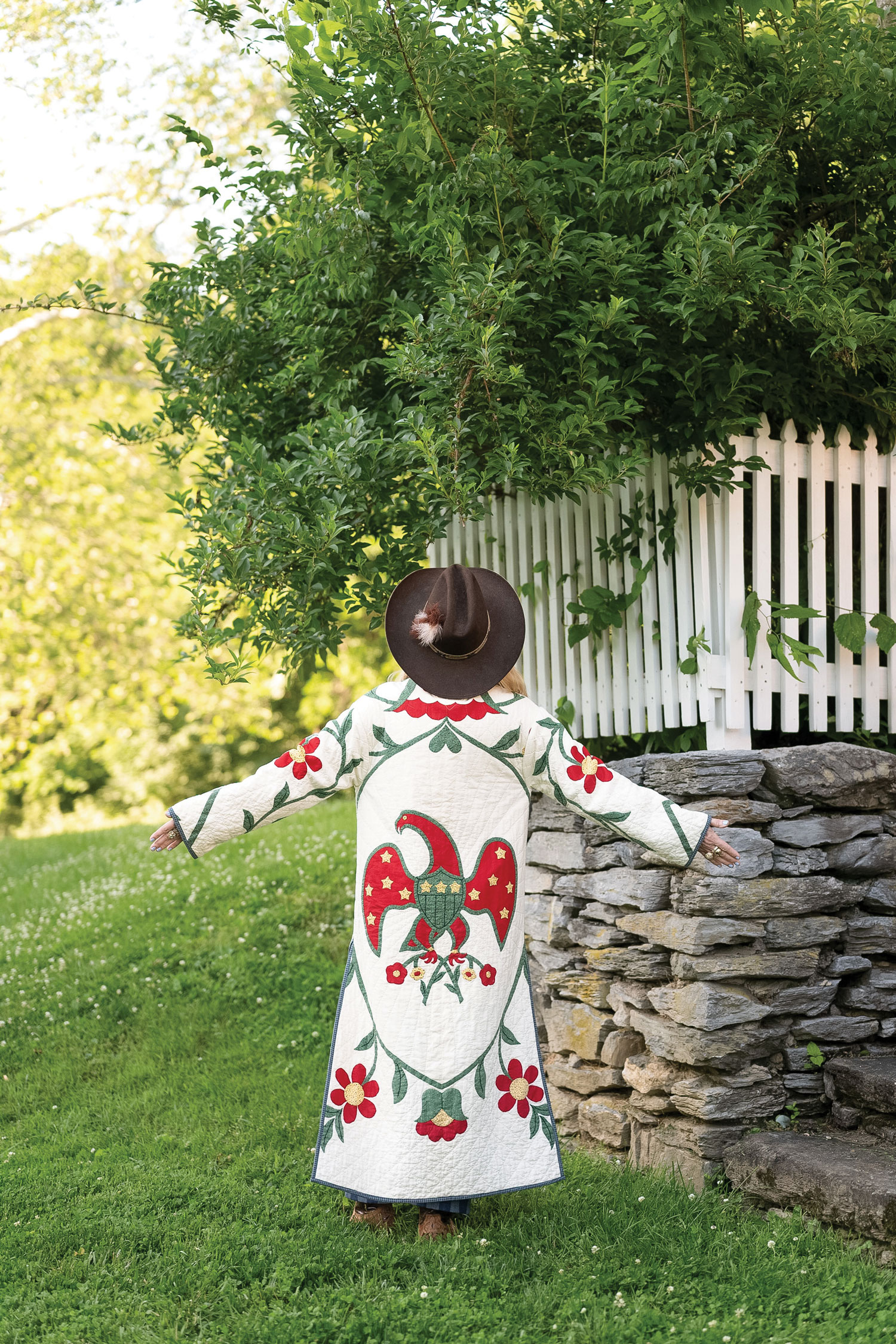
The reaction to her artful handiwork convinced Elizabeth she was on to something, leading her to consult with an Amish family that creates suits for Amish men. Her goal was to develop a prototype for a one-size-fits-most jacket she would eventually name “The Aunt Ethel” in honor of a great aunt who also had a style all her own. Another style would eventually emerge, which she named “The Helen” in honor of her more traditional grandmother, who is now 97.
Acting on her hunch, Elizabeth took a collection of jackets to Lucketts, an antiques and vintage market that hosts two shows a year in Berryville, Virginia. Elizabeth secured a booth, warning her husband John that the venture might cause her to lose money. He told her to go for it. As it turned out, her worries were pointless. She sold everything. Shoppers wanted more! “Lucketts proved to be my focus group,” she says.
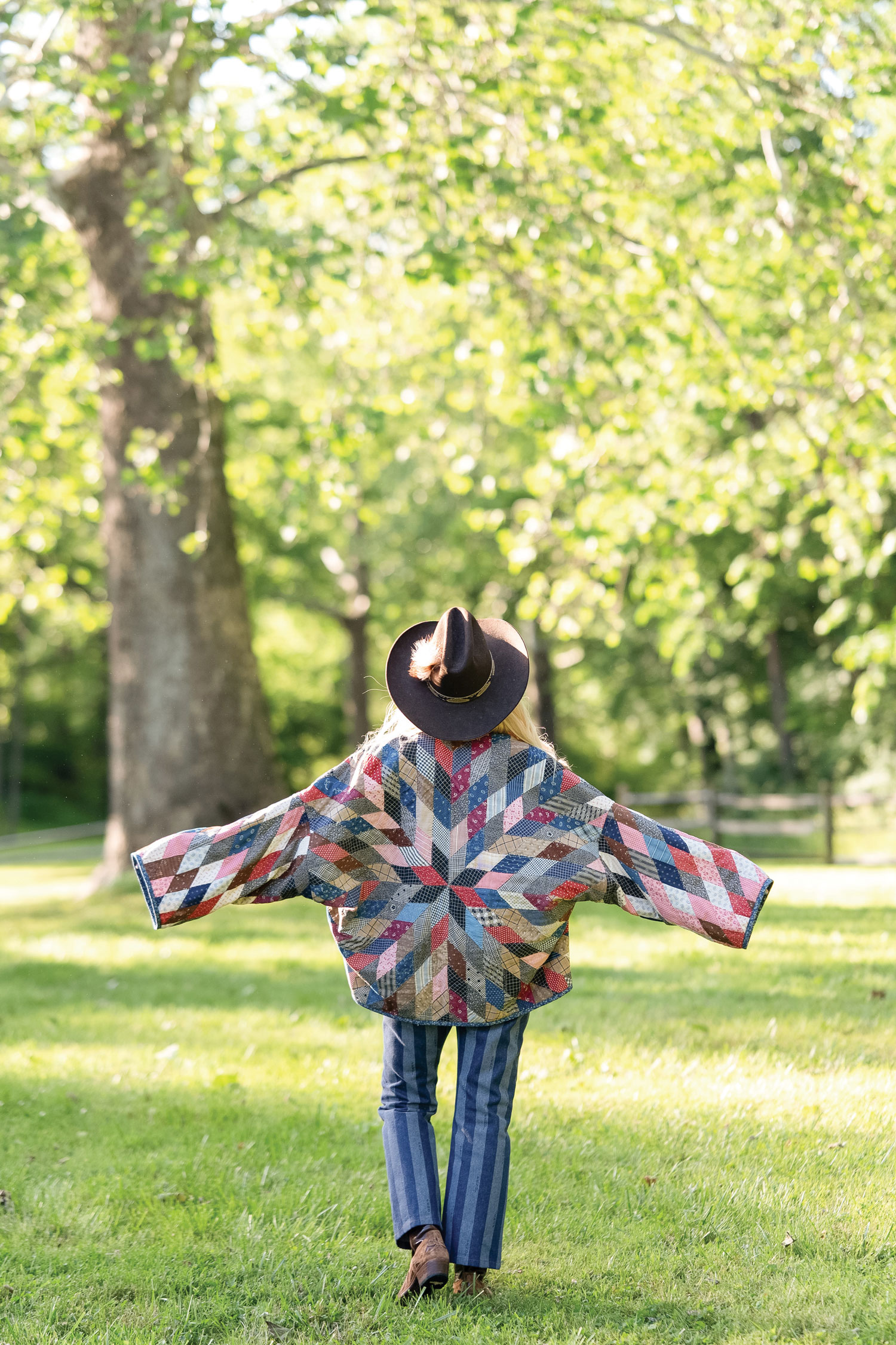
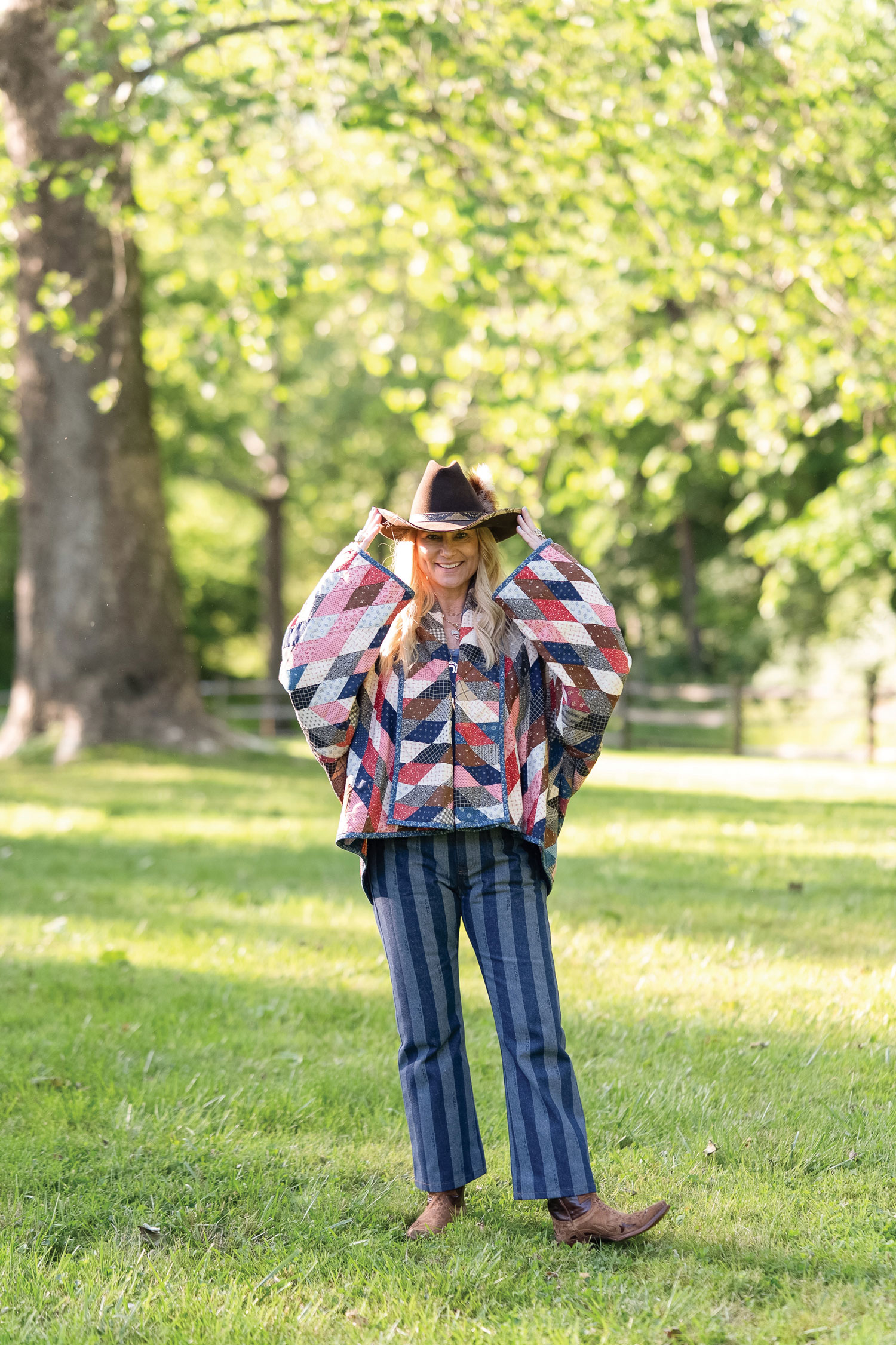
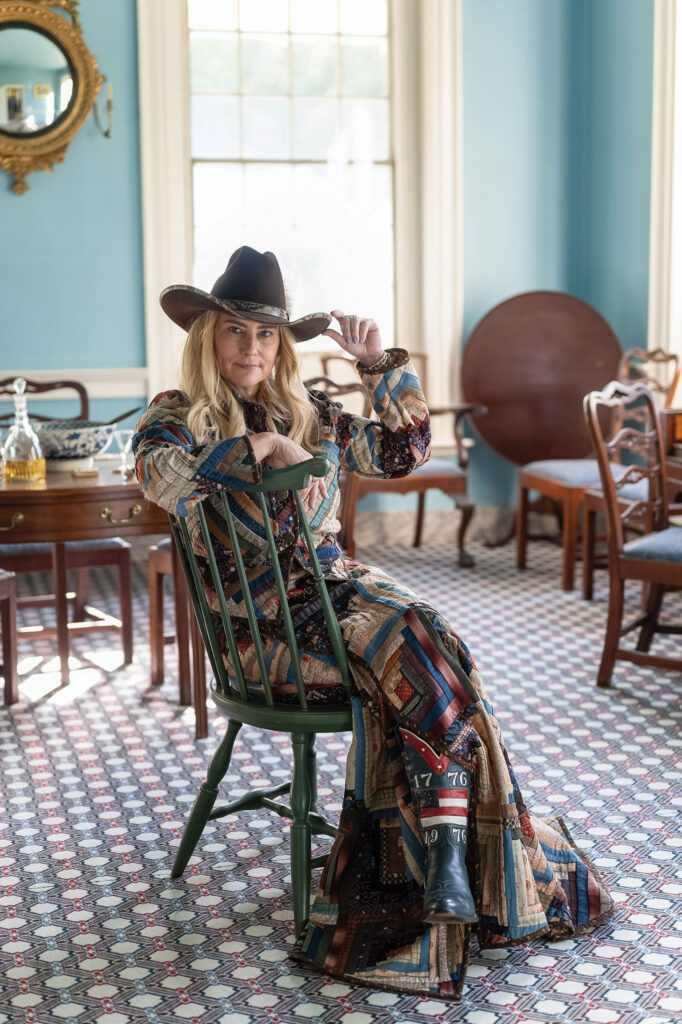
She needed a name for her creations and arrived at Lady Lancaster. “I’m a very private person and didn’t want my name out there,” she says. Next, she had to take the plunge and introduce the venture via social media. “I was scared to be on social media,” she admits. Social media meant she needed to showcase the clothing. “I tried using models,” she explains. “But they never seemed to understand how the coats and jackets move.” In the end, Elizabeth became “the face” of Lady Lancaster. True to her desire to remain “incognito,” she uses hats and poses to take the focus off her and instead place it on the clothing. “I’m cheap labor!” she laughs.
Creating the collections, which now consists of coats, jackets, dusters, blazers, skirts, vests, denim (vintage Levi’s that are embellished with patchwork) and even scrunchies (no piece of fabric goes to waste) was a learning process. Elizabeth and her team became pros at cleaning and repairing quilts. “It’s a labor-intensive process,” she says. Finishing touches also became a focal point. “I’m really, really a purist, plus I’m OCD,” she reports. Thus, she is adamant that vintage buttons, bindings, etc. are needed to complete a piece. “Those finishing touches are what set Lady Lancaster apart,” she says.
As her collections continue to evolve, Elizabeth has one goal she is firm on maintaining and that is to create clothing that is size-inclusive. “I want my buyers to feel emotion when they try on one of my pieces,” she stresses. “I think that because the pieces flatter the female body, those who wear them look and feel beautiful, no matter their size and shape.”
Go West
For the 112,000 who follow Lady Lancaster on Instagram, they’ve undoubtedly noticed that collections have taken on a Western vibe. That’s not by accident. Elizabeth spends summers in Idaho, where some cousins she is close to reside. She also attended college in Idaho. “The West is in my DNA,” she says. “I’ve enjoyed exploring that side of my family history. I’ve discovered cowboys are real!”
Trips through the West have enabled her to expand her brand. She now has a showroom in Round Top, Texas, a small town that is known for its “country chic” vibe and hosts two antiques fairs each year that draw huge crowds. Her pieces have been seen in ads for the company Double D Ranch and she has had trunk shows at the Kemo Sabe store in Aspen. She’s also a devotee of Indian Market, the show that is hosted by the Southwestern Association for Indian Arts in Santa Fe each August (it’s now in its 104th year). Through Indian Market, Elizabeth has forged relationships with textile artists such as Jimmy Dean Horn Jr. (Chickasaw), as well as jewelry makers from the Santo Domingo tribe (northern New Mexico), who are renowned for their turquoise and shell jewelry. She is now making their products available to customers.
Forging Ahead
Lady Lancaster now has three divisions: collections made from antique quilts, custom pieces (perhaps using quilts clients may have) and future heirlooms that are made with modern fabrics that are purchased locally and then quilted. “I refer to Lady Lancaster creations as ‘wearable art,’ and I think customers recognize and appreciate that the quilts we use are responsibly repurposed,” Elizabeth says. “We’re creating clothing that tells a story. I feel a kinship with the women who created them. There’s a feeling of power that comes with wearing something that tells a story.”
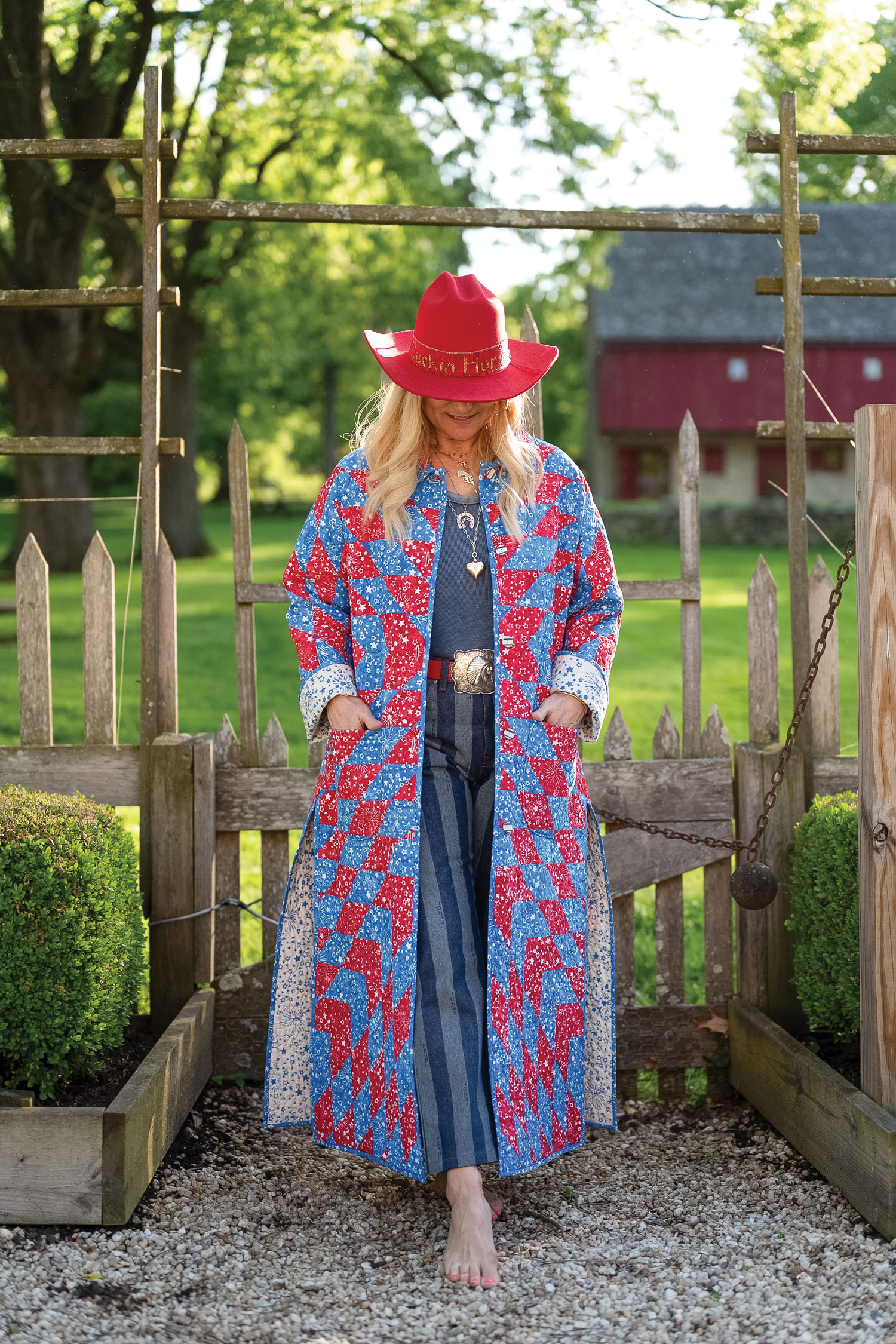
Elizabeth also likes to think that she is playing a part in helping to revive the quilt market. “For a while, it was in the tank, but prices are rebounding,” she notes. “I think it’s due to social media and people like me who are making quilts relevant again by giving them a new purpose.”
Elizabeth dips back into her research, noting that while quilts are a world-wide phenomenon, “there’s nothing like a quilt that was made in the USA,” she says. “They are part of who we are. They are a part of our history.” Because of those sentiments, Lady Lancaster pieces are accompanied by tags that declare, “Warning: This jacket will stop traffic!” The tags also include the backstories and any other relevant information about the quilts from which the pieces were made.
It’s said that history repeats itself and, in this case, quilts that were originally made as a labor of love are being repurposed with that same sense of care and love thanks to a Lancaster native whose creative spirit continues to thread itself in new directions.
Visit Lady Lancaster online (Ladylancaster.com) and through social media.
About Historic Rock Ford
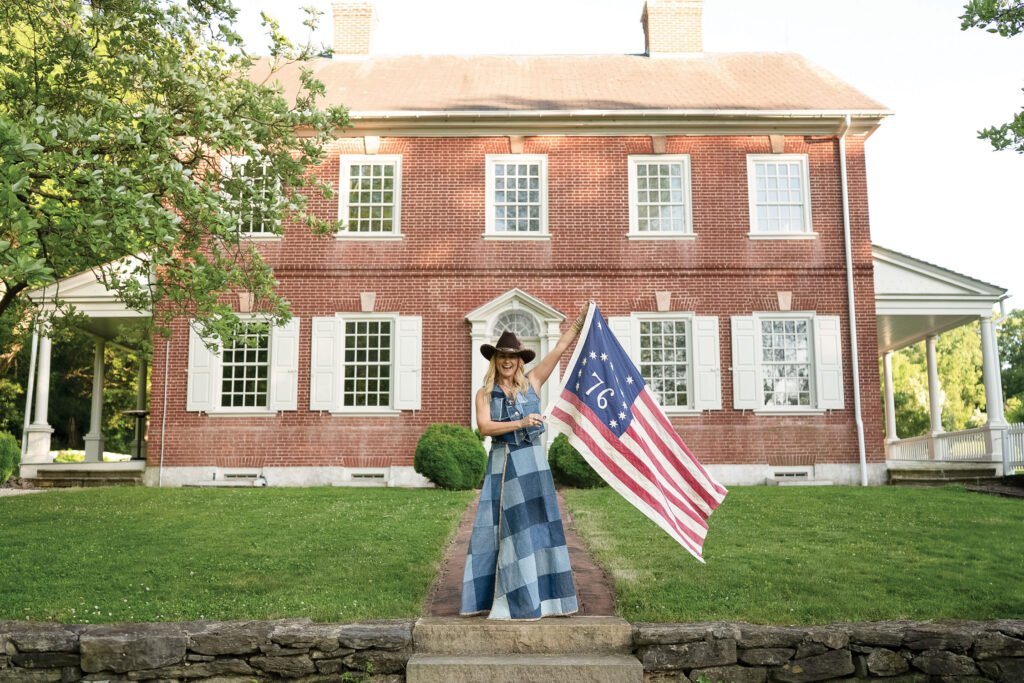
Historic Rock Ford is home to a mansion that is considered to be one of the state’s finest surviving examples of Georgian architecture. Once the home of General Edward Hand and his family, the estate dates to 1785, when the Irish-born Hand, who became a physician, Continental Army officer and politician, purchased 160 acres along the Conestoga River just south of Lancaster City (another 17 acres were purchased in 1792). The house was built in 1794, as were other buildings that supported the working farm.
After Hand’s death in 1802, the property became a tenant farm, remaining so until the 1950s, when the house was slated to be demolished and property turned into a trash incineration plant. In 1957, The Junior League of Lancaster stepped in and purchased the property and began the work of restoring the mansion. In 1958, the property was entrusted to the Rock Ford Foundation, which continued the restoration work.
A museum since 1960, Historic Rock Ford is now home to the fully refurbished mansion, a large kitchen garden, archeological sites, a restored barn that is used for museum events as well as weddings and other gatherings, and the John J. Snyder Jr. Gallery, where examples of 18th century decorative arts are on display.
Historic Rock Ford has designed an impressive slate of events to celebrate America250 that includes lectures, music, dance, family activities, theatre, film and more. An Independence Day celebration will be held July 2 and 3.
For details, visit historicrockford.org.
Leave a Reply